
Short Answer
21 Facts About Kagu (Birds)
- Endemic to New Caledonia. The kagu (Rhynochetos jubatus) is a bird species found only on the island of New Caledonia in the southwest Pacific Ocean.
- Flightless bird. Although it has wings, the kagu is flightless and relies on walking and running to navigate its forest habitat.
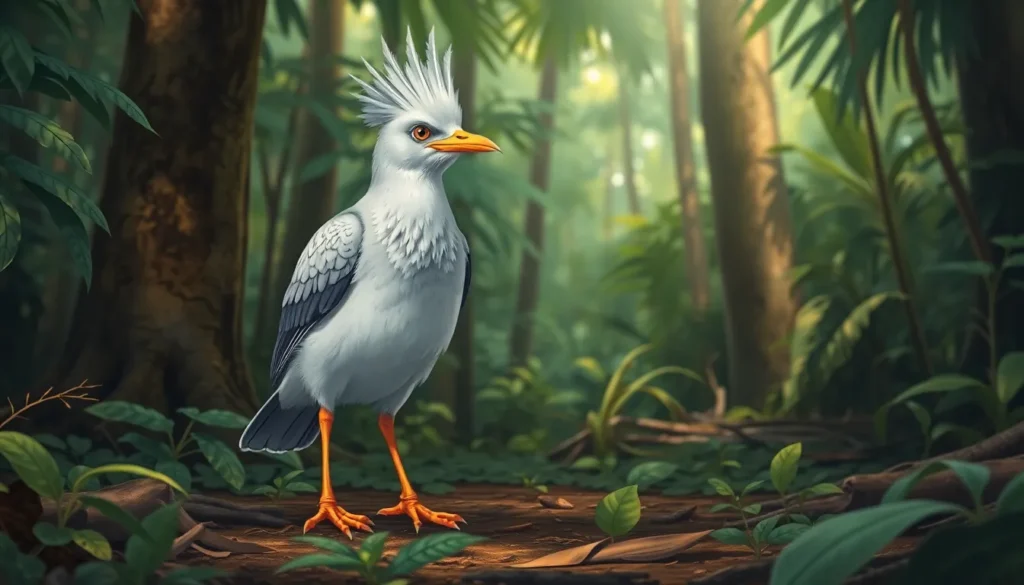
- Unique appearance. It has pale grey plumage, bright orange legs, and a striking crest of feathers on its head.
- Monotypic genus. The kagu is the only living species in the genus Rhynochetos, making it taxonomically distinct.
- Family Rhynochetidae. It is the sole member of the bird family Rhynochetidae.
- Long legs adapted for ground living. Its legs are strong and well-suited for walking on the forest floor and through underbrush.
- Distinctive nasal corns. The kagu has a special structure called nasal corns covering its nostrils, which may protect them from debris.
- Diet consists mainly of invertebrates. It feeds on insects, worms, snails, and small reptiles found on the forest floor.
- Territorial behavior. Kagus are territorial birds and often live in pairs or family groups defending their area.
- Low reproductive rate. Typically, kagu pairs lay only one or two eggs per breeding season.
- Highly vocal. They communicate with loud, piercing calls that can be heard over long distances.
- Crepuscular activity. The kagu is most active during dawn and dusk periods.
- Camouflage plumage. Its grey coloration helps it blend into the leaf litter and dense forest floor.
- Slow movement but agile. While not fast runners, kagus can move quietly and swiftly through dense vegetation.
- Conservation status. The kagu is classified as Endangered due to habitat loss and predation by introduced species.
- Predators include feral cats and dogs. These introduced mammals have significantly impacted kagu populations.
- Conservation programs in place. Efforts include habitat protection and predator control on New Caledonia.
- Role in ecosystem. As a predator of invertebrates, the kagu helps control insect populations and contributes to forest health.
- Symbol of New Caledonia. The kagu is a cultural emblem and appears on currency and official logos in New Caledonia.
- Scientific interest. Its unique evolutionary history makes it important for studies on island biogeography and flightlessness.
- Relict species. The kagu is considered a living relic of an ancient lineage of birds with few close relatives alive today.
Habitat and Behavior
The kagu inhabits dense, humid forests and shrubland areas on the island of New Caledonia. It prefers undisturbed or mature forest environments with thick leaf litter and ample ground cover. Being flightless, the kagu primarily moves by walking and running, using its long legs to navigate the forest floor in search of food. It is a territorial species, often found in pairs or small family groups that defend their territory through vocalizations and displays. The kagu is most active during crepuscular hours—dawn and dusk—when it forages mainly on invertebrates, including insects, worms, and snails. Its cryptic plumage and quiet movement help it avoid predators and remain inconspicuous in its dense habitat.
Why This Animal Matters
The kagu plays a vital ecological role in New Caledonia’s forest ecosystems by controlling invertebrate populations and maintaining soil health through its foraging activities. As an endemic and endangered species, it is a key indicator of forest ecosystem health and biodiversity on the island. Culturally, the kagu holds significance as a symbol of New Caledonia’s unique natural heritage and identity. Conservation efforts for the kagu also highlight broader issues of invasive species management and habitat protection on island ecosystems, making the bird important for environmental awareness and scientific research.
Common Misconceptions
Misconception: The kagu is a type of parrot.
Correction: Despite its bright colors and island habitat, the kagu is not a parrot but belongs to its own unique family, Rhynochetidae, and is more closely related to the order Gruiformes.
Misconception: Kagus can fly if needed.
Correction: The kagu is flightless with reduced wing muscles and cannot fly; it escapes predators by running and hiding.
Misconception: The kagu is common and not at risk.
Correction: The kagu is classified as Endangered due to habitat loss and invasive predators, and its population is vulnerable and closely monitored.
FAQ
Why is the kagu flightless?
The kagu evolved on an island with few natural predators, which allowed it to lose the ability to fly over time. Its wings are reduced, and it relies on running and camouflage for survival.
What threats does the kagu face?
The kagu faces threats primarily from habitat destruction and introduced predators such as feral cats and dogs, which prey on eggs, chicks, and adults.
How is the kagu important to New Caledonia?
The kagu is an endemic species that plays a key ecological role in controlling invertebrate populations and serves as a cultural symbol representing the unique biodiversity of New Caledonia.

Leave a Reply