
Short Answer
21 Facts About Carpenter Bees
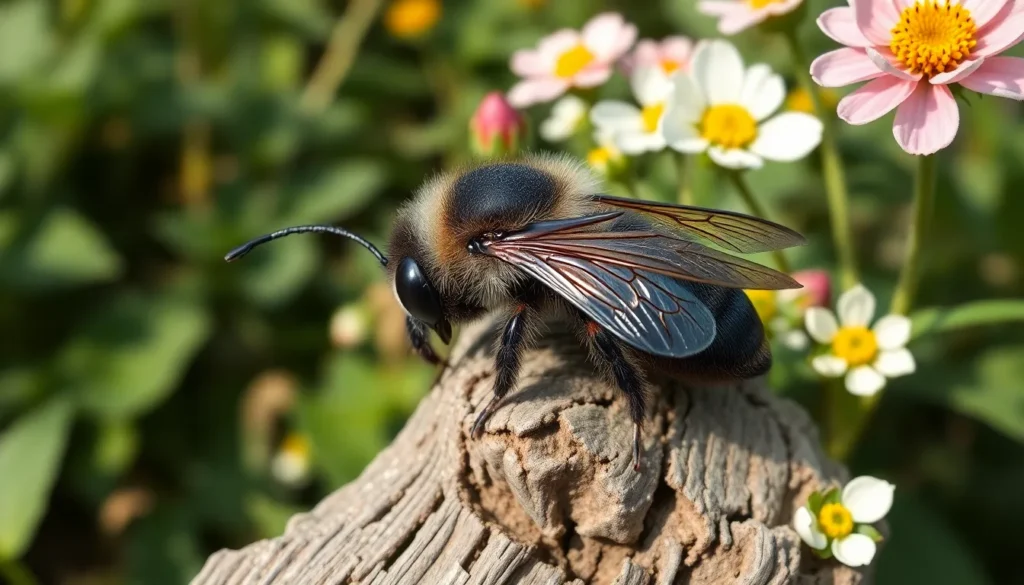
- Distinctive Appearance: Carpenter bees are large, robust bees with shiny, hairless abdomens, which distinguishes them from bumblebees that have hairy abdomens.
- Wood-Boring Nesting: Unlike many bees that nest in the ground, carpenter bees bore into wood to create tunnels where they lay their eggs.
- Solitary Nature: Carpenter bees are solitary insects, meaning each female typically builds her own nest without cooperative colony behavior.
- Pollination Role: Despite their wood-boring habits, carpenter bees are important pollinators for many flowering plants and crops.
- Males Are Territorial: Male carpenter bees do not have stingers but are often territorial and will defend their nesting sites aggressively.
- Females Can Sting: Female carpenter bees have stingers and can sting if provoked, but generally avoid aggressive behavior.
- Preferred Wood Types: Carpenter bees usually prefer softwoods such as pine, cedar, and redwood for nesting.
- Tunnel Construction: The tunnels they create are cylindrical and can be several inches long, with individual brood cells separated by partitions made of chewed wood pulp.
- Lifecycle Duration: The lifecycle from egg to adult typically spans several weeks, varying by species and environmental conditions.
- Seasonal Activity: Carpenter bees are most active in spring and summer during mating and nesting periods.
- Geographic Distribution: Carpenter bees are found worldwide, with various species adapted to different climates and regions.
- Attracted to Painted Wood: They are often attracted to painted or weathered wood, which can sometimes lead to property damage.
- Non-Social Behavior: Unlike honeybees, carpenter bees do not produce honey or wax combs.
- Pollination Technique: Carpenter bees engage in ‘buzz pollination,’ vibrating flowers to release pollen effectively.
- Damage Potential: The tunnels made by carpenter bees can weaken wooden structures over time but are generally less destructive than termites or carpenter ants.
- Natural Predators: Birds like woodpeckers sometimes prey on carpenter bees by extracting them from their tunnels.
- Attraction to Certain Flowers: They favor tubular flowers with abundant nectar, such as passionflowers and honeysuckles.
- Lifecycle Overwintering: In colder climates, carpenter bees often overwinter in their tunnels as adults before emerging in spring.
- Sexual Dimorphism: Males and females can be distinguished by differences in face coloration and the presence or absence of a stinger.
- Impact on Human Structures: While their nesting can cause cosmetic damage, carpenter bees rarely cause structural failure without long-term infestation.
- Control Methods: Non-lethal deterrents and habitat modifications are often recommended over chemical treatments to manage carpenter bee populations.
Habitat and Behavior
Carpenter bees inhabit a wide range of environments, from forests and gardens to urban areas where suitable wood is present. They prefer softwoods for nesting, often choosing unpainted or weathered wood surfaces such as eaves, decks, fences, and outdoor furniture. Their solitary behavior means that each female independently excavates tunnels for her eggs, contrasting with the social colony structures of honeybees or bumblebees. Carpenter bees are most active during warm months, when they forage for nectar and pollen and construct nests. Males patrol territories aggressively to ward off rivals, although they cannot sting. Females can sting but typically do so only when directly threatened. Carpenter bees contribute significantly to pollination by visiting a variety of flowering plants, often using buzz pollination to release pollen efficiently. In colder climates, adults overwinter inside their tunnels, emerging in spring to begin the life cycle anew.
Why This Animal Matters
Carpenter bees play a crucial ecological role as pollinators, supporting both wild plant communities and agricultural crops. Their ability to perform buzz pollination makes them particularly effective for certain plants that other pollinators cannot pollinate as efficiently. This contributes to biodiversity and the health of ecosystems. Although their wood-boring behavior can sometimes cause cosmetic damage to human-made structures, carpenter bees are not major pests like termites or carpenter ants. Their presence indicates healthy environmental conditions and native biodiversity. Additionally, their nesting tunnels provide microhabitats for other insects and contribute to nutrient cycling as damaged wood eventually decomposes. Understanding carpenter bees also helps dispel fears and promotes coexistence through informed management practices.
Common Misconceptions
Misconception: Carpenter bees are aggressive and will frequently sting humans.
Correction: Male carpenter bees are territorial but cannot sting, and females rarely sting unless provoked or handled directly.
Misconception: Carpenter bees destroy buildings similarly to termites.
Correction: While carpenter bees bore into wood to nest, their damage is typically superficial and cosmetic, unlike termites which eat wood and can cause structural damage.
Misconception: Carpenter bees live in colonies like honeybees.
Correction: Carpenter bees are solitary and do not form colonies or produce honey.
FAQ
Do carpenter bees sting?
Female carpenter bees have stingers and can sting if handled or threatened, but males do not have stingers and are harmless in that regard.
Are carpenter bees harmful to wooden structures?
Carpenter bees bore tunnels into wood to nest, which can cause cosmetic damage. However, they rarely cause structural damage unless infestations are severe and long-term.
How can carpenter bees be controlled?
Non-lethal methods such as painting or sealing wood surfaces, using physical barriers, and habitat modifications are preferred. Chemical treatments should be used cautiously and typically as a last resort.





Leave a Reply