
Short Answer
21 Facts About Indian Peafowl
- National Bird of India: The Indian peafowl (Pavo cristatus) is the national bird of India, symbolizing grace, beauty, and elegance.
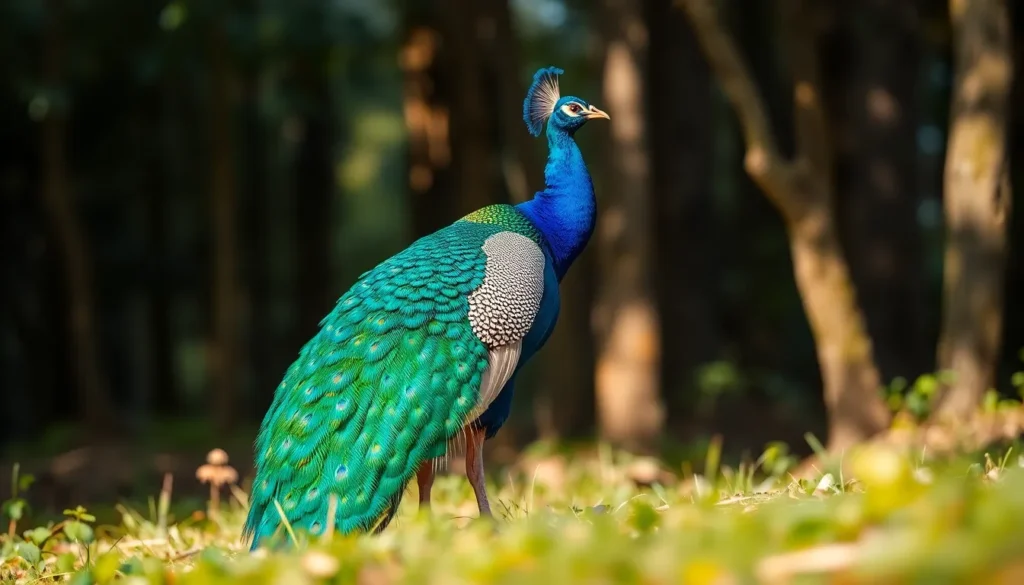
- Distinctive Plumage: Male peafowls, known as peacocks, have iridescent blue and green feathers with eye-like patterns on their long tail feathers, used in courtship displays.
- Sexual Dimorphism: Females, called peahens, have more subdued brown or grey plumage, lacking the extravagant tail feathers of males.
- Size and Weight: Indian peafowls typically measure about 100 to 115 cm in length (excluding the tail) and weigh between 4 to 6 kilograms.
- Vocalizations: Peafowls produce loud, piercing calls that can be heard over long distances, especially during mating season.
- Diet: They are omnivorous, feeding on seeds, insects, small reptiles, and plants.
- Flight Capability: Despite their heavy appearance, Indian peafowls are capable of short flights to escape predators or reach roosting sites.
- Display Behavior: Males fan out their train feathers in a spectacular display to attract females during the breeding season.
- Molting: The long tail feathers of males are shed annually and regrown before the mating season.
- Habitat Preference: They inhabit open forests, farmland edges, and cultivated areas, often near human settlements.
- Social Structure: Indian peafowls are generally social birds, often found in small groups called parties.
- Breeding Season: The breeding season typically occurs between April and September, coinciding with the monsoon in India.
- Nesting: Females build simple nests on the ground, usually in dense vegetation to hide eggs from predators.
- Eggs and Incubation: Clutches generally contain 3 to 5 eggs, incubated by the female for about 28 days.
- Lifespan: In the wild, Indian peafowls can live up to 15-20 years, with longer lifespans in captivity.
- Predators: Natural predators include large cats, snakes, and birds of prey, which target eggs, chicks, or adult birds.
- Conservation Status: Classified as Least Concern by the IUCN, the species is widespread but faces localized threats from habitat loss and hunting.
- Cultural Significance: Indian peafowls have deep cultural and religious importance in India, symbolizing beauty and spirituality in Hindu mythology.
- Use in Art and Symbolism: Their imagery is common in Indian art, textiles, and folklore, often representing immortality and pride.
- Introduced Populations: Indian peafowls have been introduced to various countries worldwide, including the United States and Australia, where they have established feral populations.
- Adaptability: Their ability to thrive near human habitation demonstrates high ecological adaptability.
Habitat and Behavior
The Indian peafowl is native to the Indian subcontinent, including India, Sri Lanka, and parts of Pakistan and Nepal. It prefers habitats such as deciduous forests, scrublands, and agricultural areas with nearby water sources. These birds are ground feeders and spend much of their time foraging for food. During the day, they often seek shade and roost in trees at night to avoid predators. Males perform elaborate courtship displays involving the raising and shaking of their iridescent tail feathers to attract females. Socially, Indian peafowls form loose groups and communicate through loud calls, especially during the breeding season. Their ability to fly short distances aids in predator avoidance and reaching safe roosts.
Why This Animal Matters
Ecologically, Indian peafowls play a role in seed dispersal and insect population control, contributing to the health of their ecosystems. Culturally, they hold significant importance in Indian traditions, folklore, and religions such as Hinduism, where the peacock is associated with deities like Kartikeya and Saraswati. Their status as the national bird of India underscores their symbolic value and the need for their conservation. Additionally, Indian peafowls attract ecotourism and inspire artistic expression, reflecting the interconnectedness between wildlife and human culture.
Common Misconceptions
Misconception: Peacocks are the only Indian peafowls.
Correction: The term “peacock” specifically refers to the male Indian peafowl; females are called peahens, and the species as a whole is the Indian peafowl.
Misconception: Indian peafowls can only live in dense forests.
Correction: While they are native to forested areas, Indian peafowls are highly adaptable and thrive in open habitats, agricultural fields, and near human settlements.
Misconception: The peacock’s tail feathers are its actual tail.
Correction: The train of feathers that peacocks display is made up of elongated upper tail covert feathers, not the tail itself, which is much smaller and hidden beneath.
Misconception: Indian peafowls are silent birds.
Correction: Indian peafowls are known for their loud and distinctive calls, especially during the breeding season.
FAQ
What is the difference between a peacock and a peafowl?
A peacock refers specifically to the male Indian peafowl, known for its colorful and elaborate tail feathers. The term peafowl represents the species as a whole, including males (peacocks), females (peahens), and juveniles.
Where do Indian peafowls typically live?
Indian peafowls inhabit a range of environments including open forests, scrublands, farmland edges, and areas near human settlements across the Indian subcontinent.
How do Indian peafowls attract mates?
Male Indian peafowls perform an elaborate courtship display by fanning out their iridescent tail feathers, shaking them to produce a rattling sound, and calling loudly to attract females during the breeding season.



Leave a Reply