
Short Answer
21 Facts About Javan Rhinos
- Critically Endangered Status
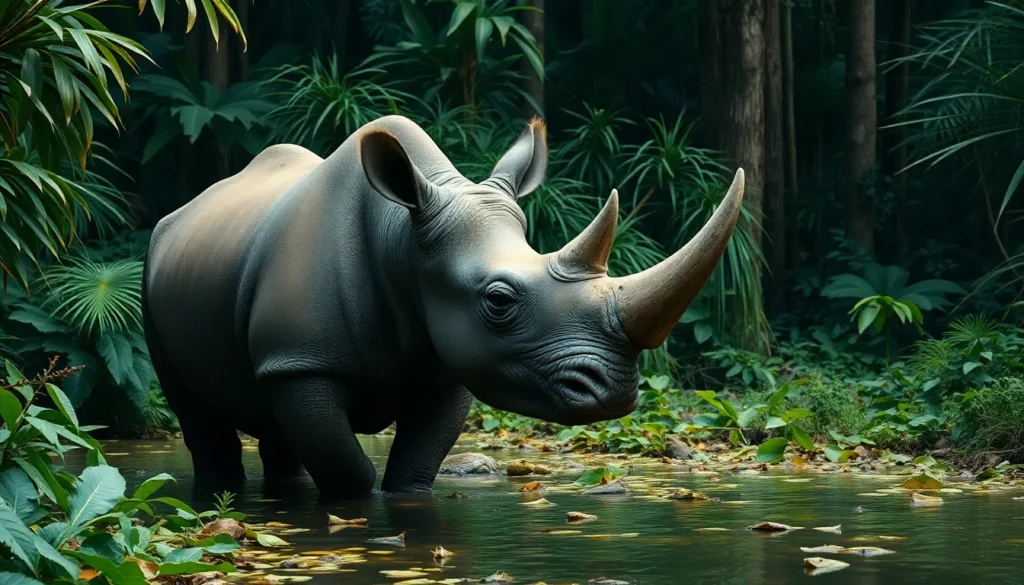
The Javan rhino (Rhinoceros sondaicus) is classified as critically endangered by the International Union for Conservation of Nature (IUCN), with fewer than 100 individuals estimated to remain in the wild. - Single-Horned Rhino
Unlike some rhino species, the Javan rhino has only one horn, which is typically smaller than those of other rhino species, measuring up to 25 cm in length. - Distinctive Skin Folds
Its skin appears to have loose folds that give it an armored appearance, a characteristic common to the species in the genus Rhinoceros. - Habitat Restriction
The species currently survives primarily in Ujung Kulon National Park in Indonesia, representing its last known stronghold in the wild. - Solitary Animal
Javan rhinos are typically solitary, with individuals maintaining distinct territories and coming together only briefly for mating. - Shy and Elusive
They are known for their elusive behavior, making them difficult to study and observe in their natural habitat. - Herbivorous Diet
The Javan rhino feeds on a variety of plant species, including shoots, leaves, fruits, and fallen trees, relying on dense tropical forests for sustenance. - Excellent Swimmers
These rhinos are good swimmers and often use water bodies within their habitat to cool down and escape predators or threats. - Low Reproductive Rate
Females typically give birth to a single calf every 2 to 3 years, contributing to the species’ slow population growth. - Ancient Species
Javan rhinos have existed for millions of years, with fossil records indicating their presence in Southeast Asia since the Pleistocene epoch. - Unique Vocalizations
They communicate using a range of sounds including grunts, whistles, and trumpeting noises, primarily for mating and territorial purposes. - Use of Mud Baths
Javan rhinos frequently wallow in mud to regulate body temperature and protect their skin from parasites and insects. - Low Genetic Diversity
Due to their small population size, Javan rhinos suffer from low genetic diversity, which can increase vulnerability to diseases and reduce adaptability. - Conservation Efforts
Strict protection measures, habitat management, and anti-poaching patrols have been implemented to preserve the remaining population. - Poaching Threat
Historically, poaching for their horns posed a significant threat, though current anti-poaching efforts have reduced this risk in their last refuge. - Limited Range
The Javan rhino’s historical range once covered much of Southeast Asia but has dramatically shrunk to a single protected area. - Role in Ecosystem
As a large herbivore, it plays a crucial role in maintaining forest structure by seed dispersal and vegetation control. - Physical Size
Adult Javan rhinos stand about 1.4 to 1.7 meters tall at the shoulder and weigh between 900 and 2,300 kilograms. - Night Activity
They are predominantly crepuscular and nocturnal, often feeding during dawn, dusk, and night to avoid heat and human disturbance. - Rare Sightings
The secretive nature and dense habitat mean that sightings by humans are rare and mostly rely on camera traps for monitoring. - Cultural Significance
In some local cultures, the Javan rhino is a symbol of strength and resilience, though its elusive nature means it is less prominent in folklore than other species.
Habitat and Behavior
The Javan rhino inhabits lowland tropical rainforests and dense bamboo thickets primarily within Ujung Kulon National Park, Indonesia, which offers a humid, warm climate with abundant vegetation. It requires dense cover for protection and access to water sources for drinking and wallowing. Behaviorally, the Javan rhino is solitary and territorial, marking areas with dung and urine. It is mostly active during cooler parts of the day, such as early morning and late afternoon, and shows nocturnal tendencies to avoid heat and human presence. Feeding habits involve browsing on a variety of plant materials, contributing to seed dispersal and forest regeneration. Despite their large size, they are surprisingly agile and can move swiftly through dense undergrowth.
Why This Animal Matters
The Javan rhino holds significant ecological importance as one of the few remaining mega-herbivores in Southeast Asian forests, influencing plant diversity and forest dynamics. It helps maintain healthy ecosystems through selective feeding and seed dispersal. Its critical conservation status highlights global biodiversity loss and the challenges of protecting rare species amid habitat destruction and poaching. The species also serves as a flagship for conservation efforts in Indonesia, raising awareness about the importance of preserving tropical forests and their inhabitants. Furthermore, protecting the Javan rhino helps safeguard other species sharing its habitat, contributing to broader environmental stability.
Common Misconceptions
Misconception: The Javan rhino is extinct in the wild.
Correction: While critically endangered, the Javan rhino still survives in the wild, primarily in Ujung Kulon National Park, Indonesia.
Misconception: All rhinos have two horns.
Correction: The Javan rhino has only one horn, which is smaller compared to other rhino species.
Misconception: Javan rhinos are aggressive and dangerous to humans.
Correction: Javan rhinos are shy and elusive, generally avoiding human contact and not known to be aggressive unless threatened.
FAQ
Where do Javan rhinos live?
Javan rhinos currently live primarily in Ujung Kulon National Park in Indonesia, which is their last known natural habitat.
Why are Javan rhinos critically endangered?
They are critically endangered due to habitat loss, poaching, a small population size, and low genetic diversity, which all threaten their survival.
How can we help conserve Javan rhinos?
Conservation efforts include habitat protection, anti-poaching measures, scientific monitoring, and raising public awareness about the species’ plight.
Leave a Reply