
Short Answer
21 Facts About Cleaner Shrimp
- Cleaner shrimp are symbiotic animals. They engage in mutualistic relationships with fish by removing parasites, dead skin, and debris from their bodies, benefiting both parties.
- They belong to the family Hippolytidae. Most cleaner shrimp species, such as the popular Lysmata amboinensis, are classified under this family of decapod crustaceans.
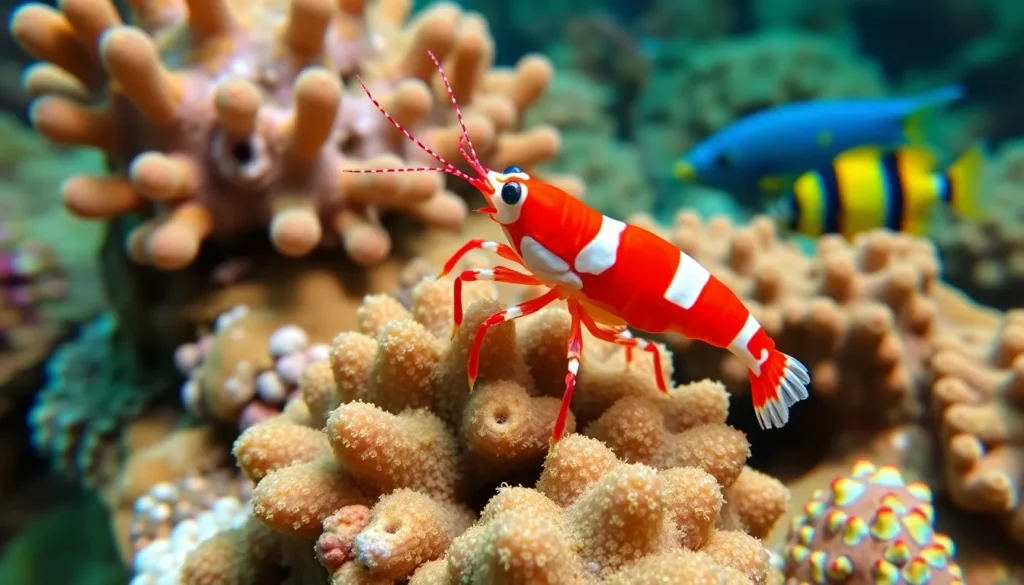
- Distinctive coloration helps identify them. Many species exhibit bright red, white, or translucent bodies with conspicuous antennae that signal their cleaning role to other fish.
- They use specialized behavior to attract clients. Cleaner shrimp perform a characteristic ‘dancing’ motion with their antennae to advertise their cleaning services to passing fish.
- Cleaning stations are common gathering spots. These shrimp often set up fixed locations on coral reefs where fish come to be cleaned regularly.
- They remove ectoparasites and dead tissue. This cleaning helps reduce parasite load and infection risks for client fish, improving their overall health.
- Cleaner shrimp have a wide distribution. They are found in tropical and subtropical waters worldwide, especially in the Indo-Pacific region.
- Some species are facultative cleaners. This means they do not rely exclusively on cleaning behavior for food and may scavenge or feed on detritus.
- They communicate with client fish through tactile signals. Antennae touching and specific movements help reassure fish and reduce predation risk during cleaning.
- Cleaner shrimp can recognize individual clients. Studies show they remember and preferentially clean fish that have cooperated in the past.
- They play a role in reef ecosystem health. By controlling parasite populations on fish, cleaner shrimp contribute to the balance and biodiversity of coral reefs.
- Their cleaning behavior benefits commercial fish species. Cleaner shrimp help maintain the health of fish important for fisheries and aquaculture.
- Cleaner shrimp are preyed upon by some predators. Despite their important role, they must avoid being eaten, often relying on their cleaning reputation to reduce predation.
- They reproduce sexually. Female cleaner shrimp can produce numerous eggs after mating, which hatch into planktonic larvae.
- Some species display protandric hermaphroditism. This means individuals can change sex from male to female during their lifespan.
- Cleaner shrimp have long antennae. These are used both to signal clients and to explore their environment.
- They are popular in marine aquariums. Due to their cleaning behavior and bright colors, cleaner shrimp are often kept by hobbyists to help maintain fish health.
- Cleaning reduces stress for client fish. By removing irritants, cleaner shrimp improve fish comfort and may influence fish behavior positively.
- Cleaner shrimp sometimes compete with cleaner fish. Both groups fulfill similar roles, but shrimp typically clean smaller clients or areas fish cannot reach.
- They are indicators of reef health. The presence of cleaner shrimp often signals a well-functioning reef ecosystem with balanced species interactions.
- Research on cleaner shrimp informs marine biology. Studying their behavior helps scientists understand mutualism, communication, and ecosystem dynamics.
Habitat and Behavior
Cleaner shrimp primarily inhabit shallow coral reefs in tropical and subtropical oceans globally, with a high concentration in the Indo-Pacific region. They prefer areas rich in coral and rocky crevices where they can establish cleaning stations. These stations serve as fixed locations where fish clients congregate to receive cleaning services. Behaviorally, cleaner shrimp use their long antennae to signal their presence and attract fish. Their characteristic ‘dance’ involves rhythmic waving of antennae and body movements to advertise their cleaning availability. The shrimp approach clients carefully, touching them gently to reassure that they are not a threat. During cleaning, shrimp remove ectoparasites, dead skin, and mucus from fish surfaces, including hard-to-reach places like gill chambers and mouths. This mutualistic behavior benefits the shrimp by providing food and benefits the fish by reducing parasite loads and improving health.
Cleaner shrimp can recognize individual fish and may adjust their cleaning behavior based on past interactions. They sometimes compete with cleaner fish for clients but can coexist by specializing in different niches. Reproduction involves sexual mating, with females producing eggs that develop into planktonic larvae before settling on reefs. Some species exhibit protandric hermaphroditism, changing sex during their lifetime to optimize reproductive success. Outside of cleaning, these shrimp may scavenge or feed on detritus, depending on species and environmental conditions.
Why This Animal Matters
Cleaner shrimp play a crucial ecological role on coral reefs by maintaining fish health and contributing to ecosystem balance. Their cleaning services reduce parasite loads on fish, which can improve fish survival, growth, and reproductive success. This mutualism supports biodiversity by promoting healthy fish populations and reducing disease transmission. Cleaner shrimp also serve as indicators of reef health, with their presence often reflecting a well-functioning ecosystem. Additionally, their interactions with client fish provide valuable insights into animal communication and cooperation. In aquaculture and marine aquarium settings, cleaner shrimp help control parasites on captive fish, reducing the need for chemical treatments. Conserving cleaner shrimp populations and their habitats aids in sustaining coral reef resilience amid global environmental threats.
Common Misconceptions
Misconception: Cleaner shrimp clean fish by eating their scales or harming them.
Correction: Cleaner shrimp remove parasites and dead tissue, not live tissue or scales. Their cleaning is beneficial and not harmful to client fish.
Misconception: All shrimp labeled “cleaner shrimp” perform cleaning behavior.
Correction: Not all shrimp sold or called cleaner shrimp engage in cleaning. True cleaner shrimp exhibit specific behaviors and ecological roles in mutualistic cleaning.
Misconception: Cleaner shrimp only clean large fish.
Correction: Cleaner shrimp clean a variety of fish sizes, including small species, and may specialize in areas inaccessible to larger cleaners like cleaner fish.
FAQ
What do cleaner shrimp eat?
Cleaner shrimp primarily feed on ectoparasites, dead tissue, and mucus removed from client fish during cleaning. Some species also consume detritus and small organic matter.
How do cleaner shrimp attract fish to be cleaned?
Cleaner shrimp use a distinctive 'dancing' motion involving waving their long antennae and performing rhythmic body movements to signal their cleaning services to passing fish.
Are cleaner shrimp harmful to fish?
No, cleaner shrimp are not harmful. Their cleaning removes parasites and dead tissue, which benefits fish by improving health and comfort.


Leave a Reply