
Short Answer
21 Facts About Lungfish
- Lungfish can breathe air. Unlike most fish, lungfish possess lungs that allow them to extract oxygen from air, enabling survival in low-oxygen environments.
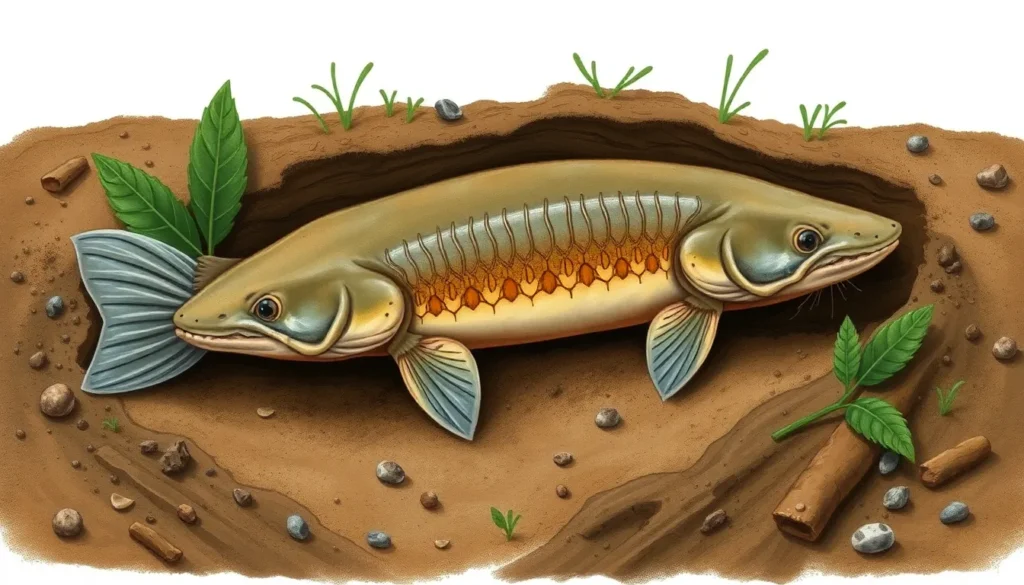
- Estivation is a drought survival strategy. Lungfish enter a state of estivation during dry periods, reducing their metabolic rate significantly to conserve energy.
- Lungfish can survive for years without water. Certain species can remain in a dormant state for up to four years until conditions improve.
- They burrow into the mud. During estivation, lungfish create a mud cocoon, which protects them from desiccation.
- Estivation is triggered by environmental cues. Changes in temperature, humidity, and water availability signal lungfish to enter estivation.
- Lungfish have a unique evolutionary history. Fossil records indicate that lungfish have existed for over 400 million years, making them one of the oldest living vertebrates.
- There are several species of lungfish. The four main species are the African lungfish, Australian lungfish, and two species of South American lungfish.
- They exhibit a mix of fish and amphibian traits. Lungfish have both gills and lungs, allowing them to thrive in aquatic and terrestrial environments.
- Lungfish can tolerate low water quality. Their ability to breathe air helps them survive in stagnant or polluted waters where other fish might perish.
- Estivation is a reversible process. When water returns, lungfish can rehydrate and resume normal activity within hours.
- They exhibit parental care. Some lungfish species show parental behaviors, such as guarding their eggs until they hatch.
- Estivation helps avoid competition. By entering a dormant state, lungfish can avoid competition for resources during droughts.
- They can reabsorb their own tissues. During long periods of estivation, lungfish can break down their own muscle tissue for energy.
- Lungfish are carnivorous. They primarily feed on smaller fish and invertebrates, using their elongated bodies to ambush prey.
- Their skin is adapted for moisture retention. The skin of a lungfish can absorb water, which helps prevent dehydration during estivation.
- They have a slow growth rate. Lungfish grow slowly, which contributes to their longevity in the wild.
- Lungfish are important in ecosystems. They play a crucial role in the food web, serving as both predator and prey in aquatic systems.
- Research on lungfish informs evolutionary biology. Studying lungfish helps scientists understand the transition from water to land in vertebrate evolution.
- Estivation affects reproduction. The timing of estivation can influence breeding cycles, as lungfish often breed after the rainy season.
- Climate change threatens their habitats. Altered rainfall patterns may impact lungfish estivation and survival in the wild.
- Lungfish can be found in various habitats. They inhabit freshwater lakes, swamps, and rivers across Africa, Australia, and South America.
Habitat and Behavior
Lungfish are primarily found in freshwater environments such as lakes, rivers, and swamps. They prefer shallow waters rich in vegetation, which provide both food and cover from predators. During dry seasons, they burrow into the mud and enter a state of estivation, significantly lowering their metabolic rate to conserve energy and moisture. This adaptation allows them to survive extended periods without water, resuming normal activity when conditions improve.
Why This Animal Matters
Lungfish play a significant ecological role as both predators and prey within their ecosystems. Their unique adaptations to survive droughts offer insights into evolutionary biology and the potential impacts of climate change on aquatic life. Additionally, their existence helps maintain biodiversity in freshwater habitats, making them an important species for conservation efforts.
Common Misconceptions
FAQ
What is estivation?
Estivation is a period of dormancy that some animals, including lungfish, enter during dry conditions to conserve energy and moisture.
How do lungfish breathe?
Lungfish can breathe both through gills and lungs, allowing them to extract oxygen from water and air.
What triggers estivation in lungfish?
Environmental factors such as temperature changes and decreased water availability trigger lungfish to enter estivation.



Leave a Reply