
Short Answer
21 Facts About Egyptian Vultures
- Scientific Name: The Egyptian vulture’s scientific name is Neophron percnopterus, placing it in the family Accipitridae.
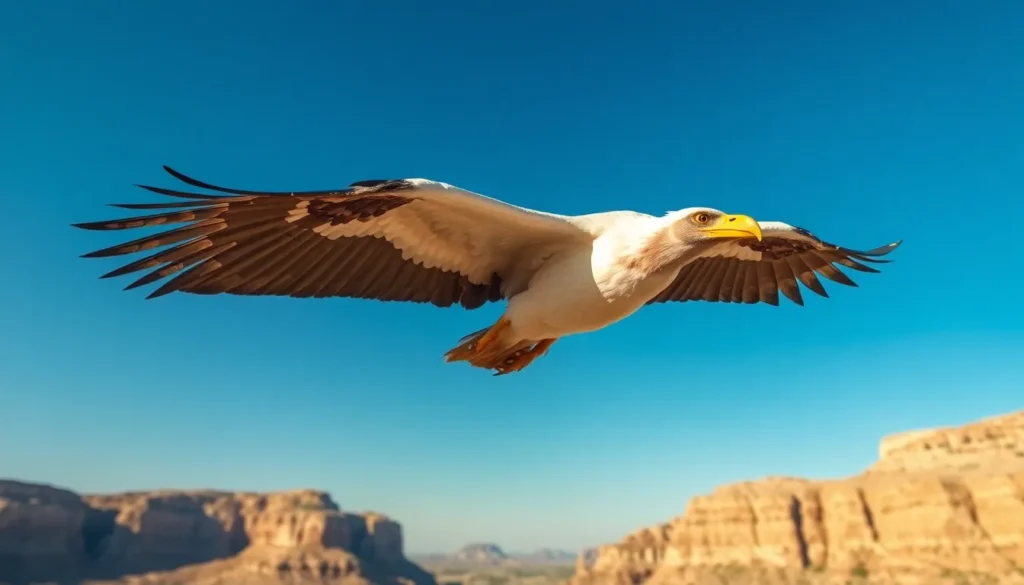
- Distinctive Appearance: It is a small vulture species with white plumage, black flight feathers, and a yellow face, making it easily recognizable.
- Tool Use: Egyptian vultures are one of the few bird species known to use tools, such as using rocks to break open large eggs like those of ostriches.
- Wide Range: They are found across southern Europe, northern Africa, and parts of Asia, including the Indian subcontinent.
- Diet: Primarily scavengers, they feed on carrion but also consume small mammals, eggs, and sometimes feces for minerals.
- Social Behavior: Egyptian vultures are generally solitary or found in small groups, especially around food sources.
- Migratory Patterns: Some populations are migratory, traveling considerable distances between breeding and wintering areas.
- Breeding: They typically build nests on cliffs, rocky outcrops, or sometimes in ruins, laying 1-3 eggs per season.
- Longevity: In the wild, Egyptian vultures can live up to 30 years, though exact data varies.
- Conservation Status: Classified as Endangered by the IUCN due to habitat loss, poisoning, and reduced food availability.
- Flight Characteristics: They have broad wings and a distinctive soaring flight, often seen gliding on thermals.
- Cultural Significance: Ancient Egyptians revered this species; it appears in hieroglyphs and was associated with protection.
- Salt and Mineral Intake: Egyptian vultures sometimes consume soil or feces to supplement their mineral intake.
- Facial Skin Color: The yellow color of their face is due to carotenoid pigments, which may signal health status.
- Adaptive Intelligence: Their ability to use tools indicates relatively high problem-solving skills among birds.
- Role in Ecosystem: By consuming carrion, they help prevent the spread of diseases and recycle nutrients.
- Threats: Besides habitat loss, they face risks from poisoning, electrocution on power lines, and collisions with wind turbines.
- Population Decline: Many regional populations have seen steep declines, prompting conservation efforts.
- Egg Predation: Their habit of breaking large eggs allows access to a nutritional resource few other birds can exploit.
- Communication: Egyptian vultures use visual signals and body language but are generally less vocal than other raptors.
- Lonely but Not Shy: Though often solitary, they can tolerate human presence and are sometimes seen near human habitation.
Habitat and Behavior
Egyptian vultures inhabit a variety of open and semi-open landscapes, including deserts, savannas, scrublands, and mountainous regions. They prefer areas where carrion is accessible, such as near human settlements, livestock grazing areas, and wild animal populations. Their nesting sites are typically cliffs or rocky outcrops, but they can also nest in man-made structures like ruins or buildings.
Behaviorally, Egyptian vultures are known for their intelligence and adaptability. Their tool use to access food is a notable example, setting them apart from many other scavenger birds. They soar on thermals to conserve energy during flight and are often seen alone or in small groups rather than large congregations. Their diet is diverse, ranging from carrion to small animals, eggs, and even mineral-rich substances like soil or feces.
Why This Animal Matters
Egyptian vultures play a critical ecological role as scavengers. By consuming carcasses, they help reduce the spread of diseases and contribute to nutrient recycling in their ecosystems. Their unique behaviors, such as tool use, make them important subjects for studies on avian intelligence and adaptation.
Culturally, Egyptian vultures have been significant since ancient times, especially in Egypt where they appeared in mythology and hieroglyphics. Their declining populations highlight broader environmental challenges, including habitat destruction and poisoning, making conservation efforts vital for maintaining biodiversity and ecosystem health.
Common Misconceptions
Misconception: Egyptian vultures are aggressive predators.
Correction: Egyptian vultures primarily scavenge and rarely hunt live prey. They are more likely to feed on carrion than to attack live animals.
Misconception: All vultures are large and bulky.
Correction: The Egyptian vulture is relatively small and slender compared to many other vulture species.
Misconception: Vultures are dirty and harmful to humans.
Correction: Vultures help maintain healthy environments by consuming dead animals and preventing disease spread.
Misconception: Egyptian vultures do not migrate.
Correction: Some populations of Egyptian vultures undertake seasonal migrations, traveling between breeding and wintering grounds.
Misconception: Vultures have poor eyesight.
Correction: Egyptian vultures have excellent eyesight, which aids them in locating food from great distances.
FAQ
What do Egyptian vultures eat?
Egyptian vultures primarily feed on carrion but also consume small mammals, eggs, and mineral-rich substances like soil or feces to supplement their diet.
Are Egyptian vultures endangered?
Yes, the Egyptian vulture is classified as Endangered by the IUCN due to factors such as habitat loss, poisoning, and reduced food availability.
Do Egyptian vultures migrate?
Some populations of Egyptian vultures undertake seasonal migrations between breeding and wintering areas, but this varies by region.



Leave a Reply