
Short Answer
21 Facts About Tent Caterpillars
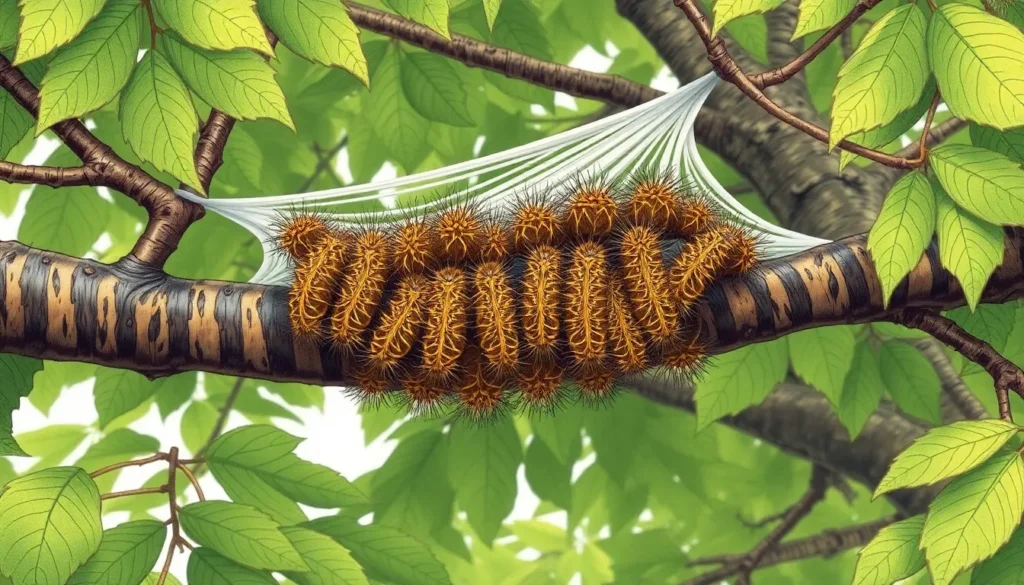
- Social Behavior: Tent caterpillars are known for their communal living, constructing silk tents in the branches of host trees where they gather for protection and warmth.
- Species Variety: There are several species of tent caterpillars, with the Eastern tent caterpillar (Malacosoma americanum) and the Western tent caterpillar (Malacosoma californicum) being among the most recognized.
- Life Cycle: Tent caterpillars undergo complete metamorphosis, passing through egg, larva (caterpillar), pupa, and adult moth stages.
- Egg Laying: Female moths lay eggs in masses around twigs, which overwinter and hatch in early spring.
- Silk Tents: The silk tents serve as communal shelters where caterpillars rest and bask in the sun to raise their body temperature.
- Feeding Habits: Tent caterpillars are folivores, primarily feeding on the leaves of deciduous trees such as cherry, apple, and hawthorn.
- Outbreaks: Populations can undergo cyclic outbreaks, during which caterpillars become highly abundant and can cause extensive defoliation.
- Predators and Parasitoids: Birds, wasps, and flies prey on tent caterpillars, and some parasitoid insects lay eggs in or on them, helping regulate their populations.
- Defensive Behavior: When threatened, tent caterpillars may thrash or regurgitate a foul-smelling liquid to deter predators.
- Temperature Regulation: The communal tents help caterpillars thermoregulate by providing a warmer microenvironment during cool mornings.
- Growth and Molting: Caterpillars grow through several instars, molting their exoskeleton multiple times before pupation.
- Pupation Location: Pupation usually occurs in sheltered areas such as bark crevices or leaf litter near the host tree.
- Adult Moths: Adult tent caterpillar moths are relatively short-lived, primarily focused on reproduction during their brief lifespan.
- Impact on Trees: While defoliation by tent caterpillars can stress trees, healthy trees typically recover without lasting damage.
- Ecological Role: Tent caterpillars serve as a food source for many animals and contribute to nutrient cycling by promoting leaf drop.
- Silk Production: The silk used to build tents is produced from specialized glands and is strong enough to hold multiple larvae together.
- Seasonal Timing: Tent caterpillars emerge in early spring, synchronizing with the budding of host tree leaves for optimal feeding.
- Communication: Caterpillars use tactile and chemical signals to coordinate group activities like feeding and tent maintenance.
- Geographical Distribution: Tent caterpillars are found throughout North America and parts of Asia, with species adapted to various climates and habitats.
- Population Control Methods: Natural predators and environmental factors typically keep tent caterpillar populations in balance, though human intervention may occur during outbreaks.
- Research Interest: Tent caterpillars have been studied extensively to understand insect social behavior, population dynamics, and forest ecology.
Habitat and Behavior
Tent caterpillars primarily inhabit deciduous forests and wooded areas where their preferred host trees, such as cherry, apple, and hawthorn, are abundant. They construct conspicuous silk tents in the forks of tree branches, which serve as communal shelters. This social behavior is crucial for thermoregulation, protection from predators, and coordination during feeding. The larvae emerge in early spring, timing their development to coincide with the availability of young leaves. Tent caterpillars are gregarious throughout their larval stage, feeding collectively on foliage and expanding their tents as they grow. After completing their larval development, they pupate in sheltered locations near the host trees before emerging as adult moths. Adults are short-lived and primarily focused on reproduction to continue the life cycle. Tent caterpillars’ population size fluctuates naturally, with periodic outbreaks causing noticeable defoliation in affected trees.
Why This Animal Matters
Tent caterpillars play a significant ecological role in forest ecosystems. By feeding on leaves, they influence tree growth and nutrient cycling; defoliation events can stimulate new growth and leaf turnover. They are an important food source for a variety of predators, including birds, small mammals, and parasitic insects, thereby supporting biodiversity. Additionally, their communal silk tents provide unique microhabitats for other organisms. Tent caterpillars also serve as model organisms in scientific studies of social insect behavior, population regulation, and forest health. While they can cause temporary damage to trees, their presence is generally a natural and integral part of ecosystem dynamics.
Common Misconceptions
Misconception: Tent caterpillars are harmful pests that kill trees.
Correction: While tent caterpillars can cause defoliation, healthy trees usually recover fully without permanent damage, and tent caterpillars are a natural part of many forest ecosystems.

Misconception: Tent caterpillars are the same as webworms.
Correction: Tent caterpillars and webworms are different species; tent caterpillars build tents in tree branches in early spring, whereas webworms create webbing around leaves and are active later in the summer.
Misconception: Tent caterpillars sting or pose a danger to humans.
Correction: Tent caterpillars do not sting or bite humans. They are generally harmless, though handling them may cause mild skin irritation in sensitive individuals.
FAQ
What do tent caterpillars eat?
Tent caterpillars primarily feed on the leaves of deciduous trees, including cherry, apple, and hawthorn species.
Are tent caterpillars harmful to trees?
While large populations can cause defoliation, healthy trees usually recover without permanent damage from tent caterpillar feeding.
How do tent caterpillars protect themselves?
They build communal silk tents for shelter and warmth, and they can deter predators by thrashing or releasing a foul-smelling liquid.






Leave a Reply