
Short Answer
21 Facts About Caracals
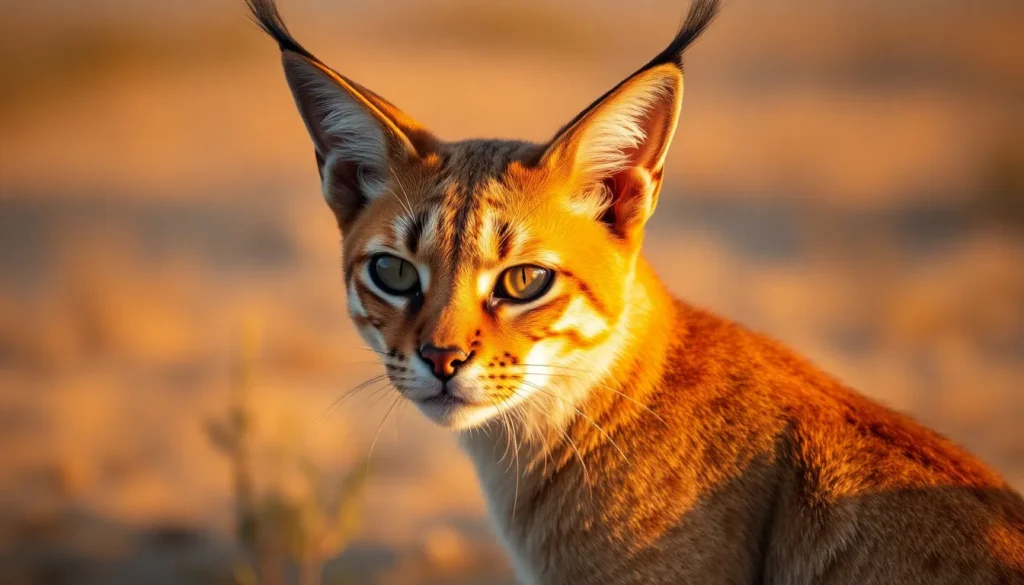
- Distinctive Ear Tufts: Caracals have long black tufts of hair on the tips of their ears, which may help with communication or camouflage.
- Medium Size: They are medium-sized cats, typically weighing between 8 to 19 kilograms (18 to 42 pounds).
- Scientific Name: Their scientific name is Caracal caracal.
- Geographic Range: Caracals are native to Africa, the Middle East, Central Asia, and parts of India.
- Habitat Variety: They inhabit savannas, woodlands, semi-deserts, and scrub forests.
- Powerful Jumpers: Caracals can leap up to 3 meters (10 feet) vertically to catch birds in mid-flight.
- Diet: Their diet mainly consists of birds, rodents, small mammals, and sometimes reptiles.
- Solitary Behavior: Caracals are mostly solitary animals except during mating season or when a mother is raising her young.
- Territorial: They mark and defend territories using scent markings and vocalizations.
- Stealthy Hunters: Known for their agility and speed, caracals use stealth to stalk prey before making a quick pounce.
- Communication: They use a variety of vocalizations including growls, hisses, and meows to communicate.
- Reproductive Facts: Female caracals usually give birth to litters of 1 to 4 cubs after a gestation period of about 78 to 81 days.
- Lifespan: In the wild, caracals live around 12 years, but they can live longer in captivity.
- Adaptations: Their powerful hind legs and muscular build aid in hunting and climbing.
- Camouflage: Their reddish-brown coat helps them blend into dry environments.
- Conservation Status: The International Union for Conservation of Nature (IUCN) lists caracals as Least Concern, but some local populations face threats.
- Human Interaction: Caracals rarely attack humans and tend to avoid human settlements.
- Historical Significance: Ancient Egyptians admired caracals and depicted them in their art.
- Hybridization: Caracals have been bred with domestic cats in some cases, resulting in hybrids known as caracats.
- Unique Vocalization: Unlike many wild cats, caracals cannot roar but produce a distinctive yowl.
- Night Activity: They are primarily nocturnal, hunting mostly at night or during dawn and dusk.
Habitat and Behavior
Caracals inhabit a variety of environments ranging from dry savannas and shrublands to mountainous regions and semi-deserts. Their adaptability to different habitats helps them survive in areas with varying prey availability and climatic conditions. These cats are solitary and territorial, using scent marking and vocalizations to communicate boundaries. Their hunting technique involves stalking prey silently before a powerful leap to capture birds or small mammals. Caracals are also known for their agility, which allows them to climb trees and leap great distances. Primarily nocturnal, they tend to avoid human contact and are elusive, making them difficult to study in the wild.
Why This Animal Matters
Caracals play a significant ecological role as mid-level predators, helping control populations of rodents, birds, and other small animals. This balance contributes to the health of their ecosystems by preventing overpopulation of prey species. Historically, caracals have held cultural importance in regions such as ancient Egypt, where they were admired for their grace and hunting abilities. Conservation-wise, while generally not endangered, local threats such as habitat loss and persecution can impact populations, making them important indicators of ecosystem health. Understanding caracals contributes to broader knowledge of biodiversity and predator-prey dynamics in their native habitats.
Common Misconceptions
Misconception: Caracals are dangerous to humans.
Correction: Caracals are shy and generally avoid humans. Attacks on humans are extremely rare.

Misconception: Caracals can roar like lions or tigers.
Correction: Caracals cannot roar; they produce distinctive yowls and other vocalizations instead.
Misconception: Caracals are large wild cats similar to cougars.
Correction: Caracals are medium-sized and smaller than cougars, with different physical and behavioral traits.
FAQ
Where do caracals live?
Caracals are found primarily in Africa, as well as parts of the Middle East, Central Asia, and India, inhabiting diverse environments such as savannas, woodlands, and semi-deserts.
What do caracals eat?
Caracals mainly feed on birds, small mammals like rodents, and sometimes reptiles, using their agility to catch prey mid-air or on the ground.
Are caracals dangerous to humans?
Caracals are generally shy and avoid humans. They are not considered dangerous and attacks on humans are extremely rare.






Leave a Reply