
Short Answer
21 Facts About Glass Frogs
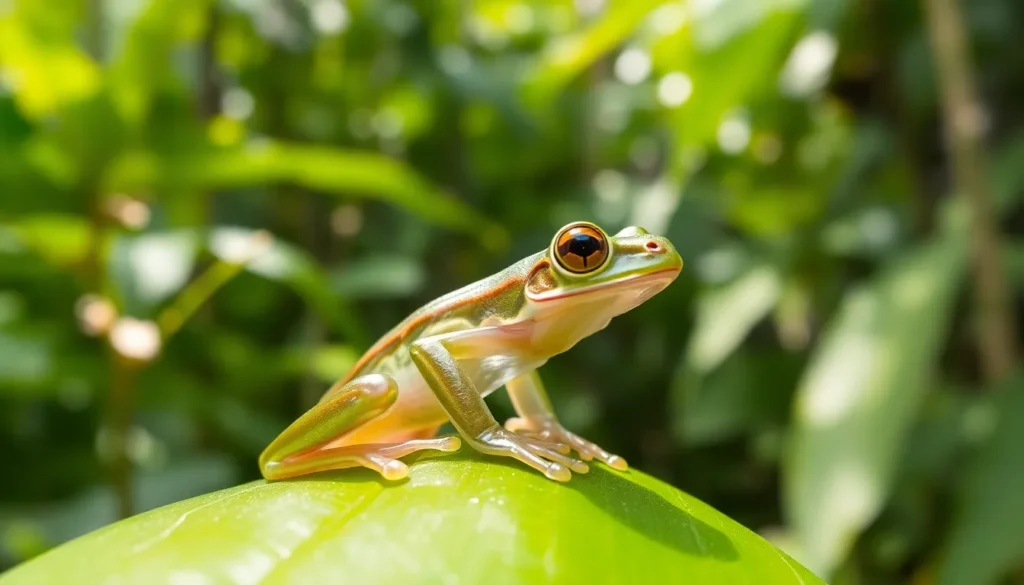
- Transparency of Skin: Glass frogs have translucent abdominal skin, making their internal organs partially visible from underneath. This feature is rare among amphibians.
- Family Centrolenidae: They belong to the family Centrolenidae, which includes about 150 species distributed mostly in Central and South America.
- Size Range: Most glass frogs are small, typically measuring between 3 to 7.5 centimeters in length.
- Habitat Preferences: They prefer humid montane rainforests and cloud forests, often found near streams and rivers.
- Nocturnal Activity: Glass frogs are primarily nocturnal, active during the night when they hunt and mate.
- Diet: Their diet mainly consists of small insects and other invertebrates.
- Reproductive Behavior: Males usually guard egg clutches laid on leaves overhanging water to protect them from predators and dehydration.
- Egg Development: Tadpoles drop into the water below after hatching, where they continue their development.
- Camouflage: Their green coloration and transparency help them blend in with leaves and avoid predators.
- Geographical Distribution: Glass frogs are found from southern Mexico through Central America to the northern Andes of South America.
- Unique Vocalizations: Males make distinct calls to attract females and establish territory.
- Threats: Habitat loss, pollution, and climate change pose significant threats to their populations.
- Conservation Status: Several species are considered vulnerable or endangered due to their limited ranges and habitat destruction.
- Scientific Interest: Their translucent skin has been studied for insights into camouflage and amphibian physiology.
- Variation Among Species: Some species have more opaque skin than others, and patterns of transparency can vary.
- Predator Avoidance: Their transparency is thought to reduce shadow casting, making it harder for predators to detect them.
- Lifecycle: Glass frogs undergo complete metamorphosis, from egg to tadpole to adult frog.
- Climbing Abilities: They have adhesive pads on their toes that help them climb vegetation near streams.
- Parental Care: In some species, males exhibit parental care by keeping eggs moist and defending them.
- Scientific Naming: The name ‘glass frog’ comes from the glass-like appearance of their translucent skin.
- Research Importance: They serve as indicators of environmental health in tropical ecosystems.
Habitat and Behavior
Glass frogs inhabit humid tropical and subtropical forests, especially cloud forests and montane rainforests, often at elevations ranging from 200 to 3,000 meters. They typically live near clean, flowing streams since their reproductive cycle depends on water for tadpole development. Their nocturnal habits involve foraging for small insects during the night, while during the day they rest on the undersides of leaves. Their unique translucent skin provides camouflage, blending with the foliage and making them difficult to spot. Males are territorial and use vocalizations to attract mates and warn rivals. Parental care varies but generally includes guarding and moistening eggs to increase survival rates. Their climbing ability is aided by specialized toe pads that help them navigate wet leaves and branches.
Why This Animal Matters
Glass frogs play a critical ecological role as both predators and prey within their ecosystems. By consuming insects, they help control pest populations and contribute to the balance of tropical forest food webs. Their sensitivity to environmental changes makes them valuable bioindicators for monitoring ecosystem health and the impacts of habitat disturbance or pollution. Culturally, their distinctive appearance and behaviors have intrigued researchers and naturalists, inspiring studies in evolutionary biology and physiology. Conservation efforts aimed at protecting glass frogs also help preserve broader biodiversity and the integrity of tropical forest habitats, which are some of the most species-rich areas on Earth.
Common Misconceptions
Misconception: Glass frogs are completely transparent.
Correction: While their abdominal skin is translucent, allowing visibility of some internal organs, their dorsal skin is typically green and opaque, providing camouflage.
Misconception: Glass frogs are related to glass snakes.
Correction: Glass frogs are amphibians, whereas glass snakes are legless lizards; they are not related despite the similarity in name.
Misconception: Glass frogs can see through themselves like glass.
Correction: The transparency is limited to certain skin areas and does not make the entire frog see-through; it serves as camouflage rather than literal glass-like vision.
FAQ
Why are glass frogs called 'glass' frogs?
They are called glass frogs because their translucent abdominal skin allows visibility of their internal organs, creating a glass-like appearance.
Do glass frogs live in water?
Glass frogs are arboreal and live mostly in trees near streams; their tadpoles develop in water after hatching.
Are glass frogs endangered?
Some species of glass frogs are considered vulnerable or endangered due to habitat loss and environmental threats.


Leave a Reply