
Short Answer
21 Facts About Servals
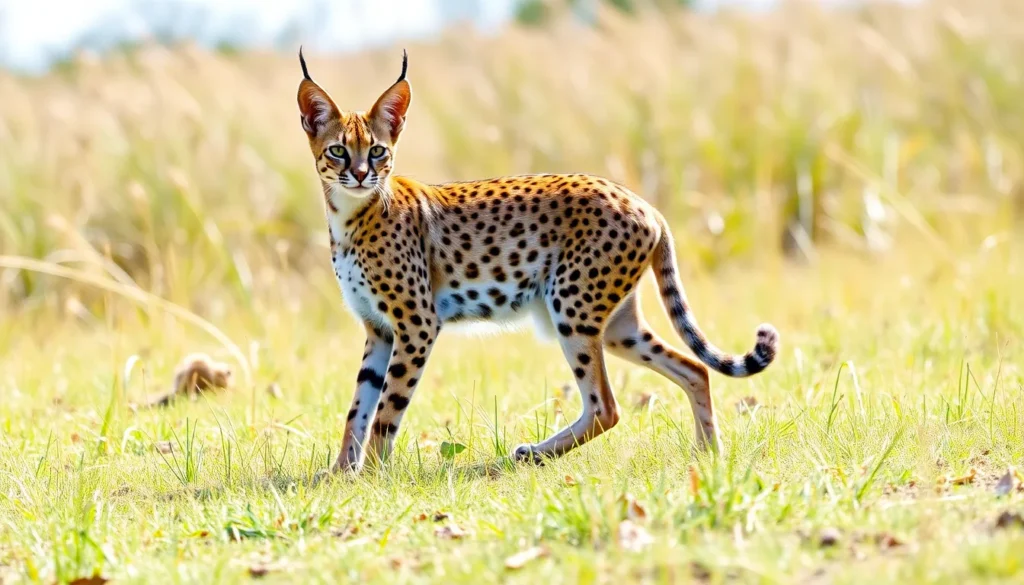
- Servals have long legs compared to their body size. Their legs are the longest relative to body size among all cats, aiding in their ability to jump and catch prey.
- They possess a distinctive spotted and striped coat. Their fur pattern provides camouflage in tall grasses and bushland.
- Servals are native to sub-Saharan Africa. They are found in a variety of habitats but prefer areas with water and dense vegetation.
- They are solitary animals. Servals typically live and hunt alone, except during mating season or when a mother is raising kittens.
- Servals are excellent jumpers. They can leap vertically up to 3 meters (about 10 feet) to catch birds in flight.
- They primarily hunt small animals. Their diet includes rodents, birds, frogs, insects, and occasionally fish.
- Servals use their large ears for acute hearing. Their ears can rotate independently to detect the faintest sounds of prey moving underground or in dense vegetation.
- They have a unique hunting technique involving pouncing. Servals often stalk prey silently before making a high leap to surprise it.
- Servals communicate through vocalizations and scent marking. They use a range of sounds including purrs, hisses, and growls to communicate with others.
- The average serval weighs between 9 and 18 kilograms. Their size allows them to be agile hunters in their environment.
- They have retractable claws. Like other cats, their claws stay sharp by retracting when not in use.
- Servals have a relatively short tail. Their tail length ranges from 20 to 40 centimeters, shorter than many other wild cats.
- They are primarily nocturnal but can be active during the day. Servals adapt their activity patterns based on prey availability and environmental conditions.
- Serval kittens are born blind and helpless. They open their eyes after about 10 days and stay with their mother for around six months.
- They mark territory with urine and feces. Territory marking helps reduce conflicts between individuals.
- Servals have been observed to swim but generally avoid water. Unlike some other wild cats, they rarely enter water bodies unless necessary.
- They are not considered endangered but face threats from habitat loss and hunting. The International Union for Conservation of Nature (IUCN) lists them as Least Concern but notes localized threats.
- Servals have been occasionally kept as exotic pets. However, their wild nature and specialized needs make them challenging to keep in captivity.
- They play a vital role in controlling rodent populations. By preying on rodents and other small animals, servals help maintain ecological balance.
- Servals belong to the Felidae family and the genus Leptailurus. They are the only species within this genus, distinct from other African wild cats.
- They have a high reproductive rate compared to some other wild cats. Females can give birth to two to three kittens per litter, with multiple litters in a year under favorable conditions.
Habitat and Behavior
Servals inhabit a wide range of environments across sub-Saharan Africa, including savannas, wetlands, grasslands, and forest edges. They prefer areas with abundant water sources and dense vegetation, which provide ample cover for stalking prey and protection from predators. As solitary and territorial animals, servals use scent marking to establish and defend their home ranges. Their behavior is largely nocturnal, although they may hunt during daylight hours depending on prey availability. Skilled climbers and jumpers, servals use their agility to capture a variety of prey, demonstrating remarkable hunting techniques such as high leaps and silent stalking. These cats are generally shy and elusive, avoiding human interaction whenever possible.
Why This Animal Matters
Servals play a crucial ecological role as mid-sized predators. By controlling populations of rodents, birds, and insects, they help maintain the health of ecosystems and reduce crop damage caused by pests. Their presence indicates a healthy environment with sufficient prey and habitat complexity. Culturally, servals have appeared in African folklore and are recognized for their striking appearance and hunting prowess. Conservation-wise, while servals are currently listed as Least Concern by the IUCN, ongoing habitat loss and illegal hunting pressures highlight the need for monitoring and habitat protection to ensure stable populations.
Common Misconceptions
Misconception: Servals are just small versions of domestic cats.
Correction: Servals are wild cats with distinct anatomy, behavior, and ecological roles, significantly different from domestic cats in size, hunting ability, and habitat requirements.
Misconception: Servals can easily be kept as pets.
Correction: Although some people keep servals as exotic pets, they require specialized care, large territories, and are not domesticated, making them unsuitable for most household environments.
Misconception: Servals only live in deserts or dry areas.
Correction: Servals prefer habitats with water and dense vegetation, such as wetlands and grasslands, rather than arid or desert regions.
FAQ
What do servals eat?
Servals primarily hunt small animals such as rodents, birds, frogs, insects, and occasionally fish. They use their keen hearing and agility to catch prey efficiently.
Are servals endangered?
Servals are currently listed as Least Concern by the IUCN. However, they face localized threats from habitat loss and hunting, which require monitoring and conservation efforts.
Can servals be kept as pets?
While servals are sometimes kept as exotic pets, they are wild animals with specialized needs and behaviors. They require large territories and expert care, making them unsuitable for most private owners.



Leave a Reply