
Short Answer
21 Facts About Hindgut Fermenters
- Definition of Hindgut Fermentation
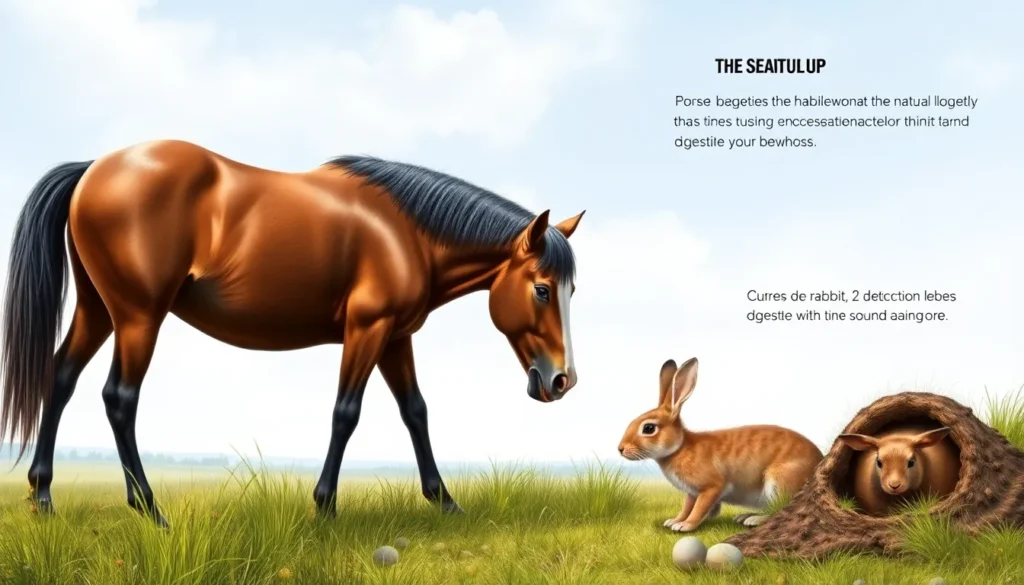
Hindgut fermenters are animals that digest plant fiber primarily in the cecum and large intestine, unlike foregut fermenters that ferment in the stomach. - Examples Include Horses and Rabbits
These species are classic examples of hindgut fermenters, adapted to digest cellulose-rich diets. - Large Cecum and Colon
They possess an enlarged cecum and colon where microbial fermentation breaks down fibrous material. - Microbial Fermentation
Microorganisms in the hindgut break down cellulose into volatile fatty acids, which are absorbed as an energy source. - Coprophagy in Rabbits
Rabbits practice coprophagy, re-ingesting certain soft feces to extract additional nutrients, particularly B vitamins and amino acids. - Non-Ruminant Digestion
Unlike ruminants which ferment before the stomach, hindgut fermenters ferment after the stomach, limiting some nutrient absorption. - Rapid Food Passage
Food passes relatively quickly through their digestive system compared to foregut fermenters, requiring large food intake volumes. - Dietary Adaptations
They primarily consume grasses, hay, and other fibrous plants adapted to their fermentation process. - Energy Efficiency
While less efficient than ruminants at extracting nutrients, hindgut fermentation allows quick access to energy from fibrous diets. - Dental Adaptations
Horses and rabbits have continuously growing teeth adapted to grinding fibrous plant material. - Water Requirements
Hindgut fermenters often require ample water intake to aid digestion and fermentation. - Role of Volatile Fatty Acids
These acids produced by fermentation serve as a primary energy source for the animal. - Varying Digestive Tract Lengths
The length of the digestive tract varies among hindgut fermenters, with horses having a notably long colon. - Fiber Digestion Limitations
Some highly lignified fibers are less digestible, limiting dietary choices. - Behavioral Adaptations for Digestion
Rabbits are crepuscular, feeding during dawn and dusk to optimize digestion and avoid predators. - Impact on Nutrient Recycling
Coprophagy helps rabbits recycle nutrients otherwise lost in feces, enhancing survival on low-nutrient diets. - Susceptibility to Digestive Disorders
Hindgut fermenters can suffer colic, diarrhea, or other digestive issues if their diet is inappropriate. - Evolutionary Adaptations
The development of hindgut fermentation allowed these animals to exploit fibrous plants widespread in grasslands. - Ecological Role
By consuming large quantities of fibrous plants, they influence plant community structure and nutrient cycling. - Domestication and Human Use
Horses have been domesticated for thousands of years, while rabbits have been farmed and kept as pets. - Conservation Considerations
Understanding their digestive physiology is important for captive care and habitat management.
Habitat and Behavior
Hindgut fermenters such as horses and rabbits inhabit diverse environments ranging from grasslands and savannas to woodlands and deserts. Horses, both wild and domesticated, typically prefer open plains where grasses dominate, while rabbits often occupy burrows in varied habitats including meadows, forests, and even semi-arid regions. Behaviorally, these animals exhibit feeding patterns aligned with their digestive systems. Horses graze for many hours daily to meet their high fiber dietary needs, whereas rabbits feed in short, frequent bouts, often during low predator activity periods like dawn and dusk. Hindgut fermentation allows them to efficiently process large quantities of fibrous plant material, facilitating survival in environments where such plants are the primary food source. Additionally, hindgut fermenters often have social structures that influence feeding and movement; for example, wild horses live in herds with complex social hierarchies, while rabbits may live solitarily or in colonies depending on species.
Why This Animal Matters
Hindgut fermenters play a significant ecological role by consuming and breaking down cellulose-rich vegetation, which many other animals cannot digest efficiently. This activity helps maintain grassland ecosystems by controlling plant growth and facilitating nutrient cycling through their waste products. Horses, in particular, have been integral to human culture and development, serving as transportation, labor, and companionship animals for millennia. Rabbits contribute to ecosystems by serving as prey for various predators, thus supporting food webs. Conservation of these species and understanding their digestive physiology is essential for sustainable management, especially as habitat loss and domestication pressures alter their natural living conditions. Their unique digestive adaptations also provide insight into evolutionary biology and animal nutrition.
Common Misconceptions
Misconception: Hindgut fermenters digest fiber as efficiently as ruminants.
Correction: While hindgut fermenters can break down fiber, they are generally less efficient than ruminants because fermentation occurs after the stomach, limiting nutrient absorption.
Misconception: Rabbits eating their feces is unhealthy.
Correction: Coprophagy is a natural and necessary behavior in rabbits that allows them to absorb essential nutrients produced during hindgut fermentation.
FAQ
What is hindgut fermentation?
Hindgut fermentation is a digestive process where fibrous plant material is broken down by microbes in the cecum and large intestine, producing volatile fatty acids that the animal absorbs for energy.
Why do rabbits eat their feces?
Rabbits perform coprophagy by consuming soft feces called cecotropes to re-digest nutrients such as vitamins and amino acids produced during hindgut fermentation that would otherwise be lost.
How is hindgut fermentation different from ruminant digestion?
Ruminants ferment plant material in a specialized stomach chamber before digestion, allowing more thorough nutrient extraction, whereas hindgut fermenters ferment in the large intestine after the stomach, resulting in faster digestion but less nutrient absorption.

Leave a Reply