
Short Answer
21 Facts About Nautilus
- Living Fossil: Nautiluses are considered living fossils, having remained relatively unchanged for over 500 million years, dating back to the late Cambrian period.
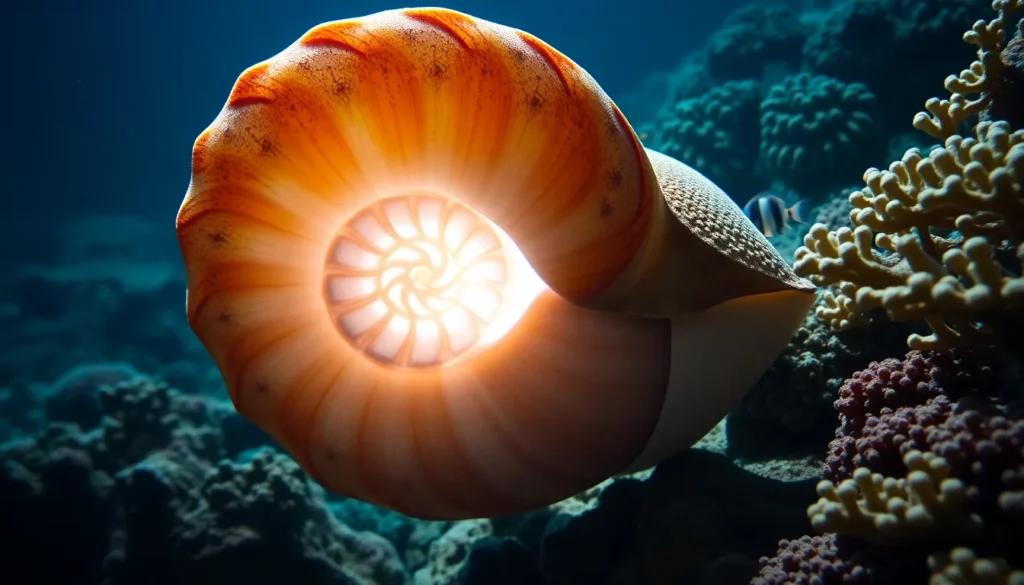
- Distinctive Shell: The nautilus has a coiled, chambered shell that is both buoyant and protective.
- Chambered Shell Function: The shell is divided into chambers that the nautilus uses to regulate buoyancy by adjusting gas and fluid levels.
- Number of Species: There are approximately six recognized species of nautilus, primarily in the genus Nautilus.
- Habitat Range: Nautiluses are found mainly in the deep slopes of coral reefs in the Indo-Pacific region.
- Depth Range: They typically inhabit depths between 100 and 500 meters but can sometimes be found as deep as 700 meters.
- Nocturnal Behavior: Nautiluses are primarily nocturnal, coming to shallower waters at night to feed.
- Diet: Their diet mainly consists of crustaceans, carrion, and small fish.
- Locomotion: Nautiluses move by jet propulsion, expelling water through a siphon to navigate.
- Vision: Nautiluses have simple pinhole eyes without lenses, relying on light and shadow detection rather than sharp images.
- Longevity: They can live up to 20 years in the wild, which is long compared to many other cephalopods.
- Reproduction: Nautiluses reproduce slowly, with females laying relatively few eggs that take many months to hatch.
- Shell Growth: The nautilus adds new chambers to its shell as it grows, sealing off older ones for buoyancy control.
- Predators: Natural predators include large fish, octopuses, and some sharks.
- Conservation Status: Some nautilus species are considered vulnerable due to overfishing for their shells and habitat degradation.
- Shell Use by Humans: Nautilus shells have been used ornamentally and commercially, but this has contributed to population pressures.
- Slow Movement: Nautiluses are relatively slow-moving animals compared to other cephalopods.
- Shell Pattern: The shell’s exterior features distinctive brown and white stripes or spots, which vary by species.
- Evolutionary Significance: Nautiluses provide insight into early cephalopod evolution due to their primitive features.
- Unique Respiratory System: They possess two gills, unlike more advanced cephalopods that have one.
- Scientific Study: Nautiluses are studied for their unique shell structure, buoyancy mechanisms, and evolutionary history.
Habitat and Behavior
Nautiluses inhabit the deep slopes of coral reefs primarily in the Indo-Pacific region, including areas around Australia, Fiji, and the Philippines. They live in depths ranging from 100 to 500 meters, occasionally venturing deeper. Their preference for steep reef slopes allows them to avoid many predators and access food sources. Nocturnal by nature, nautiluses ascend at night to forage for crustaceans, carrion, and small fish. Their movement relies on jet propulsion created by expelling water through a funnel-shaped siphon, enabling them to navigate the complex underwater terrain. They use their simple pinhole eyes to detect changes in light and shadow, compensating for their lack of image-forming lenses. Slow-growing and long-lived, nautiluses reproduce infrequently, laying a small number of eggs that require several months to develop.
Why This Animal Matters
The nautilus plays a significant ecological role in marine ecosystems as both predator and prey. By feeding on bottom-dwelling organisms and scavenging carrion, it contributes to nutrient cycling in reef environments. The species’ long evolutionary history provides valuable insights into cephalopod evolution and the survival of ancient marine lineages. Nautiluses have also attracted cultural interest, symbolizing mystery and longevity due to their unique shells and ancient origins. Conservation concerns arise from their slow reproduction and collection for their attractive shells, highlighting the importance of sustainable management to preserve their populations and the ecological balance of reef systems.
Common Misconceptions
Misconception: Nautiluses are closely related to squids and octopuses.
Correction: While all are cephalopods, nautiluses belong to a distinct subclass (Nautiloidea) and retain many primitive features, unlike the more derived coleoids (squids and octopuses).
Misconception: Nautiluses use their shells for protection only.
Correction: The shell serves both as protection and as a buoyancy aid, with internal chambers regulating gas and fluid for vertical movement.
Misconception: Nautiluses have highly developed eyes like other cephalopods.
Correction: Nautiluses have simple pinhole eyes without lenses, limiting their vision to light detection rather than detailed images.
FAQ
What is a nautilus?
A nautilus is a marine mollusk belonging to the cephalopod family, known for its distinctive coiled and chambered shell, which it uses for buoyancy and protection.
How does the nautilus control its buoyancy?
The nautilus adjusts the gas and fluid within the chambers of its shell to regulate its buoyancy, allowing it to move vertically in the water column.
Are nautiluses endangered?
Some species of nautilus are considered vulnerable due to overfishing for their shells and habitat degradation, prompting conservation concerns.


Leave a Reply