
Short Answer
21 Facts About Kudus (Antelopes)
- Kudus belong to the genus Tragelaphus. They are part of the Bovidae family and closely related to other spiral-horned antelopes.
- There are two main species: the greater kudu (Tragelaphus strepsiceros) and the lesser kudu (Tragelaphus imberbis), differing mainly in size and horn shape.
- Greater kudus are among the largest antelopes. Males can weigh up to 270 kilograms (600 pounds) and stand about 1.5 meters tall at the shoulder.
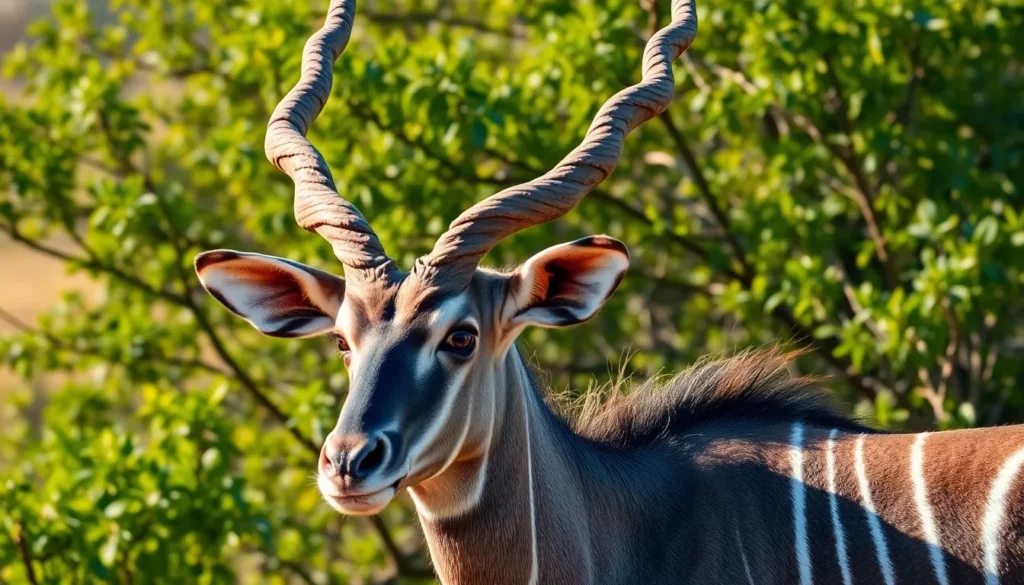
- Only male kudus have horns. Their horns are long, twisted, and can reach lengths of up to 1.8 meters (6 feet).
- The horns have two and a half to three twists. This spiral shape is unique and serves as a defense mechanism and a tool during fights for dominance.
- Kudus have distinctive white stripes on their bodies. Greater kudus usually have 6 to 10 vertical white stripes that help camouflage them in dense bush.
- Both species exhibit sexual dimorphism. Males are significantly larger and horned, while females are smaller and hornless.
- Kudus are browsers rather than grazers. They feed mostly on leaves, shoots, and occasionally fruits from shrubs and trees.
- Kudus are crepuscular. They are most active during early morning and late afternoon, resting in dense vegetation during the heat of the day.
- They are agile and can jump up to 2.5 meters high. This ability helps them escape predators by leaping over obstacles in their environment.
- Kudus rely heavily on their hearing and sense of smell. They have large ears that can rotate independently to detect sounds from various directions.
- Greater kudus live in savannas, woodlands, and bushlands. Lesser kudus prefer more arid, scrubby environments and dense thickets.
- Kudus are generally shy and elusive animals. They avoid open spaces and human presence, making them difficult to observe in the wild.
- Social structure varies between species. Greater kudus often form small groups of females and offspring, while males tend to be solitary or form bachelor groups.
- Male kudus engage in ritualized horn fights. These contests determine dominance and access to females during the breeding season.
- Gestation lasts about 7 to 8 months. Females typically give birth to a single calf, which remains hidden for several weeks to avoid predators.
- Kudus have several natural predators. These include lions, leopards, wild dogs, and hyenas.
- Kudus play an important role in their ecosystems. As browsers, they help control vegetation growth and serve as prey for large carnivores.
- They are culturally significant in some African communities. Their horns and hides are often used in traditional ceremonies and crafts.
- Kudus face threats from habitat loss and hunting. Although not currently endangered, some localized populations are vulnerable due to human activities.
- Conservation efforts focus on habitat protection and regulated hunting. National parks and reserves provide safe environments for kudus to thrive.
Habitat and Behavior
Kudus inhabit a variety of environments across eastern and southern Africa, including savannas, woodlands, and dense bush. The greater kudu is more widespread and adaptable, while the lesser kudu prefers dry, dense thickets often near water sources. Kudus are primarily browsers, feeding on leaves, shoots, and fruits rather than grass, which influences their habitat preference for areas with abundant shrubbery.
Behaviorally, kudus are mostly crepuscular, active during dawn and dusk to avoid midday heat and predators. They are known for their agility, able to leap high and navigate dense vegetation to escape threats. Social structure varies; females and young form small groups, but adult males tend to be solitary except during mating season. Males use their impressive spiral horns in ritual combat to establish dominance and breeding rights.
Why This Animal Matters
Kudus play a crucial ecological role as browsers, contributing to vegetation management and serving as prey for several large African predators. Their grazing patterns influence plant community dynamics, while their presence supports biodiversity. Culturally, kudus hold significance in various African traditions where their horns and hides are valued. Conservation of kudus is important not only for maintaining ecosystem balance but also for preserving wildlife heritage and supporting sustainable tourism in protected areas.
Common Misconceptions
Misconception: All antelopes have straight horns.
Correction: Kudus are notable for their uniquely twisted horns, which are spiraled and can reach impressive lengths.
Misconception: Only female kudus have horns.
Correction: Only male kudus possess horns; females are hornless.
Misconception: Kudus are grazers like most antelopes.
Correction: Kudus are primarily browsers, feeding on leaves and shoots rather than grass.
Misconception: Kudus are aggressive animals.
Correction: Kudus are generally shy and elusive, avoiding confrontation unless males engage in ritual combat during mating season.
Misconception: Kudus are endangered everywhere.
Correction: While some populations face threats, kudus as a species are not currently endangered and have stable populations in many protected areas.
FAQ
What is the difference between greater and lesser kudus?
Greater kudus are larger, with longer horns and more prominent body stripes, while lesser kudus are smaller, have shorter horns, and prefer drier, thicket habitats.
Do both male and female kudus have horns?
No, only male kudus have the long, twisted horns. Females are hornless.
What do kudus eat?
Kudus are primarily browsers, feeding on leaves, shoots, and fruits from bushes and trees rather than grazing on grass.


Leave a Reply