
Short Answer
21 Facts About Platypuses
- Unique Mammal: Platypuses are one of the few monotremes, mammals that lay eggs instead of giving birth to live young.
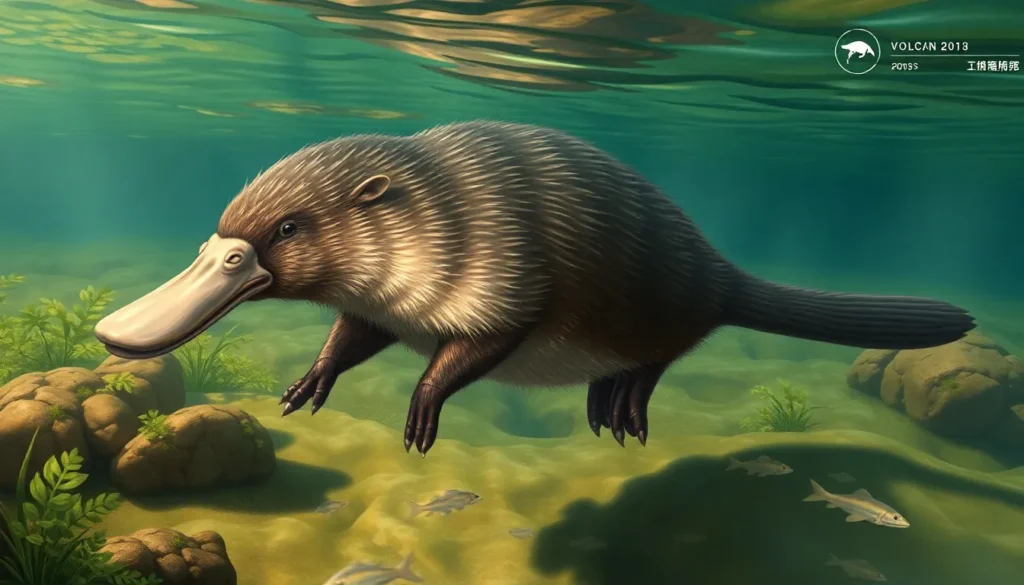
- Duck-Billed Appearance: Their most recognizable feature is a broad, flat bill resembling that of a duck, which is highly sensitive to electrical signals.
- Electrolocation Ability: Platypuses use electrolocation to hunt underwater, detecting electric fields generated by the muscles and nerves of prey.
- Venomous Spurs: Males have venomous spurs on their hind legs, which can deliver painful venom during the breeding season.
- Webbed Feet: Their feet are webbed, aiding in swimming, but the webs retract when on land to expose sharp claws for digging.
- Habitat: Platypuses live in freshwater rivers and lakes, primarily in eastern Australia and Tasmania.
- Diet: They primarily eat aquatic invertebrates, small fish, and amphibians, foraging underwater using their bill to sift through sediment.
- Fur: Their dense, waterproof fur keeps them warm and dry while swimming in cold water.
- Reproduction: Females lay one to three eggs and incubate them in burrows for about ten days before hatching.
- No Nipples: Platypus mothers secrete milk through specialized mammary gland ducts onto the skin, as they lack nipples.
- Lifespan: In the wild, platypuses can live around 10 to 17 years.
- No Stomach: Unlike most vertebrates, platypuses lack a true stomach; their esophagus connects directly to their intestines.
- Conservation Status: The platypus is currently classified as Near Threatened due to habitat destruction and water pollution.
- Historical Mystery: When first discovered by Europeans, the platypus was thought to be a hoax due to its unusual combination of traits.
- Low Body Temperature: Platypuses have a lower body temperature (about 32°C) compared to most mammals.
- Size: Adults typically measure 40 to 50 cm in length and weigh between 1 to 2.4 kilograms.
- Burrowing: They construct burrows for shelter and nesting along riverbanks.
- Activity Pattern: Platypuses are mostly nocturnal or crepuscular, being most active at dawn and dusk.
- Swimming Technique: They swim by paddling with their front feet and steering with their hind feet and tail.
- Genetic Significance: The platypus genome combines features of birds, reptiles, and mammals, providing insights into evolutionary biology.
- Role in Culture: The platypus holds significance in Indigenous Australian cultures and has become an iconic symbol of Australian wildlife.
Habitat and Behavior
Platypuses inhabit freshwater environments such as rivers, streams, and lakes in eastern Australia and Tasmania. They require clean, unpolluted water with abundant prey and riverbanks suitable for burrowing. Platypuses are primarily nocturnal and crepuscular, spending daylight hours resting in burrows. They are excellent swimmers, using webbed front feet for propulsion and hind feet and tail for steering. Their diet consists mainly of aquatic invertebrates, which they locate using electroreceptors on their bills while underwater. Platypuses close their eyes, ears, and nostrils when diving. They are solitary animals, coming together only during the breeding season. Burrows serve as shelters and nest sites, with females laying eggs and caring for young until they are independent.
Why This Animal Matters
The platypus plays an important ecological role as a predator of aquatic invertebrates, helping maintain balanced freshwater ecosystems. Its presence is an indicator of healthy water systems. Culturally, the platypus is significant to Indigenous Australians and symbolizes Australia’s unique fauna globally. Scientifically, the platypus provides valuable evolutionary insights due to its mix of reptilian and mammalian features, making it a subject of extensive research. Conservation efforts are vital to protect this Near Threatened species from habitat loss, pollution, and climate change effects.
Common Misconceptions
Misconception: Platypuses are related to ducks because of their bills.
Correction: Platypuses are mammals, not birds, and their duck-like bill is a unique adaptation unrelated to true ducks.
Misconception: Platypuses are dangerous to humans.
Correction: While male platypuses can deliver venomous spur strikes, these are rarely life-threatening to humans and are mainly used in intraspecies competition.
Misconception: Platypuses lay eggs like reptiles or birds.
Correction: Platypuses are monotremes, a rare group of egg-laying mammals, combining mammalian and reptilian reproductive traits.
Misconception: Platypuses have nipples for feeding their young.
Correction: Platypus mothers secrete milk through specialized skin patches, as they lack nipples.
FAQ
Are platypuses mammals or reptiles?
Platypuses are mammals, specifically monotremes, a group of egg-laying mammals that combine features of reptiles and mammals.
Do platypuses have venom?
Yes, male platypuses have venomous spurs on their hind legs, which can cause pain but are not fatal to humans.
How do platypuses feed their young without nipples?
Platypus mothers secrete milk through mammary gland ducts onto the skin, allowing the young to lap it up.

Leave a Reply