
Short Answer
21 Facts About Komodo Dragons
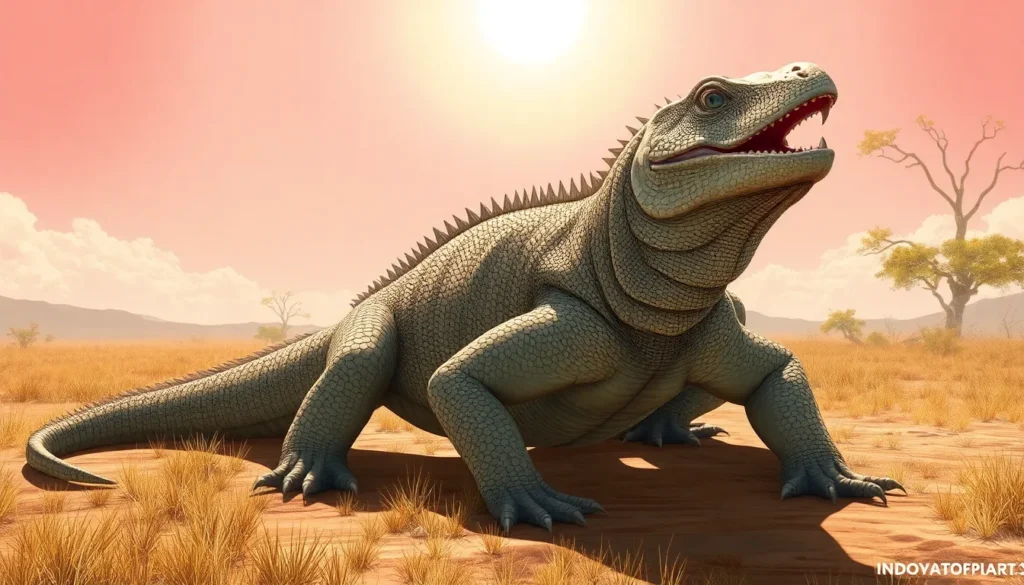
- Largest living lizard: Komodo dragons (Varanus komodoensis) are the largest living species of lizard, with some individuals reaching lengths of up to 3 meters (10 feet).
- Endemic to Indonesia: They are native to a handful of Indonesian islands, including Komodo, Rinca, Flores, Gili Motang, and Padar.
- Powerful predators: Komodo dragons are apex predators in their environment, capable of hunting large prey such as deer, pigs, and water buffalo.
- Venomous bite: Unlike earlier beliefs that bacteria in their saliva caused prey infections, Komodo dragons possess venom glands that produce toxic proteins aiding in prey immobilization.
- Strong sense of smell: They use their long, forked tongue to detect scents, allowing them to locate carrion or prey from several kilometers away.
- Cold-blooded metabolism: As reptiles, they rely on external heat sources to regulate their body temperature and can often be seen basking in the sun.
- Solitary animals: Komodo dragons are generally solitary outside of mating and feeding, often competing aggressively for food.
- Slow but powerful: Despite their bulky size, they can run briefly at speeds up to 20 km/h (12 mph) to ambush prey.
- Reproduction and parthenogenesis: Females can reproduce both sexually and through parthenogenesis, where eggs develop without fertilization.
- Long lifespan: In the wild, Komodo dragons can live around 30 years, with some individuals living longer in captivity.
- Egg incubation: Komodo dragon eggs incubate for about 7-8 months before hatching.
- Juvenile survival tactics: Young Komodo dragons are arboreal and spend much of their time in trees to avoid predation by adults.
- Conservation status: Classified as Vulnerable by the IUCN due to habitat loss, poaching, and human activities.
- Role in culture: Komodo dragons are significant in Indonesian culture and folklore, often symbolizing strength and mystique.
- Scientific discovery: Western scientists first documented Komodo dragons in 1910, sparking global interest.
- Complex social behavior: They exhibit dominance hierarchies, especially around kills, with larger individuals asserting priority access to food.
- Adapted teeth and claws: Their serrated teeth and strong claws assist in tearing flesh and climbing.
- Thermoregulation: Komodo dragons can adjust their body temperature by moving between sun-exposed and shaded areas.
- Swimming ability: They are capable swimmers and can cross between islands when necessary.
- Scientific research: Ongoing studies focus on their venom composition, behavior, and conservation strategies.
- Ecological impact: As apex predators and scavengers, they help maintain the balance of their island ecosystems.
Habitat and Behavior
Komodo dragons inhabit dry, open grasslands, savannas, and tropical forests on several Indonesian islands. They prefer hot and relatively arid environments, often found near water sources. Their behavior is primarily solitary, except during mating season or when feeding on large carcasses. Komodo dragons employ ambush hunting tactics, using stealth and bursts of speed to capture prey. They also scavenge, relying on their keen sense of smell to locate carrion. Juvenile dragons spend considerable time in trees to avoid predation by adults, gradually descending to the ground as they grow larger and more capable of defending themselves.
Why This Animal Matters
Komodo dragons play a critical role as apex predators and scavengers in their ecosystems, helping regulate populations of prey animals and cleaning up carrion, which reduces disease spread. Their unique evolutionary traits, such as venom use and parthenogenetic reproduction, make them subjects of scientific interest. Culturally, they hold significance in Indonesian traditions and attract ecotourism, which can contribute to local economies when managed sustainably. Conservation efforts are vital to protect their limited habitats from human encroachment and ensure the survival of this distinctive species.
Common Misconceptions
Misconception: Komodo dragons kill prey primarily through bacteria in their saliva.
Correction: Research has shown that Komodo dragons possess venom glands producing toxins that aid in subduing prey, rather than relying solely on bacterial infection.
Misconception: Komodo dragons are slow and cumbersome.
Correction: Despite their size, Komodo dragons can move swiftly in short bursts, reaching speeds up to 20 km/h to ambush prey.
Misconception: Komodo dragons only eat live prey.
Correction: Komodo dragons are opportunistic feeders that scavenge carrion alongside hunting live animals.
Misconception: All Komodo dragons reproduce sexually.
Correction: Female Komodo dragons can reproduce via parthenogenesis, a form of asexual reproduction, when males are not available.
FAQ
Are Komodo dragons venomous?
Yes, Komodo dragons possess venom glands that produce toxic proteins which help immobilize their prey. This was confirmed through scientific studies disproving earlier beliefs that bacteria in their saliva caused infections.
Where do Komodo dragons live?
Komodo dragons are found only on a few Indonesian islands, primarily Komodo, Rinca, Flores, Gili Motang, and Padar, inhabiting dry, open grasslands, savannas, and tropical forests.
Can Komodo dragons reproduce without males?
Yes, female Komodo dragons can reproduce through parthenogenesis, meaning they can lay viable eggs that develop without fertilization when males are unavailable.



Leave a Reply