
Short Answer
In the endless expanse of the cosmos, the universe offers a myriad of phenomena that tantalize the intellect and challenge our understanding of reality. From its vastness, which confounds our imaginations, to the intimate intricacies of quantum mechanics, the universe is a treasure trove of mind-bending facts that promise to shift perspectives. Together, we will embark on a journey through the surreal spectacles and astonishing truths that inhabit the fabric of our existence.
1. The Immeasurable Vastness of Space
Consider this: the observable universe stretches approximately 93 billion light-years across. To assimilate that dimension is to confront a reality where our Earth appears as nothing more than a mere speck in an unfathomable ocean of stars. The sheer emptiness between celestial bodies illustrates a haunting paradox—while the universe is predominantly void, it teems with over 100 billion galaxies, each brimming with billions of stars. This vast expanse not only challenges human perception but also signifies the limitations of our exploratory endeavors.
2. Time: A Malicious Illusion
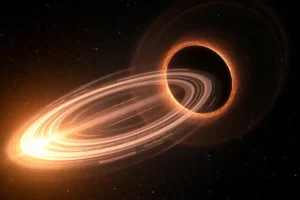
What if time is not a linear cascade but a mere façade? According to relativity, time behaves differently under various gravitational influences. For instance, the closer one is to a massive object, like a black hole, the slower time flows. This phenomenon, known as gravitational time dilation, tantalizingly suggests that a moment spent near a black hole could equate to centuries on Earth. As we delve deeper into the nuances of time, our understanding of cause and effect becomes perpetually altered.
3. The Enigma of Dark Matter
Comprising approximately 27% of the universe, dark matter remains an enigmatic entity that eludes direct detection. Its presence is inferred through gravitational effects on visible matter; however, scientists have yet to ascertain its true nature. Speculations abound, ranging from exotic particles to primordial black holes, suggesting that our current comprehension of the universe is fundamentally incomplete. The realization that the majority of the universe is composed of a substance we cannot see or fully understand provokes an existential curiosity.
4. The Quantum Realm
Stepping into the quantum realm is akin to entering a world where normal logic dissolves into absurdity. Particles exist in superposition, meaning they can occupy multiple states simultaneously until observed or measured. Consider Schrödinger’s cat—a thought experiment that illustrates this principle, where a cat in a box is simultaneously alive and dead until one opens the box. This counterintuitive behavior absolutely disrupts our classical perceptions of reality, hinting at the underlying mysteries that govern the subatomic world.
5. The Multiverse Theory
What if our universe is but one of an infinite number of parallel universes? The multiverse theory posits that every decision creates a branch in reality, spawning alternate timelines and outcomes. Picture a cosmos where you made every possible choice in your life, leading to distinct universes for each decision. This perspective invites one to ponder the intricacies of fate and free will, elevating existential dilemmas to cosmic proportions.
6. The Aging Universe: The Heat Death Theory
As the universe expands, it also ages inexorably towards an eventual fate termed the “heat death,” where it achieves a state of maximum entropy. This scenario suggests that all energy will be uniformly distributed, rendering the universe lifeless and barren. The cold and desolate aftermath begs the question: What is the cyclical purpose of creation if it ultimately leads to extinction? This contemplation on cosmic impermanence unravels the fabric of our temporal existence.
7. Cosmic Microwave Background Radiation
The afterglow of the Big Bang, known as cosmic microwave background radiation, permeates the cosmos, revealing the universe’s infant beginnings. This faint hum provides researchers with essential clues about the conditions that prevailed shortly after the universe’s inception. By analyzing its temperature fluctuations, scientists glean insights into the cosmos’ expansion rate and the distribution of matter, leading to profound revelations about our origin.
8. The Nature of Black Holes
Black holes serve as both cosmic destroyers and mysterious gateways. Formed when massive stars collapse under their own gravity, they possess gravitational pulls so strong that not even light can escape. Intriguingly, some theories propose that black holes may be passageways to alternate dimensions or even other universes. This tantalizing possibility invites speculation about what might reside beyond the event horizon, fanning the flames of curiosity.
9. The Drake Equation: Searching for Extraterrestrial Life
In a universe populated by billions of stars, the quest for extraterrestrial life seems inevitable. The Drake Equation, a probabilistic formula, estimates the number of communicating civilizations in our galaxy. Each factor in the equation—such as the rate of star formation or the likelihood of planets supporting life—invites a profound inquiry into our solitude in the galaxy. Are we, in essence, cosmic outcasts, or does intelligent life flourish around us in silence?
10. The Nature of Reality: An Expanding Puzzle
The universe is, at its core, a profound puzzle, continually expanding our quest for knowledge and understanding. As technological advancements unveil new discoveries, they also expose the limitations of current scientific paradigms. Our understanding of the universe is not static; it evolves with every revelation, challenging our positions on life, existence, and our place in the vast cosmic tapestry.
As we ponder these remarkable truths, we begin to unravel the profound intricacies of the universe. Each fact prompts deeper inquiry and illuminates the shadows of cosmic obscurity. It is essential to embrace this wonderment and curiosity, for in understanding the universe, we determine our significance within it. The breathtaking complexity of the cosmos not only humbles us but also ignites an insatiable thirst for knowledge that transcends time and space.
FAQ
How big is the universe?
The observable universe spans roughly 93 billion light-years in diameter, making Earth a tiny speck in an immense cosmic expanse.
What is dark matter and why can't we see it?
Dark matter is a mysterious form of matter that does not emit light or energy, detectable only through its gravitational effects on visible matter.
Can time really move slower near black holes?
Yes, according to Einstein's theory of relativity, strong gravity near black holes causes time to pass more slowly compared to areas with weaker gravity.
What is the significance of the cosmic microwave background radiation?
It is the thermal radiation left over from the Big Bang, providing crucial evidence about the universe's origins and evolution.
Is the multiverse theory proven?
No, the multiverse theory is a speculative idea in physics and cosmology that remains unproven and is a topic of ongoing research and debate.




Leave a Reply