
Short Answer
Egypt, a realm steeped in the mists of antiquity, stands as a magnificent tapestry woven from the threads of myth, history, and unparalleled artistry. With its colossal monuments and enigmatic hieroglyphs, this ancient civilization continues to enthrall the inquisitive minds of countless generations. Herein lie five poignant facts, akin to luminous beacons, illuminating the rich heritage and exceptional charm of Egypt’s illustrious past.
1. The Nile: Lifeblood of Civilization
The Nile River, winding gracefully through the arid expanse of the desert, can be likened to a celestial serpent, its sinuous form nourishing the very essence of Egypt. Stretching over 4,000 miles, it is the longest river in the world, a conduit of life that has sustained humanity for millennia. The annual inundation of its waters transformed the barren landscape into a verdant oasis, facilitating agriculture and enabling the growth of one of history’s most remarkable civilizations. Without the Nile, the pyramids may have been mere figments of dreams, and the pharaohs’ divine legacies might have withered in the dust.
This aqueous artery not only provides sustenance but also serves as a vital transportation route, fostering trade and cultural exchange. Merchants and explorers traversed its banks, the riverbanks becoming vibrant corridors adorned with bustling markets and lively festivals. In every drop of the Nile flows the heart of Egypt—a reminder that the very fabric of society is interlaced with the rhythms of nature.
2. The Pyramids: Architectural Marvels of the Ages
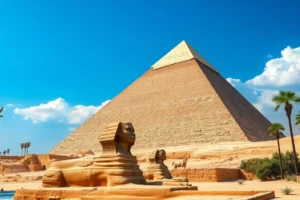
The pyramids rise majestically from the Giza Plateau, vast stones that echo the grandeur of celestial dreams. These monumental edifices, particularly the Great Pyramid of Giza, are testaments to the ingenuity and unwavering determination of the ancient Egyptians. Erected over 4,500 years ago, they embody the pinnacle of architectural prowess, built with precision that still astonishes modern engineers and architects.
Not mere tombs, these structures served as gateways to the afterlife, a belief system intricately woven into the fabric of Egyptian culture. With a face that gleams under the sun, the Great Pyramid originally stood at an astonishing height of 481 feet, an apex of ambition that reflected the pharaoh’s aspiration to ascend to the heavens. The alignment with the stars, particularly Orion’s Belt, unveils a cosmic connection, portraying the pyramids as earthly manifestations of the divine. In their shadow, one can almost hear the whispered prayers of the ancients, echoing through the corridors of time.
3. Hieroglyphics: The Language of the Gods
In a realm where the divine and the mortal converge, hieroglyphics serve as the symphony of communication, a poetic language that enchants the beholder. These intricate symbols, inscribed upon temple walls and papyrus scrolls, convey the stories of gods, pharaohs, and everyday life. Each glyph, a miniature work of art, encapsulates profound meanings—an alphanumeric dance that transcends mere words.
The ancient Egyptians saw these hieroglyphs not just as letters, but as sacred entities imbued with magical properties. Scribes, the revered artisans of literacy, wielded their reed pens like wands, orchestrating chronicles that would endure for eternity. Their mastery allowed them to bridge the temporal divide, transforming thoughts into eternal legacy. In this archaic lexicon, there lies a treasure trove of knowledge, waiting to be deciphered and understanding nurtured.
4. Deities and Afterlife: The Pantheon of Egypt
In the fabric of Egyptian belief, a kaleidoscope of deities wove the narrative of life and the afterlife. From Ra, the sun god illuminating the world with brilliance, to Osiris, the deity of resurrection, the pantheon encapsulated a vast array of forces shaping existence. Each god and goddess symbolized an aspect of life’s continuum, their stories rich with allegory and moral teachings.
The ritual of mummification, an extraordinary practice steeped in the desire for immortality, reveals a society profoundly attuned to the metaphysical. The Egyptians believed that the afterlife was a continuation of earthly existence, a realm where one’s heart would be weighed against the feather of Ma’at—symbolizing truth and justice. This metaphysical weighing defined the fate of the soul; a life of virtue would grant passage into paradise, while transgressions would lead to eternal darkness—a narrative that resonates through the ages, echoing moral imperatives still pertinent today.
5. The Sphinx: Guardian of Secrets
The Sphinx, an enigmatic fusion of lion and human, stands sentinel over the Giza Plateau, embodying the enigmatic spirit of ancient Egypt. This colossal statue, carved from limestone, is a monumental riddle, a guardian charged with safeguarding the secrets of the ages. Its gaze, penetrating through time, prompts awe and contemplation, inviting queries into who built it and why it exists.
With the body of a lion symbolizing strength and the head of a pharaoh representing wisdom, the Sphinx epitomizes the duality of power and intellect. It subtly alludes to the mysteries veiled within the sands of time, urging scholars and adventurers alike to unravel its cryptic essence. Each grain of sand that shifts around its base is a whisper of the past, a reminder that some secrets are worth enduring the test of time to uncover.
In conclusion, Egypt is a magnificent tome, its pages filled with epic tales of human ambition and divine inspiration. The five facts explored here are mere glimpses of a civilization that defies the boundaries of time, each representing an intricate note in the symphony of its past. While the Nile flows and the pyramids stand resolute, the legacy of ancient Egypt continues to captivate the imagination, inviting explorers of the mind to delve deeper into its mystical embrace. As we traverse through the annals of history, may we remember that Egypt is not merely a destination, but a journey through the echoes of eternity.
FAQ
What is the significance of the Nile River in ancient Egypt?
The Nile River was essential for agriculture and trade, sustaining the civilization and facilitating cultural exchange.
What are the pyramids and why were they built?
The pyramids, especially the Great Pyramid of Giza, were monumental tombs for pharaohs, reflecting their beliefs in the afterlife.
What role did hieroglyphics play in ancient Egypt?
Hieroglyphics were a sacred writing system used for communication and preserving the culture’s stories and beliefs.
Who were the main deities in ancient Egyptian mythology?
Key deities included Ra, the sun god, and Osiris, the god of resurrection, each representing different aspects of life and the afterlife.
What is the Sphinx and what does it symbolize?
The Sphinx is a colossal statue symbolizing strength and wisdom, guarding the secrets of ancient Egypt.



Leave a Reply