
Short Answer
21 Facts About Polarized Light Detection by Mantis Shrimp
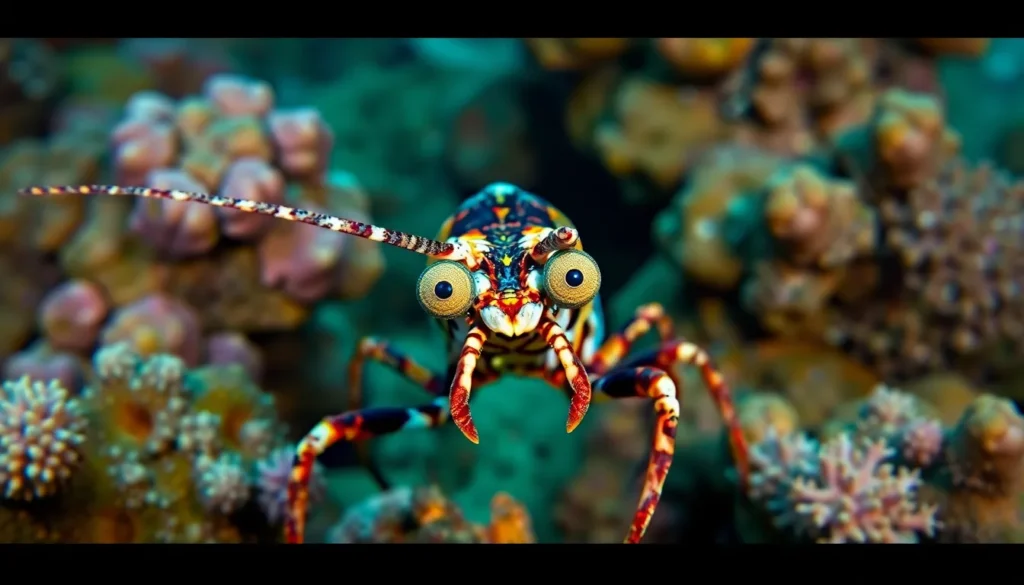
- Exceptional Visual System: Mantis shrimp have one of the most complex eyes in the animal kingdom, featuring specialized photoreceptors tuned to detect polarized light.
- Polarization Sensitivity: Unlike humans, mantis shrimp can perceive both linear and circular polarized light, enabling them to see patterns invisible to most other animals.
- Multiple Photoreceptor Types: Their eyes contain up to 16 types of photoreceptors, including those sensitive to different wavelengths and polarization states.
- Unique Eye Structure: Each eye is divided into three distinct regions, with the midband specialized for polarized light detection.
- Polarization Filters: The mantis shrimp’s eyes have microscopic structures acting as polarization filters, aiding in the precise detection of polarized light.
- Communication through Polarization: Some species use polarized light signals for intraspecific communication, such as courtship or territorial displays.
- Camouflage Detection: Polarization vision helps mantis shrimp detect prey that use polarized light for camouflage.
- Prey Detection: Sensitivity to polarized light improves their ability to spot transparent or nearly invisible prey in water.
- Navigation Aid: Polarized light patterns in the sky may assist mantis shrimp in orientation and navigation within their marine environment.
- Detection of Water Surface Reflections: Polarization vision allows mantis shrimp to detect reflections and contrasts on the water surface, aiding in predator avoidance.
- Independent Eye Movement: Each eye moves independently, allowing mantis shrimp to simultaneously analyze polarized light from different angles.
- Depth Perception: Their trinocular vision with each eye helps in judging distances precisely, important for their hunting strikes.
- Evolutionary Adaptation: The ability to detect polarized light likely evolved to enhance survival through improved predation and communication.
- Color and Polarization Processing: Mantis shrimp process color and polarization information separately, allowing sophisticated visual analysis.
- Polarization Contrast Enhancement: This ability enhances contrast in underwater environments, where light scattering can obscure details.
- Research Inspiration: The mantis shrimp’s visual system inspires biomimetic designs in optical devices and polarization sensors.
- Species Variation: Different mantis shrimp species have variations in their polarization vision capabilities, adapted to their specific habitats.
- Energy Efficiency: Their eyes are optimized to function effectively in the dim and turbid waters of coral reefs and coastal zones.
- Behavioral Responses: Experiments show mantis shrimp respond differently to polarized light stimuli, indicating its importance in their sensory world.
- Complex Neural Processing: The brain of mantis shrimp is adapted to process complex polarized light information rapidly for immediate action.
- Scientific Study Challenges: Investigating mantis shrimp polarization vision requires specialized equipment and techniques due to its complexity.
Habitat and Behavior
Mantis shrimp are marine crustaceans primarily found in tropical and subtropical waters, particularly in coral reefs and shallow coastal environments. They live in burrows or crevices on the seafloor, emerging primarily to hunt or communicate. Mantis shrimp are known for their aggressive predation strategies, using powerful raptorial appendages to strike prey with remarkable speed and force. Their complex visual system, including polarized light detection, plays a key role in locating prey, avoiding predators, and social interactions. They exhibit a range of behaviors such as territorial defense, mating rituals, and complex communication signals, some of which involve polarized light cues.
Why This Animal Matters
Mantis shrimp contribute significantly to marine ecosystems by controlling populations of various invertebrates and small fish. Their unique visual system has attracted considerable scientific interest, providing insights into sensory biology and the evolution of vision. Additionally, the study of their polarization detection has applications in developing new optical technologies, such as advanced sensors and communication devices. Mantis shrimp also hold cultural importance in some coastal communities and have been subjects of fascination due to their distinctive appearance and behavior. Conservation of their habitats is important to maintain biodiversity and ecological balance in reef systems.
Common Misconceptions
Misconception: Mantis shrimp can see all colors of the rainbow better than humans.
Correction: While mantis shrimp have many photoreceptor types and can see a broader range of wavelengths than humans, their color perception works differently and is not necessarily “better” but specialized for their environment.
Misconception: Mantis shrimp use their polarized light vision only to hunt.
Correction: Although polarized light detection aids in hunting, mantis shrimp also use it for communication, navigation, and environmental awareness.
Misconception: Polarized light detection is common among marine animals.
Correction: Polarized light vision is relatively rare and highly specialized; mantis shrimp are among the few animals with advanced and complex polarization detection capabilities.
FAQ
How do mantis shrimp detect polarized light?
Mantis shrimp detect polarized light using specialized photoreceptors in their eyes. Their eyes contain microscopic structures that act as polarization filters, allowing them to perceive both linear and circular polarized light, which enhances their ability to detect prey, communicate, and navigate.
Why is polarized light detection important for mantis shrimp?
Polarized light detection helps mantis shrimp see prey that use polarization for camouflage, communicate with other shrimps through polarized signals, and navigate their environment by interpreting polarized patterns of light underwater.
Can humans see polarized light like mantis shrimp?
No, humans cannot naturally detect polarized light with their eyes. While humans can observe polarization effects using devices like polarized sunglasses, the mantis shrimp have specialized photoreceptors that allow them to directly perceive and process polarized light signals.


Leave a Reply