
Short Answer
21 Facts About Yellowjackets
- Yellowjackets are a group of wasps: They belong to the genera Vespula and Dolichovespula, which include many species commonly referred to as yellowjackets.
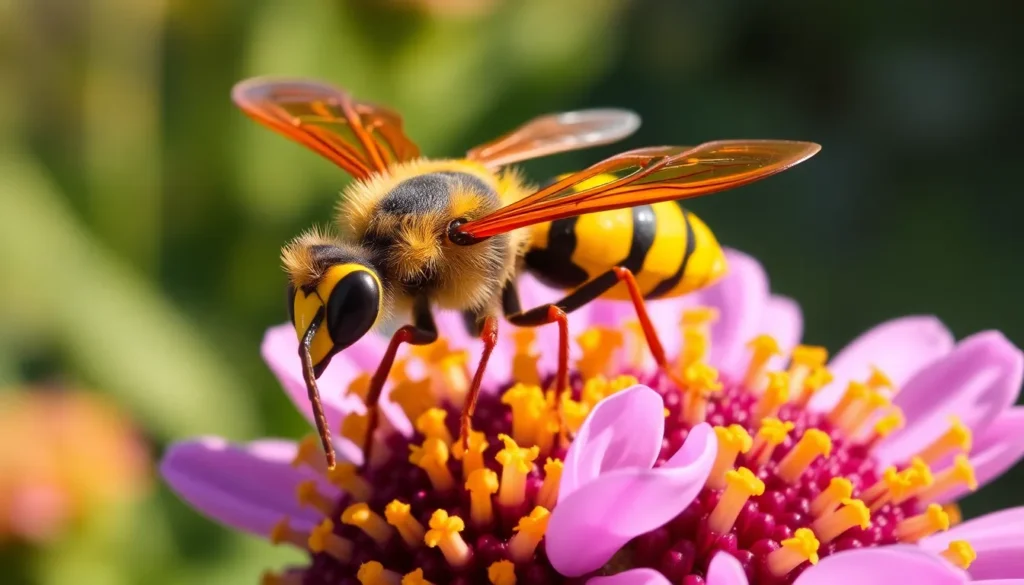
- Distinctive coloration: Yellowjackets usually have black and yellow markings that serve as a warning to predators about their ability to sting.
- Social insects: They live in colonies that can number in the thousands, with a queen, workers, and males.
- Annual colonies: Most yellowjacket colonies last only for one season, with new queens hibernating through winter to start new colonies in spring.
- Predatory diet: Yellowjackets are carnivorous and prey on other insects, playing a role in controlling pest populations.
- Scavengers: They are also scavengers and can be attracted to human food, especially sugary substances and meats.
- Multiple nesting sites: Yellowjackets build nests underground, in trees, or inside man-made structures.
- Paper nests: Their nests are made from chewed wood fibers mixed with saliva, forming a paper-like material.
- Stinging defense: Yellowjackets can sting multiple times, unlike honeybees, and use their sting to defend the colony.
- Communication by pheromones: They communicate danger and coordinate attacks using chemical signals called pheromones.
- Seasonal activity: Yellowjackets are most active in late summer and early autumn when colonies reach their peak size.
- Role in pollination: Although not as efficient as bees, yellowjackets contribute to pollination while visiting flowers for nectar.
- Flight agility: They are strong fliers capable of rapid and agile flight maneuvers.
- Natural predators: Birds, spiders, and other insects prey on yellowjackets.
- Attraction to lights: Yellowjackets can be attracted to bright lights at night, despite being primarily diurnal.
- Ecological balance: By feeding on pests and decomposing matters, yellowjackets help maintain ecological balance.
- Queen dominance: The queen controls reproduction and suppresses worker fertility through pheromones.
- Colony collapse: Colonies die off in winter, except for mated queens who hibernate to restart colonies.
- Human encounters: Yellowjackets can become aggressive when disturbed, especially near their nests.
- Species diversity: There are over 50 species of yellowjackets worldwide, with many found in North America and Europe.
- Scientific research: Yellowjackets are studied for their social behavior, communication, and venom properties.
Habitat and Behavior
Yellowjackets inhabit a wide range of environments including forests, meadows, urban areas, and suburban gardens. They typically build nests in sheltered locations such as underground cavities, tree hollows, or within man-made structures. Their social structure is highly organized, centering around a single queen who lays eggs, while sterile female workers maintain the nest, forage for food, and defend the colony. Yellowjackets are diurnal and exhibit aggressive defensive behavior when threatened, especially during the late summer when colonies reach their largest size. They forage for protein-rich prey to feed their larvae and also consume sugars from fruits, nectar, and human food sources. Communication within the colony is largely chemical, involving pheromones to signal alarm or coordinate activities.
Why This Animal Matters
Yellowjackets play an important ecological role as both predators and scavengers. By preying on various insect pests, they help control populations that could otherwise damage crops and plants. Their scavenging behavior contributes to the decomposition process, recycling nutrients back into the ecosystem. Additionally, yellowjackets assist in pollination, though less effectively than bees. From a cultural perspective, yellowjackets impact human activities because of their aggressive nature and attraction to food, leading to frequent human-wasp interactions. Understanding their behavior and role can help in managing conflicts and appreciating their contribution to biodiversity. While not currently endangered, yellowjackets are sensitive to environmental changes that affect their habitat and food availability.
Common Misconceptions
Misconception: Yellowjackets only sting to attack humans unprovoked.
Correction: Yellowjackets generally sting only in defense or when their nest is threatened. They do not typically attack humans without provocation.
Misconception: Yellowjackets are the same as bees.
Correction: Yellowjackets are wasps, which differ from bees in behavior, diet, and morphology. Bees are generally more docile and focus on pollination and nectar collection, while yellowjackets are predatory and more aggressive.
Misconception: All yellowjackets build nests underground.
Correction: While many yellowjacket species build nests underground, others nest in trees, shrubs, or man-made structures.
Misconception: Yellowjackets die after stinging once.
Correction: Unlike honeybees, yellowjackets can sting multiple times without dying.
Misconception: Yellowjackets are only pests with no ecological benefit.
Correction: Yellowjackets help control pest insect populations and contribute to nutrient cycling, making them ecologically valuable.
FAQ
Are yellowjackets dangerous to humans?
Yellowjackets can sting multiple times and may become aggressive if their nest is disturbed or if they feel threatened. While their sting can be painful and cause allergic reactions in some people, they generally do not seek out humans to sting unprovoked.
How can yellowjacket nests be identified?
Yellowjacket nests are often found underground or in hidden cavities. They are made of paper-like material created from chewed wood fibers mixed with saliva, typically appearing as layered comb structures inside their nests.
Do yellowjackets help with pest control?
Yes, yellowjackets prey on many insect pests, helping to naturally control their populations. They also scavenge and contribute to the decomposition of organic matter, playing an important role in ecosystems.

Leave a Reply