
Short Answer
21 Facts About Yellow-footed Rock Wallabies
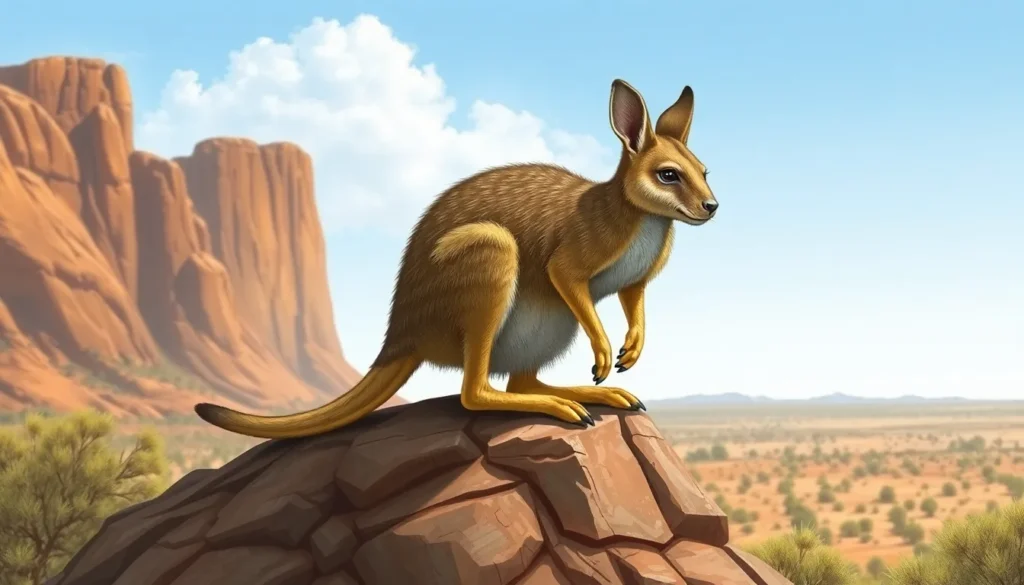
- Distinctive Coloration: Yellow-footed rock wallabies are named for the yellow or orange coloring on their feet and legs, which contrasts with their mostly grey or brown fur.
- Scientific Classification: Their scientific name is Petrogale xanthopus, belonging to the genus Petrogale, which includes several rock-dwelling wallaby species.
- Size and Weight: They typically weigh between 4 to 8 kilograms (9 to 18 pounds) and measure about 60 to 85 centimeters in body length, with a tail nearly as long as their body.
- Habitat Preference: They inhabit rocky outcrops, cliffs, and escarpments, which provide shelter and protection from predators.
- Geographic Range: Their distribution is primarily in arid and semi-arid regions of central and western Australia, including parts of South Australia and Queensland.
- Diet: Yellow-footed rock wallabies are herbivores that feed primarily on grasses, leaves, fruits, and other vegetation available in their rocky habitats.
- Adaptations for Climbing: They have strong hind legs, rough-textured feet, and long tails that aid in balance and agility on steep and uneven terrain.
- Social Behavior: These wallabies are generally shy and tend to live in small groups or loosely organized colonies.
- Reproduction: Females usually give birth to a single joey after a gestation period of about 30 days, and the young remain in the mother’s pouch for several months.
- Nocturnal Activity: They are mostly active during dawn and dusk (crepuscular) and at night, which helps them avoid the heat of the day and some predators.
- Communication: They communicate using foot thumping, vocalizations, and scent markings to signal alarm or establish territory.
- Predators: Natural predators include dingoes, eagles, and feral cats, which pose threats especially to juveniles.
- Conservation Status: The species is currently listed as Near Threatened due to habitat loss, predation by introduced species, and competition from livestock.
- Population Decline: Historical records indicate significant population declines in certain areas, prompting conservation efforts to protect remaining populations.
- Conservation Programs: Efforts include habitat restoration, predator control, and captive breeding programs to support wild populations.
- Ecological Role: As herbivores, they contribute to vegetation control and serve as prey for native predators, playing a role in ecosystem balance.
- Unique Genetic Diversity: Studies show regional genetic differences among populations, important for conservation planning.
- Climate Adaptations: Their physiology allows them to survive in harsh, dry environments with limited water availability.
- Longevity: In the wild, yellow-footed rock wallabies can live up to 10 to 15 years, though many face threats reducing lifespan.
- Cultural Significance: Indigenous Australian groups have traditional knowledge and cultural connections to rock wallabies, including the yellow-footed species.
- Research Importance: They are studied for insights into marsupial ecology, adaptation to arid habitats, and conservation biology.
Habitat and Behavior
Yellow-footed rock wallabies inhabit rocky landscapes, often in rugged terrain such as cliffs and gorges where they find shelter and protection from predators. Their preference for steep and inaccessible habitats allows them to avoid many ground-based threats. These wallabies are agile climbers, using their powerful hind legs and long tails for balance and navigation across rocky surfaces. They are mostly crepuscular and nocturnal, feeding on a diet of grasses, leaves, and fruits available in their environment. Socially, they tend to form small groups, though individuals may be solitary at times. Communication through foot thumping and scent marking helps maintain group cohesion and territory. They rely on their habitat’s microclimates and natural shelters to regulate body temperature and avoid extreme weather conditions.
Why This Animal Matters
Yellow-footed rock wallabies play an important ecological role as herbivores, influencing plant community dynamics and serving as prey for native predators. Their presence indicates healthy rocky ecosystems, and they contribute to biodiversity in arid regions of Australia. Culturally, they hold significance for Indigenous Australians who have long-standing connections to the land and its fauna. From a conservation perspective, the species highlights challenges faced by wildlife in adapting to habitat fragmentation, introduced predators, and climate change. Ongoing research and protection efforts contribute to understanding and preserving this unique marsupial, offering broader insights into arid zone ecology and species survival.
Common Misconceptions
Misconception: Yellow-footed rock wallabies are the same as regular kangaroos.
Correction: While related, yellow-footed rock wallabies are a distinct species adapted to rocky habitats, smaller in size, and different in behavior compared to larger kangaroos.
Misconception: They are abundant and not at risk.
Correction: The species has experienced declines due to habitat loss and introduced predators, leading to conservation concern and protection efforts.
FAQ
Where are yellow-footed rock wallabies found?
They are found primarily in rocky and arid regions of central and western Australia, including parts of South Australia and Queensland.
What do yellow-footed rock wallabies eat?
Their diet consists mainly of grasses, leaves, and fruits that grow in their rocky habitats.
Are yellow-footed rock wallabies endangered?
They are classified as Near Threatened due to habitat loss and predation by introduced species, though conservation efforts are ongoing to support their populations.

Leave a Reply