
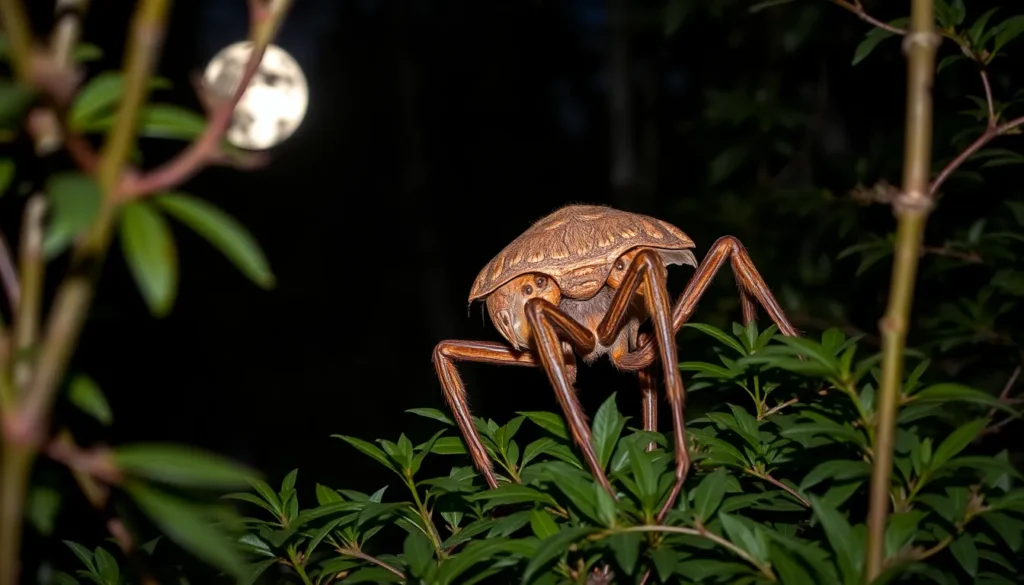
Short Answer
21 Facts About Weta (Giant Crickets)
- Diverse Group: Weta belong to the family Anostostomatidae and include over 70 species ranging from cave-dwelling to tree weta.
- Large Size: Some species of weta are among the heaviest insects in the world, with the giant weta weighing up to 70 grams.
- Native to New Zealand: Weta are endemic to New Zealand, meaning they are found naturally nowhere else in the world.
- Long Lifespan: Compared to many insects, some weta can live up to several years in the wild.
- Nocturnal Behavior: Most weta are active at night, which helps them avoid many predators and harsh daytime conditions.
- Omnivorous Diet: Weta consume a variety of food including leaves, fruits, insects, and even small animals.
- Flightless: Weta do not have functional wings and rely on their strong legs for movement and jumping.
- Strong Legs: Their powerful hind legs not only aid in jumping but also in defense and fighting during mating competitions.
- Sound Production: Some species produce sounds by rubbing their legs against their bodies, a process called stridulation.
- Camouflage: Weta’s coloration and body shape help them blend into their environment to avoid predators.
- Reproductive Behavior: Female weta lay eggs in soil or wood, and in some species, males guard the eggs.
- Predators: Native predators include birds and reptiles, but introduced species like rats and cats pose significant threats.
- Conservation Status: Several weta species are considered threatened or endangered due to habitat loss and invasive predators.
- Ecological Role: Weta play an important role in New Zealand’s ecosystems as both prey and consumers of plant and insect matter.
- Ancient Lineage: Weta have existed for millions of years and are often referred to as living fossils.
- Temperature Sensitivity: Weta are ectothermic and depend on environmental temperatures to regulate their activity levels.
- Defensive Behavior: When threatened, weta may raise their legs and bite if necessary.
- Social Interactions: Some tree weta species live in groups and exhibit social behaviors uncommon among insects.
- Scientific Interest: Weta are studied for insights into insect evolution, physiology, and conservation biology.
- Cultural Significance: Weta hold a special place in Māori culture and New Zealand identity, symbolizing the unique native fauna.
- Adaptations to Environment: Weta species have evolved to survive in diverse habitats, including forests, caves, and alpine regions.
Habitat and Behavior
Weta primarily inhabit New Zealand’s forests, shrublands, and caves. Different species have adapted to various ecological niches, from arboreal tree weta living in hollow branches to cave weta found in dark, moist caves. Their nocturnal activity helps reduce predation risks and avoid daytime heat. Weta are generally solitary but some tree-dwelling species may form small groups. They are omnivorous, feeding on leaves, fruits, and small insects, which enables them to exploit different food sources. Their strong hind legs are adapted for jumping and defense, and some species use stridulation to communicate or deter predators. Reproduction involves laying eggs in protected sites, and in some cases, males show parental care. Weta rely on their camouflage and defensive behaviors to survive in habitats that face threats from introduced mammals and habitat disturbance.
Why This Animal Matters
Weta hold significant ecological value as both consumers and prey within New Zealand’s ecosystems, contributing to nutrient cycling and the food web. Their unique evolutionary history makes them a focus of scientific research, providing insights into insect adaptation and biodiversity. Culturally, weta are emblematic of New Zealand’s natural heritage and are featured in Māori mythology and modern conservation messaging. Due to their vulnerability to introduced predators and habitat loss, several weta species are conservation priorities. Protecting weta helps maintain ecological balance and supports the preservation of New Zealand’s distinctive biodiversity.
Common Misconceptions
Misconception: Weta are dangerous or aggressive to humans.
Correction: Weta are generally not aggressive and will only bite if handled roughly; they are harmless to humans.
Misconception: Weta are large spiders or related to arachnids.
Correction: Weta are insects, specifically orthopterans related to crickets and grasshoppers, not arachnids.
Misconception: All weta species are giant and intimidating.
Correction: While some species are large, others are smaller and less conspicuous.
Misconception: Weta can fly.
Correction: Weta lack functional wings and cannot fly.
Misconception: Weta are pests.
Correction: Weta are native wildlife important to ecosystems, not agricultural pests.
FAQ
What is a weta?
A weta is a group of large, cricket-like insects native to New Zealand, known for their impressive size and unique ecological roles.
Are weta dangerous to humans?
No, weta are not dangerous to humans. They may bite if handled roughly but generally pose no threat.
Why are weta important to New Zealand's ecosystem?
Weta contribute to nutrient cycling and serve as prey for native predators, playing a vital part in maintaining ecological balance.


Leave a Reply