
Short Answer
21 Facts About Uintatheres
- Uintatheres belonged to the order Dinocerata. They are part of an extinct group of large, herbivorous mammals known as Dinocerata, which were among the earliest large mammals after the extinction of dinosaurs.
- They lived during the Eocene epoch. Uintatheres thrived roughly between 56 and 34 million years ago in the early to middle Eocene period.
- Uintatheres were among the largest mammals of their time. Some species reached sizes comparable to modern-day rhinoceroses, measuring up to 4 meters (13 feet) in length.
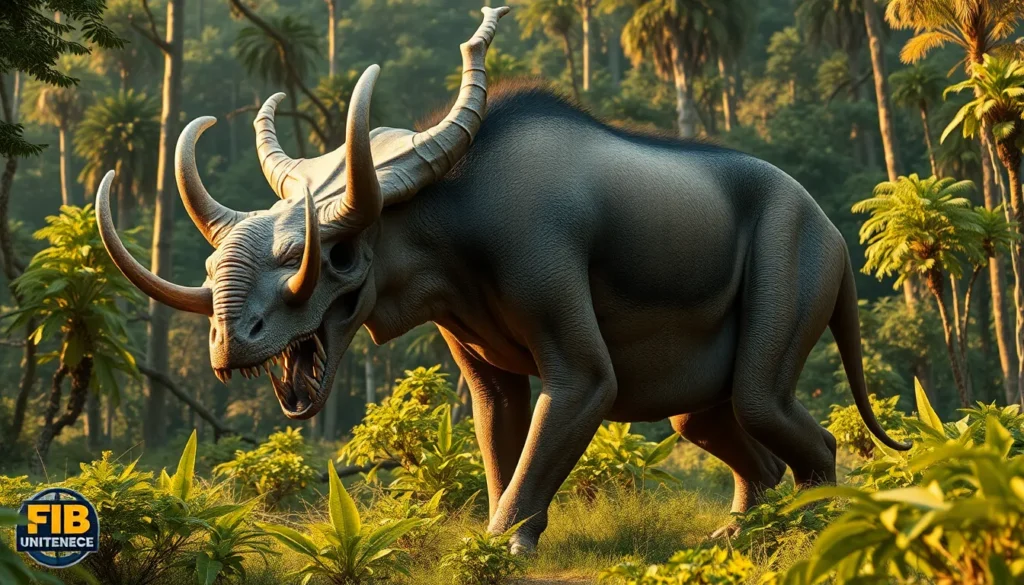
- Their skulls featured distinctive bony protuberances. Uintatheres had six large ossicones or horn-like structures on their skulls, which may have been used for display or species recognition.
- They had large, saber-like canine teeth. These prominent upper canines likely played a role in defense or intraspecific competition.
- Uintatheres had a heavy, robust body structure. Their bones were thick and strong, supporting a massive body built for a slow but powerful lifestyle.
- Fossils of Uintatheres have been found primarily in North America and Asia. Their remains have been discovered in regions such as Wyoming in the United States and parts of China and Mongolia.
- They are considered part of the group known as ‘Uintatheriidae.’ This family includes several genera, with Uintatherium being the most well-known genus.
- Uintatheres likely had a herbivorous diet. Their teeth and jaw structure suggest they fed on soft vegetation such as leaves and aquatic plants.
- Despite their large size, Uintatheres were not closely related to modern elephants or rhinoceroses. They represent a unique evolutionary branch of large mammals that eventually became extinct.
- Their unique cranial features have puzzled paleontologists. The function of their multiple skull horns and large canines remains a subject of scientific debate.
- Uintatheres are among the earliest examples of large mammalian herbivores after the dinosaur extinction. Their evolution marks an important point in mammalian history, as mammals filled ecological niches left vacant.
- They had a relatively short tail compared to their body size. This trait suggests adaptations to their specific environment and lifestyle.
- Uintatheres are thought to have been slow-moving animals. Their massive build and limb structure imply they were not fast runners but relied on size for protection.
- Their fossils have helped scientists understand early mammalian evolution. Studying Uintatheres provides insight into how mammals diversified and adapted during the Eocene.
- Uintatheres may have exhibited sexual dimorphism. Differences in horn size and canine development between individuals suggest possible gender-based distinctions.
- They lived in warm, forested environments. The Eocene climate was generally warm and humid, supporting lush vegetation that Uintatheres would have fed upon.
- The extinction of Uintatheres coincided with climatic changes. Cooling trends and habitat shifts during the late Eocene likely contributed to their decline and eventual extinction.
- Uintatheres are not direct ancestors of any modern mammals. Their lineage ended without leaving extant descendants, representing a distinct evolutionary experiment.
- They were among the first large mammals to evolve specialized skull ornamentation. This adaptation may have influenced later mammalian groups with cranial appendages.
- Uintatheres have been featured in scientific literature since the 19th century. Their fossils were first described in the late 1800s, sparking interest in prehistoric mammalian fauna.
Habitat and Behavior
Uintatheres inhabited warm, forested regions during the Eocene epoch, a time characterized by a greenhouse climate and extensive wetlands. Their fossils have been predominantly found in North America and parts of Asia, indicating a relatively broad geographic distribution. These large herbivores likely preferred lush, dense vegetation near rivers and lakes, which provided abundant food resources. Based on their robust limb bones and heavy body, Uintatheres were probably slow-moving animals that relied on their size and formidable skull features for defense rather than speed. Their large, saber-like canines and ossicones may have been used in social interactions such as dominance displays or mating competitions. Uintatheres likely lived solitary or small-group lifestyles, though specific social behaviors remain speculative due to limited fossil evidence.
Why This Animal Matters
Uintatheres hold significant ecological and scientific importance as some of the earliest large mammalian herbivores following the extinction of non-avian dinosaurs. Their evolution illustrates how mammals rapidly diversified and occupied new ecological niches during the Eocene epoch. Studying Uintatheres contributes to understanding mammalian morphology, adaptation strategies, and evolutionary pathways, particularly regarding large body size and cranial ornamentation. From a paleontological perspective, Uintatheres provide critical insights into Eocene ecosystems and climatic conditions. Although extinct, they exemplify the dynamic nature of mammalian evolution and the impact of environmental changes on species survival. Uintatheres also serve as a reference point for comparing extinct and extant large herbivores, enriching knowledge about mammalian biodiversity through geologic time.
Common Misconceptions
Misconception: Uintatheres were ancient elephants.
Correction: Although Uintatheres were large herbivores with some superficial similarities to elephants, they belonged to a distinct order (Dinocerata) and are not closely related to modern elephants.
Misconception: The horns on Uintatheres’ skulls were used for defense like those of modern horned animals.
Correction: The exact function of their bony protuberances remains uncertain; they may have served for display, species recognition, or sexual selection rather than direct defense.
Misconception: Uintatheres were fast runners.
Correction: Their heavy, robust bodies and limb structure suggest they were slow-moving animals that relied on size and weapons rather than speed to avoid predators.
FAQ
What are Uintatheres?
Uintatheres were large, extinct herbivorous mammals that lived during the Eocene epoch, notable for their distinctive skull ornamentation and large size.
When did Uintatheres live?
Uintatheres lived approximately between 56 and 34 million years ago during the Eocene epoch.
Are Uintatheres related to modern elephants?
No, Uintatheres belong to a separate extinct order called Dinocerata and are not closely related to modern elephants or rhinoceroses.



Leave a Reply