
Short Answer
21 Facts About Feral Horses and Pigs
- Origin from Domestication
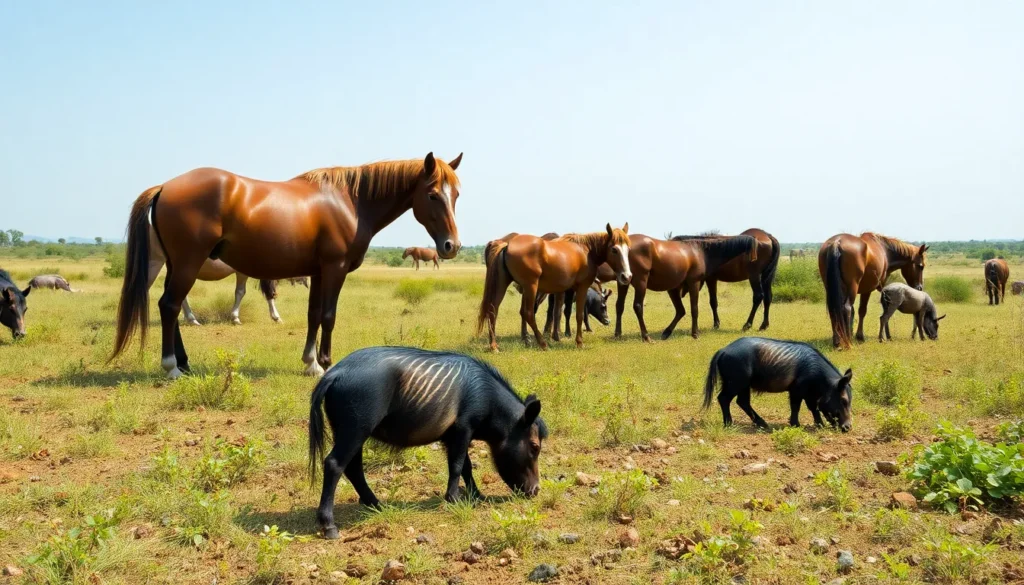
Feral horses and pigs originate from domesticated animals that have escaped or been released into the wild, adapting to natural environments over time. - Global Distribution
Feral horses are found on every continent except Antarctica, with notable populations in the Americas, Australia, and parts of Europe. Feral pigs have similarly widespread populations worldwide. - Distinct from Wild Ancestors
Feral horses descend from domesticated breeds, differing genetically and behaviorally from truly wild horses like the Przewalski’s horse. Feral pigs derive from domestic swine and differ from wild boars. - Social Structure of Feral Horses
Feral horses typically live in bands consisting of one dominant stallion, multiple mares, and their offspring, exhibiting social behaviors similar to their domestic counterparts. - Reproductive Rates
Feral pigs reproduce rapidly, with females capable of birthing multiple litters per year, which can lead to rapid population growth in suitable habitats. - Dietary Adaptability
Both feral horses and pigs are highly adaptable feeders; horses primarily graze on grasses, while pigs are omnivorous, consuming plants, insects, and small animals. - Impact on Ecosystems
Feral pigs can cause significant environmental damage through rooting and wallowing, disrupting native plant communities, whereas feral horses can affect vegetation by grazing and trampling. - Competition with Native Species
Feral animals often compete with native wildlife for food and habitat, sometimes threatening indigenous species through resource depletion. - Role in Seed Dispersal
Both feral horses and pigs can contribute to seed dispersal through their movements and digestive processes, influencing plant community dynamics. - Behavioral Changes from Domestication
Despite living in the wild, feral horses and pigs retain some behaviors influenced by their domestication history, affecting their survival strategies. - Feral Horse Management
Many regions implement management programs to control feral horse populations to balance ecological impact and cultural values. - Feral Pig Control Efforts
Due to their rapid reproduction and ecological damage, feral pig populations are often subject to control measures including hunting and trapping. - Adaptation to Varied Climates
Feral horses and pigs have demonstrated the ability to survive in diverse climates, from deserts to temperate forests. - Longevity in the Wild
Feral horses can live up to 20-25 years in the wild, while feral pigs generally have shorter lifespans, around 4-8 years. - Predation Risks
Feral pigs are preyed upon by large carnivores such as wolves and big cats where present, while feral horses face fewer natural predators due to their size. - Human Cultural Significance
Feral horses hold cultural and historical significance in many societies, often symbolizing freedom and wilderness, while feral pigs have a more complex reputation due to their impact on agriculture. - Genetic Studies
Genetic analyses help distinguish feral populations from wild and domestic stock, aiding in conservation and management decisions. - Hybridization Concerns
Feral pigs can interbreed with wild boars, potentially affecting genetic integrity of wild populations. - Use in Ecotourism
In some regions, feral horses attract tourists interested in observing free-ranging animals, contributing to local economies. - Challenges in Population Estimation
Estimating feral animal populations is difficult due to their mobility and often rugged habitats, complicating management efforts. - Legal Status Variability
The legal classification of feral horses and pigs varies by jurisdiction, influencing management practices and protection status.
Habitat and Behavior
Feral horses and pigs inhabit a wide range of environments including grasslands, forests, deserts, and wetlands. Their ability to adapt to different climates and forage types enables survival across continents. Feral horses typically live in social groups called bands, which provide protection and facilitate reproduction. These bands are led by dominant stallions who defend the group from rival males. Horses spend much of their time grazing and require access to water sources.
Feral pigs are highly adaptable omnivores and solitary or form small groups called sounders, primarily composed of females and their offspring. Pigs use rooting behavior to find food underground, which can alter soil composition and plant communities. Both species are mostly crepuscular or nocturnal to avoid heat and predators. Their behavior reflects a balance between survival instincts inherited from wild ancestors and traits retained from domestication.
Why This Animal Matters
Feral horses and pigs have significant ecological roles as both ecosystem engineers and invasive species in certain areas. Their foraging behavior influences vegetation patterns, soil health, and the availability of resources for other wildlife. Culturally, feral horses often symbolize wilderness and freedom, featuring prominently in folklore and local traditions. Conversely, feral pigs are frequently associated with agricultural damage and disease transmission, making their management a priority in many regions.
Conservation and management of feral populations require balancing ecological impacts with cultural values. In some cases, feral horses are protected due to their heritage, while feral pigs are controlled to mitigate environmental and economic harm. Understanding feral animal dynamics aids in preserving native biodiversity and maintaining ecosystem balance.
Common Misconceptions
Misconception: Feral horses are the same as wild horses.
Correction: Feral horses descend from domesticated stock and differ genetically and behaviorally from true wild horses, such as the Przewalski’s horse.
Misconception: Feral pigs are native wildlife.
Correction: Feral pigs originate from domestic swine introduced by humans and are considered invasive in many regions, impacting native ecosystems negatively.
FAQ
What is the difference between feral and wild horses?
Feral horses descend from domesticated animals that have returned to the wild, whereas wild horses have never been domesticated. This distinction is important for genetics, behavior, and conservation.
How do feral pigs affect the environment?
Feral pigs disrupt ecosystems by rooting in the soil, damaging native vegetation, spreading invasive plant species, and competing with native wildlife for resources.
Are feral horses protected by law?
Protection status varies globally; some regions protect feral horses due to cultural significance, while others manage populations to reduce ecological impact.


Leave a Reply