
Short Answer
21 Facts About Porcelain Crab Filter Feeding
- Porcelain crabs are not true crabs. Unlike true crabs, porcelain crabs belong to the family Porcellanidae and are more closely related to squat lobsters.
- They are small in size. Most species of porcelain crabs measure between 1 to 3 inches in width.
- Porcelain crabs have a unique feeding method. They are filter feeders, using their specialized mouthparts to capture plankton and organic particles from the water.
- They reside in rocky and coral reef environments. Porcelain crabs are commonly found in shallow waters of the Pacific and Indian Oceans, often hiding in crevices.
- Porcelain crabs have a mutualistic relationship with sea anemones. Many species live in association with anemones, which provide protection while the crab feeds on plankton.
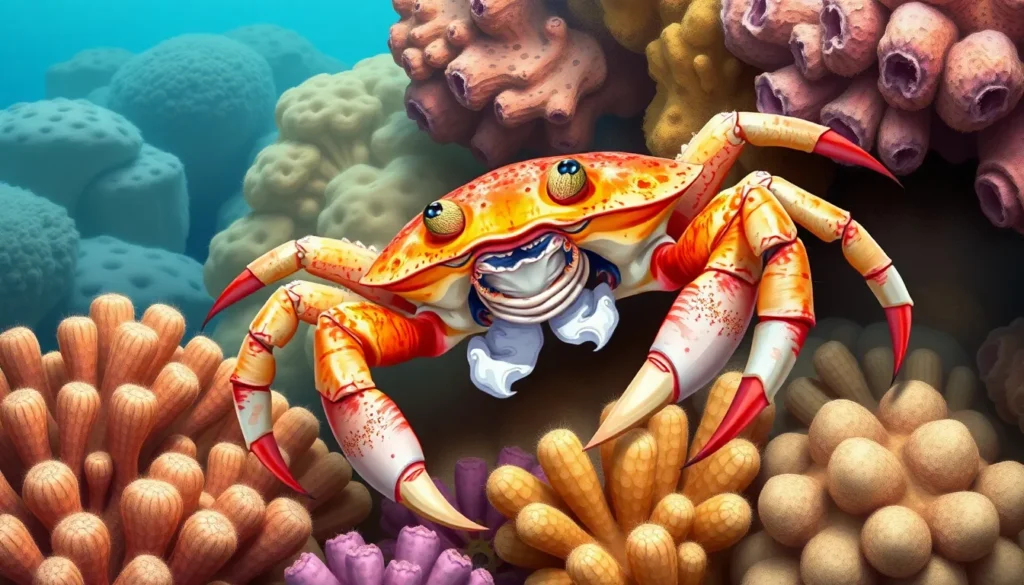
- They have a distinctive appearance. Porcelain crabs exhibit a flattened body and long, slender claws, giving them a unique silhouette compared to other crabs.
- Porcelain crabs can regenerate lost limbs. Like many crustaceans, they can regrow lost claws and legs over time.
- They use their claws for feeding and defense. The large claws are adapted for both capturing food and warding off predators.
- Coloration varies by species. Some porcelain crabs are brightly colored, aiding in camouflage among coral and rocky substrates.
- They are nocturnal feeders. Porcelain crabs often feed at night, when plankton is more abundant in the water column.
- Porcelain crabs reproduce sexually. Mating occurs frequently during warmer months, with females carrying fertilized eggs until they hatch.
- Lifespan can vary. Porcelain crabs typically live for several years, depending on environmental conditions and predation.
- They are sensitive to water quality. Porcelain crabs thrive in clean, well-oxygenated waters, making them indicators of ocean health.
- They can tolerate a range of salinities. Many species have adapted to live in both marine and brackish waters.
- Porcelain crabs exhibit social behavior. They can often be seen in groups, sharing space with other individuals and species.
- They play a role in nutrient cycling. By filtering water, they help maintain water clarity and support the health of their ecosystems.
- Porcelain crabs can be preyed upon by larger fish and invertebrates. Their small size makes them vulnerable to various predators in their habitat.
- They have a unique molting process. Like other crustaceans, they must molt to grow, shedding their exoskeleton periodically.
- Porcelain crabs can be found in various marine environments. They inhabit coral reefs, rocky shores, and sandy bottoms.
- They are studied for their ecological impact. Researchers examine their filter-feeding habits to understand their role in ocean ecosystems.
- Porcelain crabs are not commonly consumed. While some crustaceans are popular seafood, porcelain crabs are generally not targeted for human consumption.
Habitat and Behavior
Porcelain crabs are primarily found in the shallow waters of the Pacific and Indian Oceans, often residing in rocky crevices or among coral reefs. They are adept at hiding from predators and have a preference for environments with abundant plankton, which forms the basis of their diet. Their filter-feeding behavior allows them to capture tiny particles suspended in the water, which they consume during nocturnal feeding sessions.
Why This Animal Matters
Porcelain crabs play a significant ecological role as filter feeders, contributing to nutrient cycling in marine ecosystems. By filtering the water, they help maintain water clarity and support the health of coral reefs and other marine habitats. Additionally, their association with sea anemones provides insight into mutualistic relationships in marine biology. Understanding their behavior and ecology is crucial for conservation efforts aimed at protecting marine environments.
Common Misconceptions
Misconception: Porcelain crabs are true crabs.
Correction: Porcelain crabs belong to the family Porcellanidae and are more closely related to squat lobsters than to true crabs.
Misconception: All crabs are aggressive and territorial.
Correction: While some crabs exhibit aggressive behavior, porcelain crabs are generally more passive and prefer to hide among coral and rocks.
FAQ
What do porcelain crabs eat?
Porcelain crabs are filter feeders, primarily consuming plankton and organic particles from the water.
Where can I find porcelain crabs?
They are typically found in rocky crevices and coral reefs in the shallow waters of the Pacific and Indian Oceans.
How do porcelain crabs reproduce?
Porcelain crabs reproduce sexually, with females carrying fertilized eggs until they hatch.




Leave a Reply