
Short Answer
21 Facts About Discus Fish
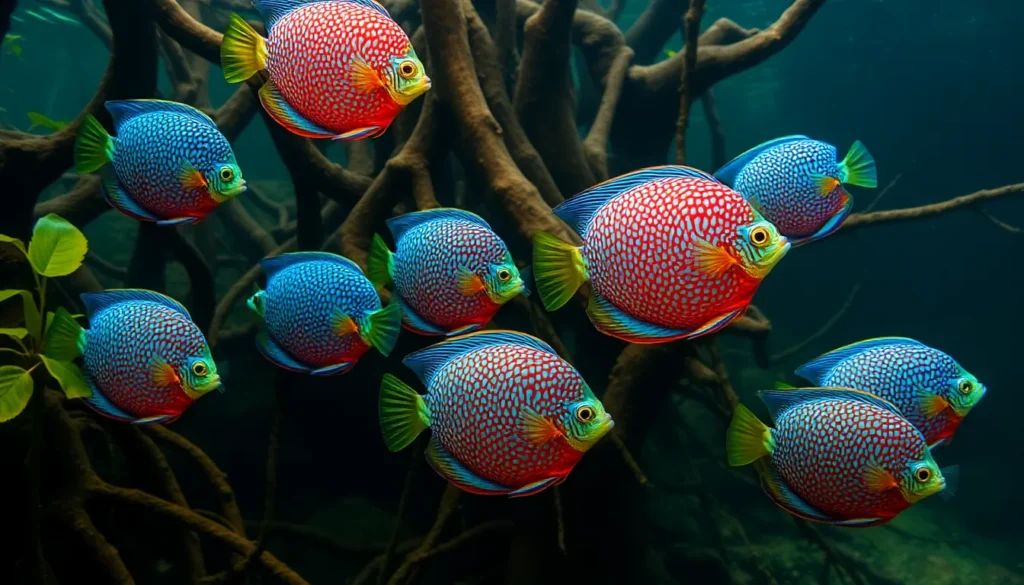
- Distinctive Shape: Discus fish are named for their round, disc-like shape, which makes them unique among freshwater fish.
- Native Habitat: They originate from the Amazon River Basin in South America, particularly in slow-moving waters.
- Species Diversity: The genus Symphysodon includes three recognized species: Symphysodon aequifasciatus, Symphysodon discus, and Symphysodon tarzoo.
- Color Patterns: They exhibit a wide range of colors and patterns, including blues, reds, greens, and stripes, often varying between wild and captive-bred specimens.
- Size: Adult discus fish typically reach about 15 centimeters (6 inches) in diameter, though some can grow larger in optimal conditions.
- Social Behavior: They are social fish that prefer to live in groups, often forming hierarchical structures within their schools.
- Diet: In the wild, discus fish feed on small invertebrates, plant matter, and detritus; in captivity, they require a varied diet including protein-rich foods.
- Water Conditions: They thrive in soft, acidic water with temperatures ranging from 26 to 30 degrees Celsius (79 to 86 degrees Fahrenheit).
- Breeding Behavior: Discus fish are known for their parental care, with both parents involved in guarding and feeding the fry using a mucus secretion from their skin.
- Slow Growth: Compared to other aquarium fish, discus have a slower growth rate and longer maturation period.
- Fragile Health: They are sensitive to water quality and require stable, clean environments to avoid stress and disease.
- Popularity in Aquariums: Due to their striking appearance, discus fish are highly sought after by aquarium enthusiasts but are recommended for experienced hobbyists.
- Selective Breeding: Captive breeding programs have produced various color morphs and patterns not typically found in the wild.
- Longevity: Under proper care, discus fish can live up to 10 years or more in an aquarium setting.
- Temperature Sensitivity: They do not tolerate sudden temperature changes well, which can lead to health complications.
- Role in Ecosystem: In their natural habitat, discus fish contribute to controlling insect populations and serve as prey for larger animals.
- Water Flow Preference: They prefer calm waters with minimal current, reflecting their native slow river environments.
- Communication: Discus fish use body language and color changes to communicate stress, dominance, or readiness to breed.
- Conservation Status: While not currently listed as endangered, habitat destruction in the Amazon poses potential risks to wild populations.
- Stress Indicators: Changes in coloration and behavior can indicate stress or illness in discus fish, requiring careful observation.
- Compatibility: They are generally peaceful but can be territorial during breeding; tank mates should be chosen carefully to avoid aggression.
Habitat and Behavior
Discus fish inhabit the slow-moving waters of the Amazon River and its tributaries, where they are often found among submerged tree roots and flooded forest areas. These environments provide abundant hiding spaces and a rich supply of food. They prefer warm, soft, and acidic water conditions, reflecting the natural parameters of their habitat. Socially, discus fish live in groups, which aids in protection against predators and facilitates breeding. They display complex social interactions, including dominance hierarchies and cooperative care of offspring. Their diet in the wild consists mainly of small invertebrates, organic detritus, and plant matter, making them omnivorous. Discus fish are relatively shy and rely on camouflage and schooling behavior for defense.
Why This Animal Matters
Discus fish play an important ecological role in their native ecosystem by contributing to the balance of aquatic food webs. They help control insect populations and serve as prey for larger fish and birds, thus supporting biodiversity. Culturally, discus fish have significance in the aquarium trade due to their unique appearance and breeding behaviors, influencing ornamental fish keeping worldwide. From a conservation perspective, maintaining wild populations is important as habitat degradation from deforestation and water pollution threatens their natural environments. Their sensitivity to environmental changes also makes them useful bioindicators of river health in the Amazon basin.
Common Misconceptions
Misconception: Discus fish are easy to care for and suitable for beginner aquarists.
Correction: Discus fish require precise water conditions, stable environments, and specialized diets, making them better suited for experienced hobbyists.
Misconception: Discus fish can tolerate a wide range of water temperatures.
Correction: They are sensitive to temperature fluctuations and need consistently warm water between 26 and 30 degrees Celsius to thrive.
Misconception: Discus fish grow quickly and reach full size in a few months.
Correction: Discus fish have a slow growth rate and require longer maturation periods compared to many other aquarium fish.
Misconception: All discus fish look the same in color and pattern.
Correction: There is significant variation among species and strains, especially in captive-bred discus, which display diverse colors and patterns.
Misconception: Discus fish do not require social interaction.
Correction: They are social animals that thrive in groups and display stress and behavioral changes when kept in isolation.
FAQ
What is the ideal water condition for discus fish?
Discus fish thrive in warm, soft, acidic water with temperatures between 26 and 30 degrees Celsius, a pH of 6.0 to 7.0, and very low levels of nitrates and ammonia.
Can discus fish be kept with other species in a community tank?
Discus fish can be kept with peaceful tank mates that tolerate similar water conditions; however, aggressive or fast-moving fish should be avoided as they can stress discus fish.
How do discus fish care for their young?
Both parents participate in guarding eggs and fry. After hatching, the fry feed on a mucus secretion produced on the parents' skin, a unique behavior among fish.




Leave a Reply