
Short Answer
21 Facts About Tapeworms
- Tapeworms are flatworms. They belong to the class Cestoda and have a flattened, ribbon-like body structure.
- They are parasitic organisms. Tapeworms live inside the intestines of vertebrates, including humans, feeding off their host’s nutrients.
- Tapeworms lack a digestive system. Instead of digesting food themselves, they absorb nutrients directly through their skin from the host’s gut.
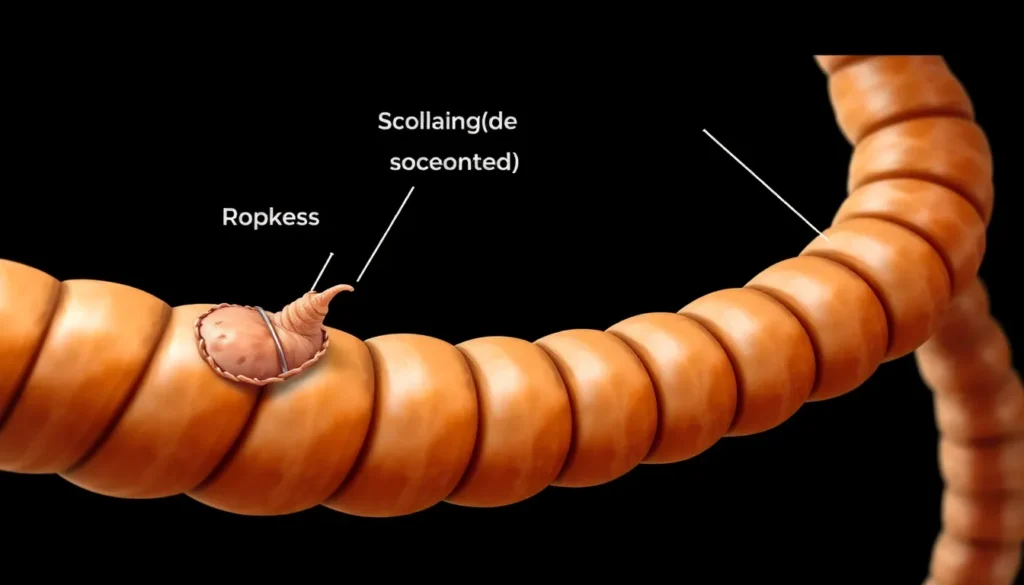
- Their bodies are segmented. Each segment, called a proglottid, contains reproductive organs and can produce thousands of eggs.
- Tapeworms can grow very long. Some species can reach lengths of up to 10 meters (33 feet) or more inside their hosts.
- They have a specialized head called a scolex. The scolex contains hooks and suckers that help the tapeworm attach securely to the host’s intestinal wall.
- Tapeworms have complex life cycles. These often involve multiple hosts, including intermediate hosts like livestock or fish, before reaching their final host.
- Eggs are released through the host’s feces. This allows the tapeworm to spread and infect new hosts in the environment.
- Human tapeworm infections usually come from eating undercooked meat. Common sources include beef, pork, and fish contaminated with tapeworm larvae.
- Tapeworm infections can be asymptomatic or cause mild to severe symptoms. Symptoms may include abdominal pain, weight loss, and nutritional deficiencies.
- Treatments are available and effective. Medications such as praziquantel can eliminate tapeworm infections in humans and animals.
- Tapeworms have no respiratory or circulatory systems. Their flat body shape facilitates diffusion of gases and nutrients directly through the skin.
- They reproduce sexually and asexually. Proglottids can produce eggs independently, increasing the worm’s reproductive potential.
- Tapeworms can survive for years inside a host. Some species may live several years if untreated.
- Tapeworms are found worldwide. They infect many types of vertebrates in diverse climates and environments.
- Some tapeworm species infect pets and livestock. This can cause economic losses and health concerns in agriculture and animal husbandry.
- Tapeworm larvae can form cysts in tissues. In some species, such as the pork tapeworm, larval cysts can cause serious conditions like cysticercosis.
- Tapeworms have been studied in evolutionary biology. Their parasitic lifestyle provides insights into host-parasite coevolution.
- They are sometimes used in research on parasite-host interactions. Understanding their biology helps develop treatments and control measures.
- Tapeworms do not have a brain. Instead, they have a simple nervous system to coordinate movements and responses.
- Despite their parasitic nature, tapeworms play a role in ecosystems. They influence host population dynamics and energy flow through food webs.
Habitat and Behavior
Tapeworms inhabit the intestines of vertebrate animals, including mammals, birds, and fish. They attach themselves to the intestinal wall using their scolex, which is equipped with hooks and suckers. Tapeworms absorb nutrients directly through their body surface, as they lack a digestive system. Their life cycle often involves multiple hosts; eggs released in feces contaminate the environment, where intermediate hosts ingest them. The larvae develop in these hosts before being passed on to the definitive host through consumption. Tapeworms can live for several years inside their hosts, continuously producing eggs for transmission. Their behavior is largely passive, relying on attachment and nutrient absorption rather than active movement.
Why This Animal Matters
Tapeworms are important both ecologically and medically. Ecologically, they influence host populations and energy transfer in food chains. They can affect the health and behavior of host animals, potentially impacting wildlife and livestock populations. Medically, tapeworms are significant parasites of humans and domestic animals, causing diseases that range from mild discomfort to serious health conditions. Understanding tapeworm biology is vital for developing effective treatments and control strategies, particularly in regions where tapeworm infections are common. Additionally, their role in evolutionary studies helps scientists understand parasitism and host adaptation.
Common Misconceptions
Misconception: Tapeworms can jump from person to person.
Correction: Tapeworms cannot spread directly between people through casual contact. Infection usually occurs by ingesting contaminated food or water containing tapeworm eggs or larvae.

Misconception: All tapeworm infections cause severe symptoms.
Correction: Many tapeworm infections are asymptomatic or cause only mild symptoms, although some species can cause serious illness if untreated.
Misconception: Tapeworms are a sign of poor hygiene only.
Correction: While hygiene plays a role, tapeworm infections are also linked to food preparation practices, such as consuming undercooked meat or fish, regardless of hygiene standards.
Misconception: Tapeworms can live anywhere in the body.
Correction: Adult tapeworms primarily reside in the intestines, though larval forms can sometimes invade other tissues, causing different health issues.
Misconception: Tapeworms can be transmitted through touching infected animals.
Correction: Transmission occurs through ingestion of eggs or larvae, not by casual contact with infected animals.
FAQ
How do tapeworms infect humans?
Humans typically become infected by consuming undercooked or raw meat or fish containing tapeworm larvae. Once ingested, the larvae develop into adult tapeworms in the intestines.
Can tapeworm infections be cured?
Yes, tapeworm infections can be effectively treated with antiparasitic medications such as praziquantel, which kill the worms inside the body.
Are tapeworms dangerous to humans?
While many infections cause mild or no symptoms, some tapeworm species can cause serious health problems, especially if larval forms invade body tissues outside the intestines.




Leave a Reply