
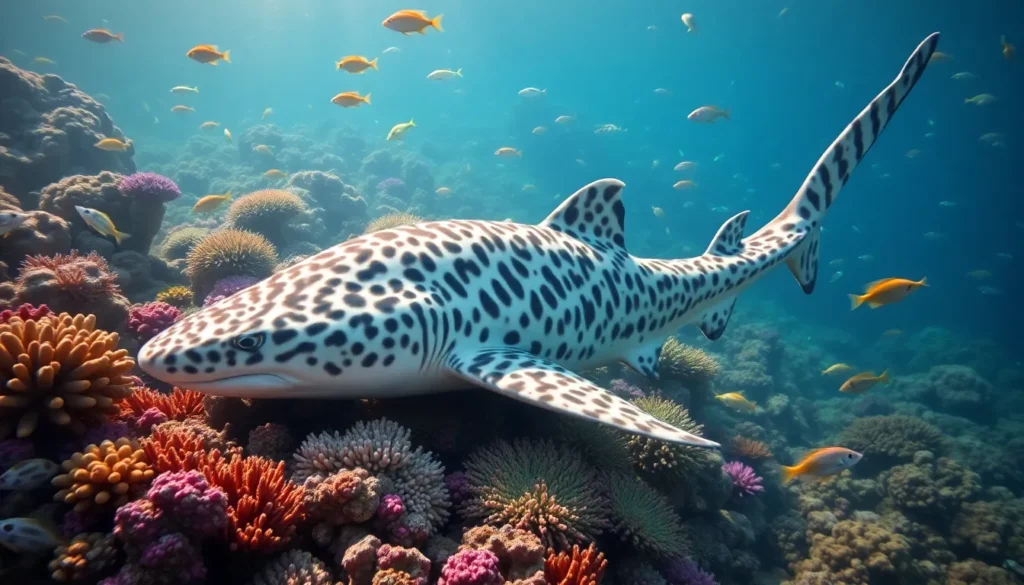
Short Answer
21 Facts About Zebra Sharks
- Distinctive Appearance: Zebra sharks have a unique pattern of stripes when young, which change to spots as they mature, resembling a leopard-like appearance.
- Scientific Classification: They belong to the family Stegostomatidae and are the only extant species in the genus Stegostoma.
- Size: Adult zebra sharks can grow up to 2.5 meters (8.2 feet) in length, making them relatively large among reef sharks.
- Habitat Range: They are found in tropical Indo-Pacific waters, including the Red Sea, East Africa, and northern Australia.
- Nocturnal Behavior: Zebra sharks are primarily nocturnal hunters, resting on the sea floor during the day and becoming active at night.
- Diet: Their diet mainly consists of mollusks, crustaceans, small bony fishes, and occasionally sea urchins.
- Movement: They have a unique mode of locomotion, often crawling along the seabed using their muscular pectoral fins.
- Reproduction: Zebra sharks are oviparous, laying spiral-shaped egg cases that attach to substrates on the ocean floor.
- Longevity: They can live up to 25-30 years in the wild, though precise lifespan data is limited.
- Conservation Status: The IUCN lists zebra sharks as Endangered due to habitat degradation and fishing pressures.
- Behavioral Sociality: They are generally solitary but may gather in small groups during mating or resting periods.
- Camouflage: Their spotted pattern provides effective camouflage against the sandy and rocky ocean floor.
- Respiration: Zebra sharks can pump water over their gills while stationary, allowing them to rest on the seabed without swimming constantly.
- Predators: Larger sharks and occasionally humans pose threats to zebra sharks, especially juveniles.
- Ecological Role: As benthic predators, zebra sharks help maintain the balance of reef ecosystems by controlling populations of invertebrates and small fishes.
- Human Interaction: They are generally harmless to humans and sometimes appear in public aquariums due to their distinctive appearance.
- Adaptations: Their flattened bodies and flexible tails assist in maneuvering through coral reefs and crevices.
- Egg Development: The incubation period for zebra shark eggs can last several months before hatching.
- Juvenile vs Adult Patterns: The transformation from striped juveniles to spotted adults is an unusual trait among sharks.
- Scientific Research: Zebra sharks have been subjects in studies of shark locomotion and reproductive biology.
- Common Names: Besides zebra shark, they are sometimes called leopard sharks, though this name can cause confusion with other species.
Habitat and Behavior
Zebra sharks inhabit shallow tropical and subtropical waters, often found on coral reefs, sandy flats, and rocky areas from the surface down to depths of around 62 meters (203 feet). They prefer warm waters of the Indo-Pacific region, including areas around northern Australia, Southeast Asia, and the Red Sea. These sharks are mostly solitary creatures that spend their daytime resting on the sea floor, camouflaged among rocks and coral. At night, they become active hunters, using their sensory adaptations to locate prey such as mollusks, crustaceans, and small fish. Their ability to crawl using their pectoral fins allows them to navigate complex reef structures effectively. Reproduction involves laying spiral-shaped egg cases that attach to coral or rocky substrates, where the embryos develop over several months before hatching. Overall, zebra sharks are benthic predators adapted to reef environments, utilizing their unique locomotion and camouflage to thrive.
Why This Animal Matters
Zebra sharks hold ecological significance as mid-level predators on coral reefs, helping regulate populations of invertebrates and small fish, which contributes to the health and stability of reef ecosystems. Their presence indicates a balanced marine environment, as they are sensitive to habitat changes and overfishing. Culturally, they attract interest among divers and marine enthusiasts due to their distinctive appearance and gentle nature. Conservation-wise, zebra sharks face threats from habitat destruction, fishing, and the aquarium trade, making their protection important for biodiversity preservation. Studying zebra sharks also provides valuable insights into shark biology, locomotion, and reproductive strategies, supporting broader marine conservation efforts.
Common Misconceptions
Misconception: Zebra sharks are aggressive and dangerous to humans.
Correction: Zebra sharks are generally docile and pose little threat to humans. They are often described as gentle and are considered safe for divers.

Misconception: The name “leopard shark” exclusively refers to zebra sharks.
Correction: The name “leopard shark” is also used for a different species (Triakis semifasciata) found in the Pacific Ocean, which can cause confusion. Zebra sharks are sometimes called leopard sharks but are taxonomically distinct.
Misconception: Zebra sharks do not change appearance as they grow.
Correction: Zebra sharks exhibit a significant transformation from striped juveniles to spotted adults, a rare trait among sharks.
Misconception: Zebra sharks need to keep swimming constantly to breathe.
Correction: Unlike some shark species, zebra sharks can pump water over their gills while stationary, enabling them to rest on the ocean floor.
FAQ
What is the typical size of a zebra shark?
Adult zebra sharks typically grow up to 2.5 meters (8.2 feet) in length.
Where are zebra sharks commonly found?
Zebra sharks inhabit tropical waters in the Indo-Pacific region, including coral reefs and sandy bottoms from the Red Sea to northern Australia.
Are zebra sharks dangerous to humans?
No, zebra sharks are generally docile and pose little threat to humans. They are often considered gentle and safe for divers.



Leave a Reply