
Short Answer
21 Facts About Uakari Monkeys
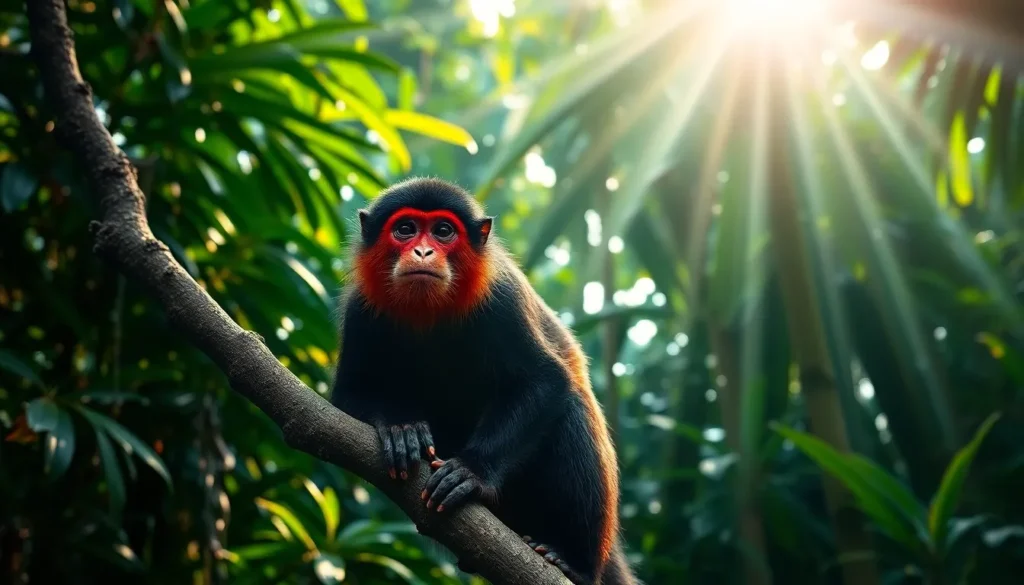
- Distinctive Red Face
Uakari monkeys are famous for their bright red faces, which are thought to indicate health and vitality, as the redness results from visible blood vessels under thin skin. - Short Tails
Unlike many other New World monkeys, uakaris have very short tails, which are not prehensile and are not used for grasping. - Habitat
They primarily inhabit the flooded forests and riverine areas of the Amazon basin in countries such as Brazil, Peru, Colombia, and Bolivia. - Diet
Uakaris mainly feed on fruits, seeds, and occasionally insects, with some species specialized in eating hard-to-crack seeds. - Social Structure
They live in large social groups that can number from 20 up to over 100 individuals, which may help protect against predators. - Locomotion
Uakaris are arboreal and move through the forest canopy using quadrupedal walking and leaping between branches. - Species Diversity
There are several species of uakari monkeys, including the bald uakari (Cacajao calvus) and the black-headed uakari (Cacajao melanocephalus). - Conservation Status
Many uakari species are considered vulnerable or near threatened due to habitat loss and hunting pressures. - Breeding
Uakaris have a seasonal breeding cycle, with females typically giving birth to a single infant after a gestation period of about five to six months. - Communication
They communicate through vocalizations, facial expressions, and body postures to maintain group cohesion and convey alarm. - Predators
Natural predators include large birds of prey, snakes, and wild cats such as jaguars and ocelots. - Health Indicator
The red coloration of the face may serve as a visual indicator of health; pale faces can suggest illness or parasite infestation. - Longevity
In the wild, uakaris can live up to 15 years, though lifespan may vary among species. - Scientific Name Origin
The genus name “Cacajao” derives from indigenous languages but the exact meaning is uncertain. - Fur Texture
Uakaris have dense, long fur, which may help protect them from insects and harsh weather conditions in their environment. - Diet Specialization
Some uakari species have strong jaws and specialized teeth to crack open tough seeds that other animals cannot access. - Activity Patterns
They are diurnal, being most active during daylight hours and resting at night. - Group Movement
Uakaris move through the canopy together, often traveling collectively to feeding sites to maximize safety and foraging success. - Cultural Significance
In some indigenous Amazonian cultures, uakaris appear in folklore and traditional stories due to their unusual appearance. - Research Importance
Uakaris are studied by primatologists to better understand primate social systems and adaptation to flooded forest environments. - Threats
Deforestation, habitat fragmentation, and hunting for food or the pet trade are significant threats to uakari populations.
Habitat and Behavior
Uakari monkeys inhabit the Amazon rainforest, particularly preferring seasonally flooded forests known as várzea. Their arboreal lifestyle means they spend most of their time in the tree canopy, moving by quadrupedal locomotion and leaping. They live in large social groups, which help reduce predation risk and improve foraging efficiency. Their diet consists mainly of fruits and seeds, with some species adapted to cracking hard seeds with powerful jaws. Uakaris are diurnal and depend heavily on visual cues to communicate, with their red faces playing a key role in social interactions. They are adapted to the wet and dynamic environment of the Amazon basin, relying on dense forest cover for shelter and food resources.
Why This Animal Matters
Ecologically, uakari monkeys contribute to seed dispersal, helping maintain the diversity and regeneration of Amazonian forests. Their specialized diet on seeds also influences forest composition. From a conservation perspective, uakaris serve as indicators of forest health due to their sensitivity to habitat disturbance. Culturally, they hold significance in indigenous Amazonian communities, featuring in local lore and traditional knowledge. Studying uakaris provides insights into primate evolution, social behavior, and adaptation to flooded forest ecosystems, enriching scientific understanding of biodiversity in one of the world’s most important natural habitats.
Common Misconceptions
Misconception: Uakari monkeys use their tails to grasp branches like some other monkeys.
Correction: Uakaris have very short tails that are not prehensile and do not assist in grasping branches.

Misconception: The red face of the uakari is due to fur coloration.
Correction: The red face results from visible blood vessels beneath thin skin, not fur color.
Misconception: Uakaris are solitary animals.
Correction: Uakaris are highly social and live in large groups, sometimes exceeding 100 individuals.
Misconception: Uakari monkeys are widespread throughout all tropical forests.
Correction: Uakaris are restricted primarily to the Amazon basin’s flooded and riverine forests.
FAQ
What distinguishes uakari monkeys from other primates?
Uakari monkeys are distinguished by their bright red faces, very short tails, and specialized diet focused on hard seeds. They live in large social groups in flooded Amazonian forests.
Why do uakari monkeys have red faces?
The red coloration is caused by visible blood vessels beneath thin skin on their faces, serving as an indicator of health and vitality to other monkeys.
Are uakari monkeys endangered?
Several species of uakari are classified as vulnerable or near threatened, mainly due to habitat loss and hunting pressures affecting their populations.






Leave a Reply