
Short Answer
21 Facts About Extinction Events and Animals
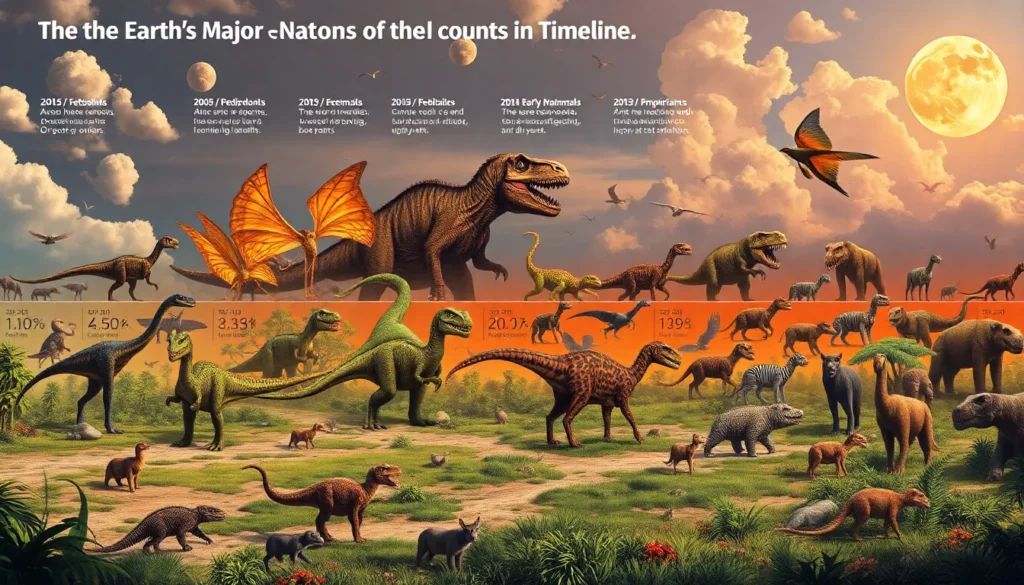
- Mass extinction events have occurred five times in Earth’s history. These major events, including the Permian-Triassic and Cretaceous-Paleogene extinctions, caused massive losses of animal species across many groups.
- The Permian-Triassic extinction was the largest. Occurring about 252 million years ago, it wiped out an estimated 90-96% of marine species and 70% of terrestrial vertebrate species.
- The Cretaceous-Paleogene extinction led to the demise of non-avian dinosaurs. This event about 66 million years ago allowed mammals and birds to diversify and dominate terrestrial ecosystems.
- Extinction events often result from multiple factors. Causes can include volcanic activity, climate change, asteroid impacts, and ocean anoxia.
- Some species survive extinction events through refugia. These are areas that remain relatively stable and provide shelter during environmental upheavals.
- Extinction events reset ecological communities. Surviving species often radiate and fill vacant niches in the aftermath.
- Marine animals are particularly vulnerable during extinction events. Changes in ocean chemistry, temperature, and oxygen levels affect marine biodiversity severely.
- Extinction is a natural part of evolution. Most species that ever lived are now extinct, and extinction drives evolutionary change by eliminating less adapted species.
- Not all extinctions are mass events. Background extinction occurs at a slower, steady rate independent of catastrophic events.
- Extinction events influence animal morphology. For example, after the Permian extinction, new forms of reptiles and amphibians evolved with different body plans.
- Some animals have survived multiple extinction events. Groups like sharks and coelacanths have persisted for hundreds of millions of years.
- Extinction events can affect predator-prey dynamics. The loss of certain species disrupts food webs and can lead to ecological imbalances.
- Large body size often correlates with higher extinction risk. Many megafauna species have been disproportionately affected during mass extinctions.
- Extinction events have shaped modern biodiversity hotspots. Areas with high species richness today often reflect past refugia or rapid post-extinction diversification.
- Fossil records provide critical evidence for understanding extinction events. They reveal patterns of species loss and survival over geological time.
- Human activity is causing a sixth extinction event. Many scientists argue current species loss rates exceed background levels due to habitat destruction, climate change, and pollution.
- Extinction events can lead to evolutionary innovations. New traits and adaptations sometimes arise in surviving animal lineages in response to changed environments.
- Some extinct animals are known only from fossilized remains. Entire ecosystems have been reconstructed from these fossils to understand past extinctions.
- Isolated island species are highly vulnerable to extinction. Limited ranges and small populations make them susceptible to environmental and human pressures.
- Extinction events impact genetic diversity. Loss of species reduces the gene pool available for future adaptation and evolution.
- Studying extinction events helps predict future biodiversity trends. Insights into past events guide conservation strategies aimed at preventing further losses.
Habitat and Behavior
Extinction events affect animals across diverse habitats, including terrestrial, marine, and freshwater environments. Animals living in stable habitats such as deep oceans or isolated refuges have sometimes survived these events. Behaviors like burrowing, migration, or dietary flexibility can increase survival chances during environmental stress. After extinction events, surviving animals often adapt to new conditions, sometimes shifting their habitats or behaviors to exploit available resources.
Why This Animal Matters
While extinction events are not animals themselves, understanding them is crucial for comprehending animal evolution and biodiversity. These events have shaped the course of life on Earth by periodically resetting ecosystems and influencing which species thrive. Studying extinction events helps scientists learn about resilience, adaptation, and the consequences of environmental change, which is critical for current conservation efforts. Moreover, animals surviving these events often become foundational species in new ecological communities, highlighting their role in ecosystem recovery and stability.
Common Misconceptions
Misconception: Extinction events happen suddenly and kill all species instantly.
Correction: While some extinctions may occur rapidly in geological terms, most take place over thousands to millions of years, with species declining at different rates.

Misconception: All species are equally vulnerable during extinction events.
Correction: Vulnerability varies widely depending on factors such as habitat, physiology, reproductive rate, and ecological role.
Misconception: Extinction events only affect large animals.
Correction: Extinction impacts species of all sizes, from microorganisms to large vertebrates, although body size may influence risk.
Misconception: Extinction is solely a negative process.
Correction: Extinction is a natural and necessary component of evolution that enables new species to emerge and ecosystems to reorganize.
Misconception: The current biodiversity crisis is just like past extinction events.
Correction: Although similar in some respects, the current human-driven extinction differs in speed, scale, and causes from many past natural events.
FAQ
What causes mass extinction events?
Mass extinction events are caused by a combination of catastrophic factors such as massive volcanic eruptions, asteroid impacts, rapid climate changes, and oceanic oxygen depletion that disrupt ecosystems on a global scale.
How do extinction events affect animal evolution?
Extinction events eliminate many species, creating ecological opportunities for surviving species to diversify and evolve new traits, often leading to rapid adaptive radiation and the emergence of new animal groups.
Are humans causing a new extinction event?
Many scientists agree that human activities, including habitat destruction, pollution, and climate change, are driving a current rapid loss of species, often referred to as the sixth mass extinction.

Leave a Reply