
Short Answer
21 Facts About Dholes (Asian Wild Dogs)
- Scientific Classification:
Dholes belong to the genus Cuon and the species Cuon alpinus, making them distinct from other canids like wolves and foxes. - Geographic Range:
Dholes are native to various parts of Asia, including India, Southeast Asia, and parts of Russia and China. - Pack Structure:
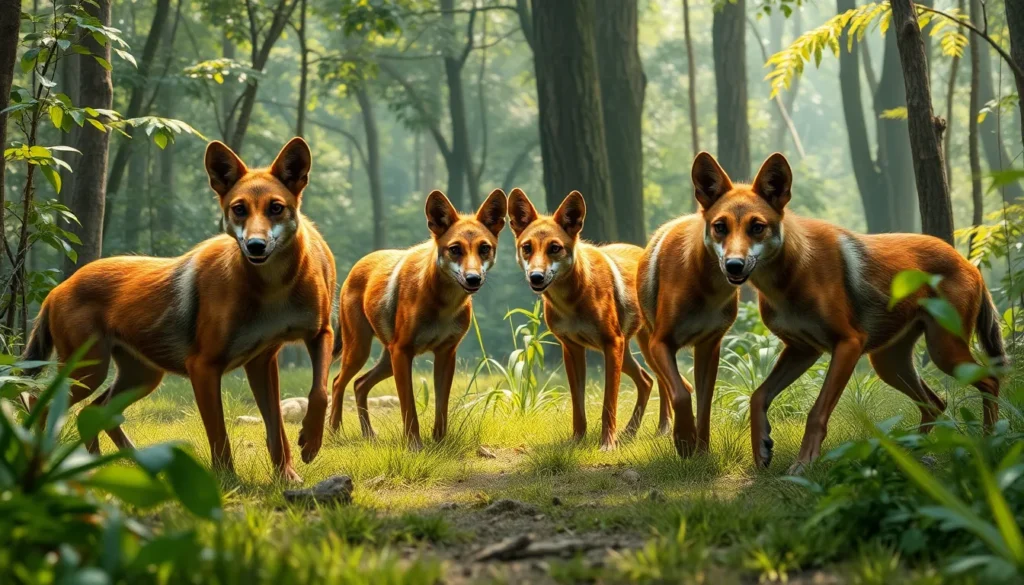
They live and hunt in social packs typically ranging from 5 to 12 individuals, exhibiting complex social behaviors. - Communication:
Dholes use a wide variety of vocalizations, including whistles, to communicate within their packs. - Appearance:
Dholes have a reddish coat that varies in shade, with white markings on the chest and underparts. - Size:
Adult dholes typically measure between 60 to 75 cm at the shoulder and weigh around 10 to 20 kg. - Hunting Techniques:
They are known for cooperative hunting, often targeting medium to large-sized ungulates such as deer and wild boar. - Speed and Endurance:
Dholes are fast runners and can maintain high speeds over long distances during hunts. - Reproduction:
Pack members assist in raising pups, with the alpha female usually being the primary breeder. - Diet:
Primarily carnivorous, dholes feed on a variety of prey, including deer, hares, and birds. - Habitat Preferences:
They inhabit forests, grasslands, and mountainous regions, adapting to various environments. - Conservation Status:
The International Union for Conservation of Nature (IUCN) lists the dhole as Endangered due to habitat loss and declining prey populations. - Threats:
Major threats include habitat fragmentation, human-wildlife conflict, and diseases transmitted by domestic dogs. - Behavioral Adaptations:
Dholes exhibit playful behavior and strong social bonds, which aid in cooperative hunting and pup rearing. - Territoriality:
They mark and defend territories through scent marking and vocalizations. - Genetic Distinctiveness:
Dholes are genetically distinct and not closely related to wolves, despite some superficial similarities. - Role in Ecosystem:
As apex predators, dholes help regulate prey populations, maintaining ecological balance. - Historical Range:
Historically, dholes had a wider range across Asia, but their distribution has significantly contracted. - Interaction with Humans:
Dholes rarely attack humans and are generally shy, but conflicts may arise due to livestock predation. - Research Challenges:
Studying dholes in the wild is difficult due to their elusive nature and the dense habitats they occupy. - Conservation Efforts:
Conservation programs focus on habitat protection, reducing human conflict, and monitoring populations.
Habitat and Behavior
Dholes inhabit diverse environments across Asia, including tropical forests, grasslands, and mountainous regions. Their adaptability allows them to survive in both dense forests and open landscapes. They are diurnal, being most active during the day, and rely heavily on their cooperative pack behavior for hunting and social interaction. Packs work together to hunt medium to large ungulates, using endurance and coordination to exhaust prey. Their social structure is complex, with cooperative care of young and shared responsibilities within the pack. Dholes mark their territories using scent and vocalizations to communicate boundaries and maintain social order within and between packs.
Why This Animal Matters
Dholes play a crucial ecological role as apex predators, helping to control herbivore populations and maintain healthy ecosystems. Their presence indicates a relatively intact environment, as they require sufficient prey and habitat to survive. Culturally, dholes have been part of folklore and traditional knowledge in some Asian regions. Conservation efforts targeting dholes also benefit other species sharing their habitat, making them important flagship species. Protecting dholes contributes to preserving biodiversity and ecological balance in many Asian landscapes.
Common Misconceptions
Misconception: Dholes are closely related to wolves.
Correction: Although dholes share some physical similarities with wolves, they belong to a separate genus and are genetically distinct.

Misconception: Dholes frequently attack humans.
Correction: Dholes are generally shy and avoid humans; attacks on people are very rare.
Misconception: Dholes are solitary animals.
Correction: Dholes are highly social and live in packs, cooperating in hunting and pup care.
FAQ
What is a dhole?
A dhole is a wild canid native to Asia, scientifically known as Cuon alpinus. It is also called the Asian wild dog and is known for its social pack behavior and cooperative hunting.
Where do dholes live?
Dholes inhabit various regions across South and Southeast Asia, including forested and mountainous areas in countries like India, Thailand, and parts of Russia and China.
Are dholes endangered?
Yes, dholes are classified as Endangered by the IUCN due to habitat loss, depletion of prey, disease, and human-wildlife conflicts.




Leave a Reply