
Short Answer
21 Facts About Sugar Gliders
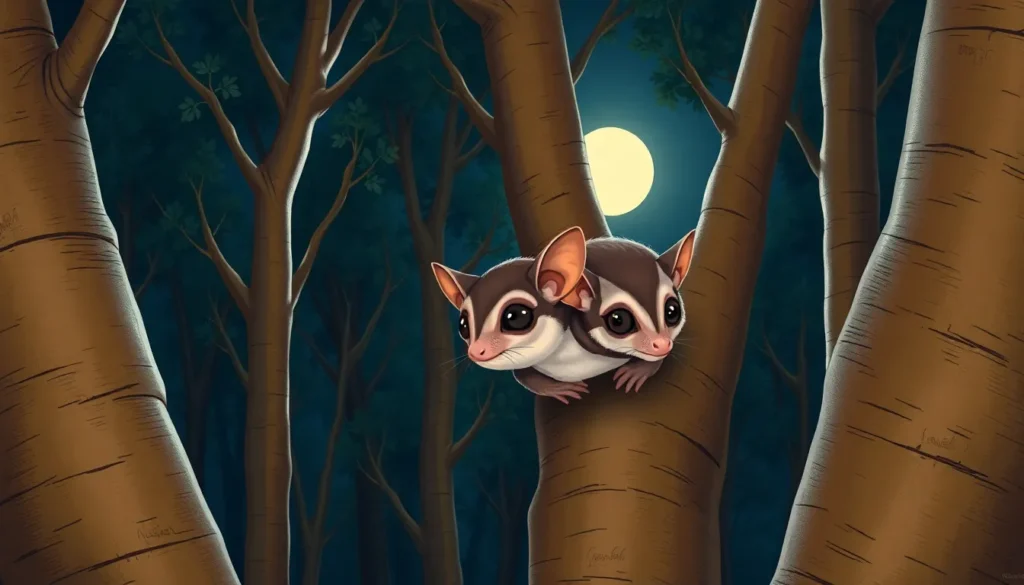
- Small, Nocturnal Marsupials: Sugar gliders are small, nocturnal marsupials that belong to the family Petauridae. They are primarily active at night and have adaptations suited for nocturnal life.
- Gliding Ability: Sugar gliders have a membrane called the patagium that stretches from their forelegs to hindlegs, allowing them to glide between trees for distances up to 50 meters.
- Native Range: They are native to Australia, Tasmania, New Guinea, and some surrounding islands, inhabiting forested and woodland areas.
- Diet Includes Nectar and Insects: Their diet is omnivorous, consisting mainly of nectar, sap, insects, and sometimes small vertebrates, which provides balanced nutrition.
- Social Animals: Sugar gliders are highly social creatures that live in groups called colonies, which can consist of up to seven individuals.
- Communication: They communicate through a variety of vocalizations including barking, chirping, and hissing sounds to convey different messages.
- Reproduction and Development: Female sugar gliders have a pouch in which their young, called joeys, develop after birth, similar to other marsupials.
- Long Lifespan for Size: In the wild, sugar gliders can live up to 9 years, while in captivity they may live up to 12-15 years with proper care.
- Territorial Scent Marking: They use scent glands located on their forehead and chest to mark territory and identify group members.
- Excellent Climbers: Their sharp claws and opposable toes help them climb trees efficiently.
- Low Body Weight: They typically weigh between 90 to 150 grams, making them lightweight and agile.
- Threats in the Wild: Habitat loss and predation by introduced species such as cats and foxes threaten their populations in some areas.
- Adapted Eyesight: Their large eyes enhance night vision, which is crucial for nocturnal activity.
- Tail Usage: Their bushy tail is not prehensile but is used for balance and steering during gliding.
- Temperature Regulation: Sugar gliders engage in torpor, a state of reduced metabolic activity, to conserve energy during cold periods or food shortages.
- Popular Exotic Pets: Due to their size and social behavior, sugar gliders are sometimes kept as exotic pets, though this requires specialized care.
- Legal Status Varies: Ownership of sugar gliders is regulated differently depending on the region and country, with some places banning or restricting them as pets.
- Ecological Role: By feeding on nectar and insects, they contribute to pollination and insect population control within their ecosystems.
- Distinctive Markings: They have a dorsal stripe running from their nose to the mid-back, which varies in intensity among individuals.
- Highly Agile in Trees: Their flexible joints and lightweight bodies enable quick and precise movements among branches.
- Scientific Interest: Sugar gliders are studied for their unique locomotion, social behavior, and physiological adaptations among marsupials.
Habitat and Behavior
Sugar gliders inhabit a variety of forested environments including eucalyptus forests, acacia woodlands, and rainforests. They are arboreal, spending most of their time in trees, and use their gliding ability to move efficiently between tree trunks and branches. Being nocturnal, they rest in tree hollows or nests made from leaves during the day. Their social structure is complex, with colonies maintaining close bonds through grooming and vocal communication. Their diet varies seasonally but primarily includes sap and gum from trees, nectar, pollen, and insects, which they forage for during the night. Sugar gliders have adapted to survive in environments with fluctuating food availability through behaviors such as torpor, helping them conserve energy during cold or lean periods.
Why This Animal Matters
Sugar gliders play an important ecological role as both pollinators and insect predators, supporting the health and diversity of their forest habitats. Their feeding habits help facilitate the pollination of native plants, while their predation on insects aids in controlling pest populations. Culturally, they are known among Indigenous Australian communities and have gained popularity globally as exotic pets, which has raised awareness about their conservation needs. Conservation efforts are important to mitigate threats from habitat destruction and introduced predators. Additionally, sugar gliders serve as valuable subjects in scientific research on marsupial biology, gliding locomotion, and social behavior, providing insights that contribute to broader ecological and evolutionary understanding.
Common Misconceptions
Misconception: Sugar gliders are rodents.
Correction: Sugar gliders are marsupials, not rodents. They belong to the family Petauridae and carry their young in pouches, a characteristic of marsupials.
Misconception: Sugar gliders can fly like bats.
Correction: Sugar gliders do not fly; they glide using a membrane called the patagium to move between trees, which is a controlled form of gliding rather than powered flight.
Misconception: Sugar gliders are low-maintenance pets.
Correction: These animals require specialized diets, social interaction, and environmental enrichment to thrive in captivity, making them high-maintenance pets unsuitable for most owners.
Misconception: Sugar gliders are solitary creatures.
Correction: Sugar gliders are highly social animals that live in groups in the wild and require social companionship to maintain psychological health.
FAQ
Are sugar gliders good pets?
Sugar gliders require specialized care, including a proper diet, social interaction, and environmental enrichment. They are social animals and may develop behavioral problems if kept alone. Potential owners should research thoroughly and consider their long-term commitment.
How do sugar gliders glide?
Sugar gliders have a patagium, a membrane of skin extending from their forelegs to their hindlegs. By spreading their limbs, they stretch this membrane to catch air and glide between trees, allowing efficient movement across forest canopies.
What do sugar gliders eat in the wild?
In their natural habitat, sugar gliders consume a varied diet including tree sap and gum, nectar, pollen, insects, and occasionally small vertebrates. This diet supports their nutritional needs and varies seasonally depending on availability.
Leave a Reply