
Short Answer
21 Facts About Red Pandas
- Scientific Classification: Red pandas belong to the family Ailuridae and are the only living members of this family.
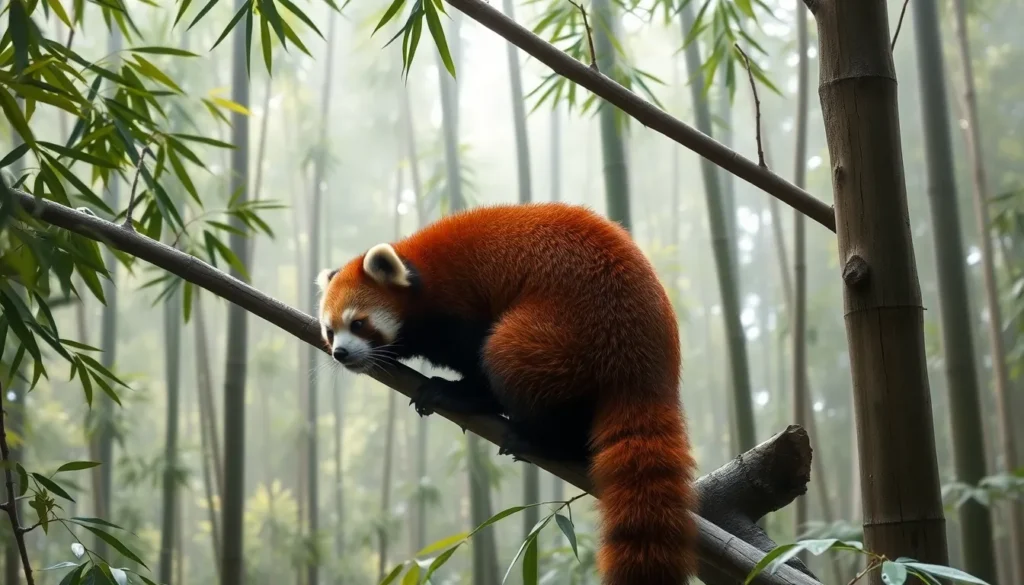
- Appearance: They have reddish-brown fur with a long, bushy tail featuring six alternating red and buff rings.
- Size: Red pandas are about the size of a domestic cat, measuring around 50 to 64 cm in body length, with tails adding another 28 to 59 cm.
- Diet: Their diet consists primarily of bamboo leaves and shoots, but they also eat fruits, acorns, roots, and occasionally small animals and eggs.
- Habitat: They inhabit temperate forests in the Himalayas and high mountain areas of China, typically between 2,200 and 4,800 meters elevation.
- Behavior: Red pandas are mostly solitary and are active mainly from dusk to dawn (crepuscular and nocturnal).
- Climbing Skills: They are excellent climbers, using their sharp claws and flexible ankles to navigate trees efficiently.
- Reproduction: Breeding season generally occurs from January to March, with females giving birth to one to four cubs after a gestation of about 134 days.
- Lifespan: In the wild, red pandas live approximately 8 to 10 years, but they can live up to 15 years in captivity.
- Conservation Status: Classified as Endangered by the IUCN due to habitat loss, poaching, and fragmentation.
- Distinct from Giant Pandas: Despite their name, red pandas are not closely related to giant pandas and belong to a separate family.
- Unique Wrist Bone: They have a false thumb, an extended wrist bone, which helps them grasp bamboo and climb trees.
- Communication: Red pandas communicate through body language and a variety of sounds, including whistles, squeals, and twitters.
- Territorial Marking: They use scent glands located on the underside of their tails to mark territory.
- Activity Patterns: Red pandas spend much of their time resting or sleeping during the day to conserve energy.
- Thermoregulation: Their thick fur and bushy tails help insulate them against cold temperatures in mountainous habitats.
- Threats: Besides habitat destruction, red pandas face threats from illegal pet trade and accidental trapping.
- Population Estimates: Wild populations are estimated to be fewer than 10,000 mature individuals and declining.
- Role in Culture: In some regions, red pandas are featured in local folklore and are considered symbols of gentleness and agility.
- Captive Breeding: Various zoos worldwide participate in breeding programs to help conserve the species.
- Scientific Interest: Red pandas are studied for their unique evolutionary history and adaptations to bamboo diets.
Habitat and Behavior
Red pandas are native to the temperate forests of the eastern Himalayas and southwestern China, where they favor areas rich in bamboo understory. These forests provide a cool climate and ample tree cover, which are essential for their survival. Red pandas are arboreal and spend much of their time in trees, where they forage for food and escape predators. They are primarily solitary creatures, except during mating season or when mothers rear cubs. Their activity peaks during twilight hours, aligning with their crepuscular and nocturnal nature. Their diet mainly consists of bamboo, although they are opportunistic feeders and consume various plant materials and small animals when available. Red pandas use scent marking to communicate territorial boundaries and rely on their agility to navigate forest canopies. Seasonal changes influence their behavior, including breeding and feeding patterns, as they adapt to temperature fluctuations and food availability.
Why This Animal Matters
Red pandas play an important role in their ecosystems by contributing to the health of bamboo forests, which are vital habitats for many species. By feeding on bamboo and other plants, they help control vegetation growth and promote biodiversity. Their presence indicates a healthy, functioning forest ecosystem. Culturally, red pandas hold significance in local traditions and have become emblematic species for conservation awareness in their native regions and globally. Due to their endangered status, red pandas are a focus for conservation efforts that aim to protect forest habitats and prevent biodiversity loss. Studying red pandas also provides insights into evolutionary biology and adaptation, particularly regarding dietary specialization and arboreal lifestyles. Protecting red pandas supports broader environmental conservation goals and raises awareness about the impacts of deforestation and climate change.
Common Misconceptions
Misconception: Red pandas are closely related to giant pandas.
Correction: Despite sharing a name and bamboo diet, red pandas belong to their own family, Ailuridae, and are more closely related to raccoons and skunks than to giant pandas.
Misconception: Red pandas are aggressive and dangerous.
Correction: Red pandas are generally shy and avoid humans, using climbing and scent marking rather than aggression for defense.
Misconception: Red pandas are widespread and common.
Correction: Red pandas are endangered with a limited and fragmented range, facing threats that have led to declining populations.
FAQ
Are red pandas related to giant pandas?
No, red pandas and giant pandas are not closely related. Red pandas belong to their own family, Ailuridae, while giant pandas are members of the bear family Ursidae. They do share a similar bamboo-based diet but evolved separately.
What do red pandas eat?
Red pandas primarily eat bamboo leaves and shoots, but they also consume fruits, acorns, roots, and occasionally insects, eggs, and small animals.
Why are red pandas endangered?
Red pandas face threats from habitat loss due to deforestation and human encroachment, poaching, and fragmentation of their natural habitats, leading to declining populations and an Endangered classification by the IUCN.




Leave a Reply