
Short Answer
21 Facts About Land Snails
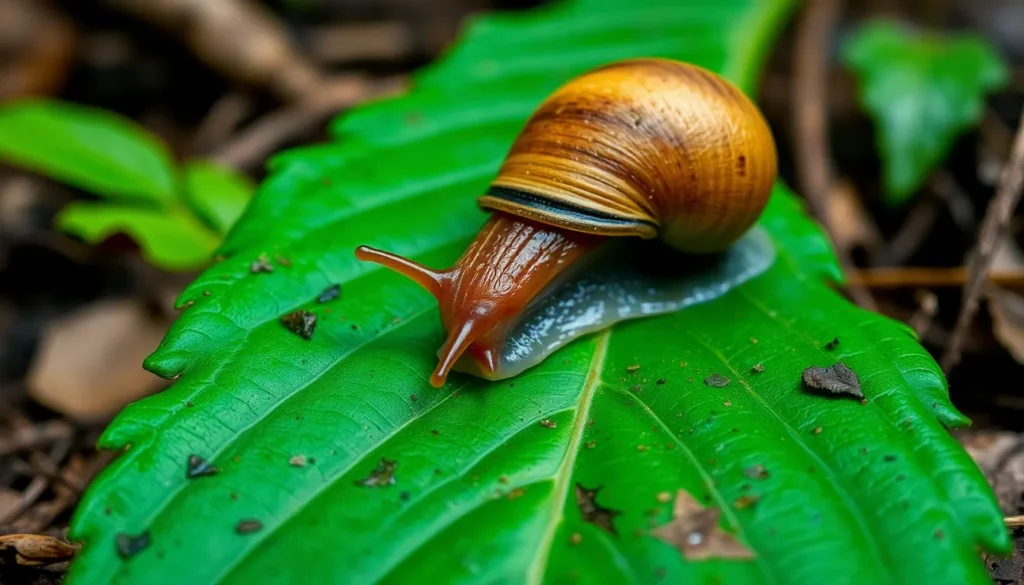
- Land snails belong to the class Gastropoda. They are mollusks characterized by a muscular foot and a coiled shell.
- They have a hard, external shell. This shell protects their soft body and can vary in shape, size, and color depending on the species.
- Land snails move using a muscular foot. This foot secretes mucus to reduce friction and help glide over surfaces.
- Most land snails are hermaphrodites. They possess both male and female reproductive organs, which allows them to mate with any mature individual of their species.
- Snails have tentacles on their heads. Typically, two pairs exist: the upper pair bear eyes, while the lower pair serve as sensory organs.
- They breathe air through a lung-like structure. Unlike aquatic snails with gills, land snails use a pallial lung to extract oxygen from the air.
- Land snails are mostly nocturnal. They are more active at night or in moist conditions to avoid dehydration.
- Their diet mainly consists of plant material. They feed on leaves, stems, fruits, and sometimes fungi or decaying organic matter.
- Land snails produce slime or mucus. This mucus helps in locomotion, moisture retention, and protection from rough surfaces and predators.
- They can retract fully into their shells. This defensive behavior helps protect their vulnerable bodies from harm.
- Some species can hibernate or estivate. In unfavorable conditions such as extreme cold or drought, they enter a state of dormancy to conserve energy.
- Their shells grow throughout their lives. As the snail grows, the shell’s opening expands and new shell material is added in a spiral pattern.
- Land snails have a radula. This is a tongue-like organ with rows of tiny teeth used to scrape or cut food.
- Snail shells are made primarily of calcium carbonate. This mineral composition makes their shells hard but also requires them to obtain sufficient calcium from their environment.
- The speed of land snails is very slow. Typically, they move at a rate of only a few millimeters per second.
- Some land snail species are considered pests. They can damage crops and garden plants, impacting agriculture.
- Land snails serve as prey for various animals. Birds, mammals, insects, and amphibians commonly feed on snails.
- They have been used in cultural symbolism. In some cultures, snails represent patience and persistence due to their slow movement.
- Fossil records show snails have existed for hundreds of millions of years. They have a long evolutionary history dating back to the Paleozoic era.
- Some land snails are kept as pets. Certain species are raised in captivity for educational and hobby purposes.
- Conservation concerns exist for some species. Habitat loss and pollution threaten certain land snail populations worldwide.
Habitat and Behavior
Land snails inhabit a variety of terrestrial environments, including forests, grasslands, gardens, and urban areas. They prefer moist and shaded habitats to prevent dehydration, as their soft bodies are vulnerable to drying out. Most are nocturnal or crepuscular, becoming active during the cooler, more humid times of day. They move slowly by contracting muscles along their foot, aided by mucus secretion that reduces friction. Their diet mainly consists of decaying plant material, fungi, and live plants, contributing to nutrient cycling in ecosystems. During dry or cold periods, many land snails enter dormancy states such as hibernation or estivation to survive adverse conditions.
Why This Animal Matters
Land snails play important ecological roles as decomposers and as part of the food web. By feeding on plant material and fungi, they help recycle nutrients in the soil, supporting plant growth. They also serve as prey for numerous animals, thus contributing to biodiversity. In some cultures, snails have symbolic significance and appear in folklore and art. From a conservation perspective, some land snail species are indicators of environmental health, as they are sensitive to habitat changes and pollution. Protecting land snail habitats helps maintain overall ecosystem balance.
Common Misconceptions
Misconception: Snails carry their homes on their backs like turtles.
Correction: The snail’s shell is part of its body, not a separate home. It grows with the snail and provides protection.
Misconception: All snails are pests that damage gardens.
Correction: While some species can be agricultural pests, many snails contribute positively to ecosystems by decomposing organic matter.
FAQ
How do land snails breathe?
Land snails breathe air using a pallial lung, a specialized part of their mantle cavity adapted to extract oxygen from the atmosphere.
Why do land snails produce slime?
The slime or mucus produced by land snails helps them move smoothly by reducing friction, prevents injury from rough surfaces, and helps retain moisture.
Are land snails harmful to gardens?
While some land snail species can damage plants by feeding on leaves and stems, many snails play beneficial roles by decomposing organic matter and enriching soil health.



Leave a Reply