
Short Answer
21 Facts About Saolas (Rare Bovid)
- Discovery: The saola (Pseudoryx nghetinhensis) was first described scientifically in 1992, making it one of the most recent large mammal discoveries.
- Rare sightings: Saolas are extremely elusive, with very few confirmed sightings and photographic evidence in the wild.
- Scientific classification: Saolas belong to the Bovidae family, which includes antelopes, goats, and cattle.
- Common name: They are sometimes called the “Asian unicorn” due to their rarity and distinctive horns.
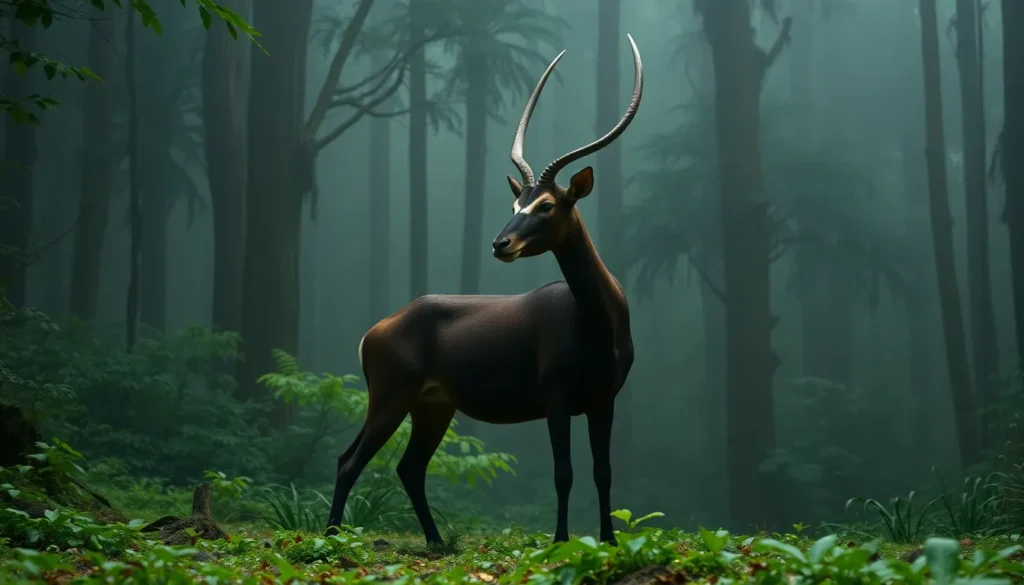
- Physical appearance: Saolas have slender bodies, dark brown coats with white markings on the face and legs, and long, straight, slightly twisted horns.
- Horn length: Both males and females possess horns that can reach up to 50 centimeters (20 inches) in length.
- Size: Saolas are medium-sized bovids, standing around 80 centimeters (31 inches) at the shoulder and weighing approximately 90 kilograms (200 pounds).
- Silent nature: They are known to be very quiet animals, rarely making vocalizations.
- Habitat: Saolas inhabit dense, evergreen forests in the Annamite mountain range along the Laos-Vietnam border.
- Elevation range: They live at elevations between 300 and 1,000 meters above sea level.
- Diet: Saolas are herbivores, feeding primarily on leaves, shrubs, and grasses found in their forest environment.
- Behavior: They are believed to be solitary or found in small groups, and are most active at dawn and dusk (crepuscular).
- Reproduction: Very little is known about their breeding habits, though it is assumed they have a similar reproductive cycle to related bovids.
- Threats: Habitat loss due to logging and agriculture, as well as hunting, are major threats to saolas.
- Conservation status: The International Union for Conservation of Nature (IUCN) classifies the saola as Critically Endangered.
- Conservation efforts: Various organizations are working to protect saola habitats and reduce hunting pressures.
- Captivity challenges: No saolas have survived long in captivity, making conservation efforts in the wild crucial.
- Ecological role: As herbivores, saolas help maintain the balance of vegetation in their forest ecosystems.
- Cultural significance: Local communities regard the saola as a mysterious and important symbol of biodiversity.
- DNA studies: Genetic research shows saolas are a distinct genus, closely related to cattle and buffalo but unique in their lineage.
- Ongoing research: Scientists continue to study saolas using camera traps and environmental DNA to better understand their distribution and population.
Habitat and Behavior
Saolas are native to the humid, dense evergreen forests of the Annamite Mountains, a region stretching across Laos and Vietnam. These forests provide the thick cover and abundant vegetation that saolas require for shelter and food. Their elusive nature and preference for remote, rugged terrain contribute to the difficulty in studying them. Saolas are believed to be primarily solitary or found in small family groups. They are crepuscular, being most active at twilight hours. Their diet consists mainly of leaves, shoots, and grasses, which they browse quietly to avoid predators. The dense forest habitat also helps them evade threats, though habitat fragmentation and hunting have significantly reduced their numbers.
Why This Animal Matters
The saola holds immense ecological importance as a part of Southeast Asia’s unique biodiversity. As a herbivore, it plays a role in maintaining the health and diversity of forest vegetation. Additionally, the saola symbolizes the critical need for conservation in one of the world’s most biologically rich but threatened regions. Its discovery in the late 20th century highlighted that large mammal species can still be unknown to science, emphasizing the importance of protecting unexplored habitats. Cultural respect for the saola among local communities fosters potential for community-based conservation initiatives. Given its critical status, the saola serves as a flagship species for conservation efforts in the Annamite Mountains.
Common Misconceptions
Misconception: The saola is a mythical creature or a legend.
Correction: The saola is a real, scientifically described species, although its rarity and elusive nature have contributed to myths about its existence.
Misconception: Saolas are closely related to antelopes.
Correction: While saolas belong to the Bovidae family, genetic studies show they are distinct and more closely related to cattle and buffalo than to typical antelopes.
Misconception: Saolas are commonly found and not endangered.
Correction: Saolas are critically endangered, with only a few confirmed sightings and a very limited population in the wild.
FAQ
Where is the saola found?
The saola is found exclusively in the Annamite Mountains along the border between Laos and Vietnam, inhabiting dense evergreen forests.
Why is the saola so rare?
The saola is rare due to its naturally elusive behavior, limited geographic range, habitat loss, and hunting pressures.
Has the saola ever been kept in captivity?
Attempts to keep saolas in captivity have failed, with no individuals surviving long, making in-situ conservation critical.



Leave a Reply