
Short Answer
21 Facts About Rainforest Animals
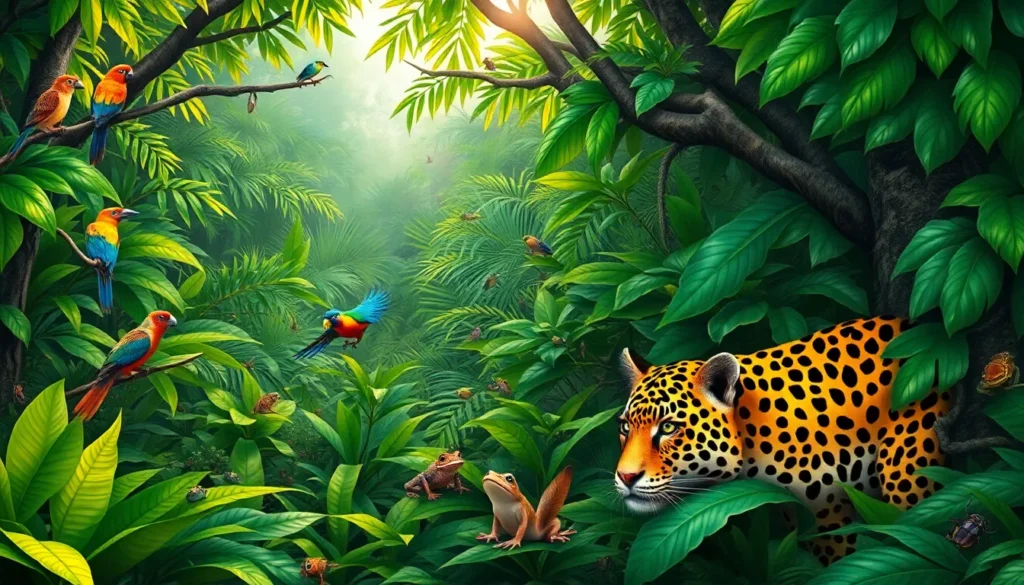
- Rainforest animals are among the most diverse on Earth. Tropical rainforests cover less than 10% of the Earth’s surface but are home to over half of the world’s known animal species.
- Many rainforest animals have developed unique camouflage. For example, the leaf-tailed gecko blends perfectly with tree bark or leaves to avoid predators.
- Some rainforest animals are nocturnal. Species like the kinkajou and many frogs are active at night to avoid daytime predators and heat.
- Rainforest frogs often have bright colors. These bright colors serve as warnings to predators about their toxicity.
- Many rainforest birds are excellent mimics. The lyrebird, for instance, can imitate the calls of other birds and even human-made sounds.
- Rainforest mammals exhibit a wide range of diets. Some are frugivores like many monkeys, while others are carnivores like jaguars.
- Some animals use the rainforest canopy as their primary habitat. Species such as sloths and certain monkeys rarely descend to the forest floor.
- Rainforest insects can be extremely abundant. A single tree may host thousands of insect species, many still undescribed by science.
- Many rainforest animals have symbiotic relationships. Ants protect certain tree species in exchange for food and shelter.
- Some rainforest animals communicate using ultrasound. Bats and some frogs use ultrasonic calls that are inaudible to humans.
- Rainforest animals often play key roles in seed dispersal. Birds, bats, and primates help spread seeds, facilitating forest regeneration.
- Certain rainforest species exhibit remarkable parental care. For example, poison dart frogs carry their tadpoles to water-filled tree holes.
- Many rainforest animals rely on water sources within the forest. Streams, pools, and tree holes provide essential hydration and breeding sites.
- Rainforest animals show diverse reproductive strategies. Some lay eggs like reptiles and amphibians, while others bear live young like mammals.
- Some rainforest animals have developed resistance to toxins. The golden poison frog produces batrachotoxin but is immune to its own poison.
- Rainforest primates exhibit complex social behaviors. Species such as howler monkeys have established hierarchies and vocal communication systems.
- Many rainforest animals are threatened by habitat loss. Deforestation and fragmentation severely impact species survival.
- Rainforest animals contribute to nutrient cycling. Decomposers like certain insects and fungi break down organic material, sustaining forest health.
- Some rainforest animals are bioindicators. Their presence or absence can indicate environmental changes or pollution levels.
- Rainforest animals often demonstrate impressive adaptations to humidity and temperature. Amphibians, for example, have permeable skin that requires moist environments to survive.
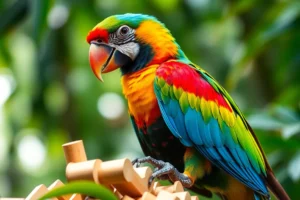
- Conservation efforts often focus on flagship rainforest species. Animals like jaguars, orangutans, and macaws help raise awareness for broader ecosystem protection.
Habitat and Behavior
Rainforest animals inhabit tropical and subtropical forests characterized by high rainfall and dense vegetation. These ecosystems provide a complex three-dimensional environment, including emergent trees, canopy layers, understory, and forest floor. Many animals have specialized behaviors to navigate these layers, such as arboreal locomotion in primates and gliding in some rodents and reptiles. Behavioral adaptations include nocturnality to avoid daytime predators and thermoregulation in a humid climate. Diets vary widely, with some species specializing in fruits, insects, or small vertebrates. Social structures range from solitary animals to intricate group dynamics observed in certain mammals and birds.
Why This Animal Matters
Rainforest animals play essential ecological roles including pollination, seed dispersal, and maintaining food webs. Their interactions contribute to forest regeneration and biodiversity maintenance. Culturally, many rainforest species hold significance for indigenous peoples and global communities alike, often featuring in folklore and traditional medicine. Conservation of rainforest animals is critical as they face threats from habitat destruction, climate change, and illegal wildlife trade. Protecting these animals helps preserve the overall health and stability of rainforest ecosystems, which in turn supports global environmental balance.
Common Misconceptions
Misconception: All rainforest animals live on the forest floor.
Correction: Many rainforest animals live in the canopy or emergent layers, rarely descending to the ground, such as sloths and many monkey species.

Misconception: Rainforest animals are mostly large and dangerous.
Correction: While some rainforest animals like jaguars are large predators, the majority are small, including numerous insect and amphibian species.
Misconception: The bright colors of some rainforest animals mean they are safe.
Correction: Bright coloration often serves as a warning of toxicity or danger, as seen in poison dart frogs.
Misconception: Rainforest animals do not adapt well to changes.
Correction: Many rainforest species have evolved specialized adaptations for survival, though rapid environmental changes can still threaten them.
Misconception: Rainforest animals are isolated and do not impact other ecosystems.
Correction: Rainforest species contribute to global biodiversity and ecological processes that influence broader environmental health.
FAQ
Why are rainforest animals so diverse?
Rainforest ecosystems offer a wide range of habitats and abundant resources, which support a tremendous variety of species. The complex structure of rainforests, including multiple vegetation layers, creates numerous ecological niches that animals can adapt to.
How do rainforest animals adapt to living in dense forests?
Many rainforest animals have developed adaptations such as camouflage, arboreal locomotion, nocturnality, and specialized diets to survive in dense, competitive environments with limited light and high humidity.
What threats do rainforest animals face?
Major threats include deforestation, habitat fragmentation, climate change, hunting, and the illegal wildlife trade. These pressures disrupt ecosystems and can lead to population declines or extinctions.
Leave a Reply