
Short Answer
21 Facts About Polar Bear Fur
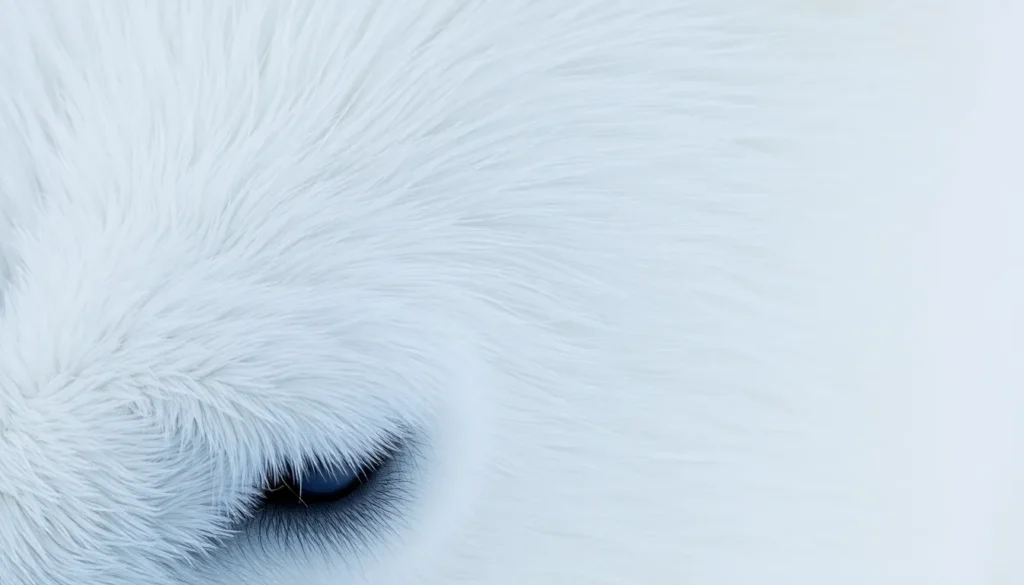
- Polar bear fur consists of two layers: The outer layer is made up of guard hairs, while the dense underfur provides insulation.
- The fur appears white but is actually translucent: Individual hairs are hollow and clear, scattering visible light and giving the bear its white appearance.
- Hollow guard hairs help with insulation: The air trapped inside these hairs reduces heat loss in extremely cold environments.
- Polar bear fur aids in camouflage: The white appearance helps the bear blend into snowy and icy surroundings to hunt seals.
- Fur coloration can vary slightly: Depending on lighting and conditions, polar bear fur can appear yellowish, especially in summer or in captivity.
- Polar bear skin beneath the fur is black: This helps absorb and retain heat from sunlight.
- Fur provides buoyancy: The hollow hairs trap air, which helps polar bears float while swimming.
- Guard hairs are water-repellent: This feature helps keep the underfur dry when swimming in icy water.
- Polar bear fur grows continuously: It thickens in winter for extra warmth and sheds somewhat in summer.
- Fur thickness varies by body region: It is thickest on the back and shoulders, providing extra insulation in key areas.
- Polar bear fur offers protection against UV radiation: The dense fur and black skin beneath help shield the bear from harmful sun exposure.
- Polar bear fur can trap heat effectively: The combined effect of hollow hairs and dense underfur allows survival in temperatures as low as -40°C (-40°F).
- Polar bear fur is adapted to Arctic wind: The fur reduces heat loss even in strong, cold winds by minimizing air exchange near the skin.
- The fur’s hollow structure helps prevent ice buildup: Hollow guard hairs reduce the chance of ice crystals forming directly on the fur.
- Fur contributes to thermoregulation: Polar bears can regulate heat loss by adjusting blood flow to the skin beneath the fur.
- Polar bear fur is unique among bears: No other bear species has similarly adapted hollow guard hairs and insulating underfur.
- Polar bear fur has inspired biomimetic research: Scientists study its properties for creating better insulating materials.
- Polar bear fur helps with sensory functions: Whiskers and vibrissae on the face assist in detecting prey, supported by the fur’s arrangement.
- Polar bear fur is resistant to staining: It can stay relatively clean despite contact with blood or dirt due to its water-repellent properties.
- Polar bear fur is shed seasonally: Bears molt in spring and summer to prepare for warmer conditions.
- Polar bear fur plays a role in social signaling: Fur condition and cleanliness can indicate health and status to other bears.
Habitat and Behavior
Polar bears (Ursus maritimus) inhabit the circumpolar Arctic region, primarily on sea ice where they hunt seals, their main prey. Their fur is critically adapted to the cold, icy habitat, offering insulation and camouflage. Polar bears are excellent swimmers, often traveling long distances in search of food. The hollow guard hairs and dense underfur allow them to retain body heat in freezing temperatures and stay dry after swimming. Behaviorally, polar bears rely on their fur’s camouflage to stalk prey and avoid detection. They spend much of their time on sea ice platforms and coastal areas, and their fur plays an essential role in their survival in this harsh environment.
Why This Animal Matters
Polar bears are apex predators in the Arctic ecosystem, playing a vital role in maintaining the balance of marine life by regulating seal populations. Their fur adaptations represent an extraordinary example of evolutionary response to extreme environments. Culturally, polar bears are iconic symbols of the Arctic and have significance for indigenous peoples. Conservation efforts focus on polar bears due to climate change impacts on sea ice, highlighting the importance of understanding their biology, including fur adaptations, to protect the species and its habitat.
Common Misconceptions
Misconception: Polar bear fur is actually white.
Correction: Polar bear fur is translucent and hollow; the white appearance results from light scattering.
Misconception: Polar bear fur is thick enough to keep them warm without any additional adaptations.
Correction: The fur works in conjunction with black skin that absorbs heat and a thick layer of fat for insulation.
Misconception: Polar bear fur turns yellow because the bears are dirty.
Correction: Yellowish fur is often due to natural oils, age, or exposure to sunlight and is not a sign of uncleanliness.
FAQ
Why does polar bear fur appear white if the hairs are translucent?
Polar bear hairs are hollow and translucent, scattering visible light in a way that makes the fur appear white, providing effective camouflage in snowy environments.
How does polar bear fur help them survive cold Arctic temperatures?
The fur traps air within hollow guard hairs and a dense underfur layer, providing insulation that reduces heat loss. Combined with black skin that absorbs sunlight and a thick fat layer, it keeps polar bears warm.
Does polar bear fur get wet when they swim?
The guard hairs are water-repellent, which helps keep the insulating underfur dry even after swimming in icy water, maintaining the bear’s warmth.



Leave a Reply