
Short Answer
21 Facts About Sand Dollars
- Sand dollars are echinoderms. They belong to the class Echinoidea, which also includes sea urchins and sea biscuits.
- They have a flattened, disk-like shape. This shape helps them burrow into sandy or muddy ocean floors where they live.
- Their skeleton is called a test. The test is made of calcium carbonate and is covered with tiny spines when the animal is alive.
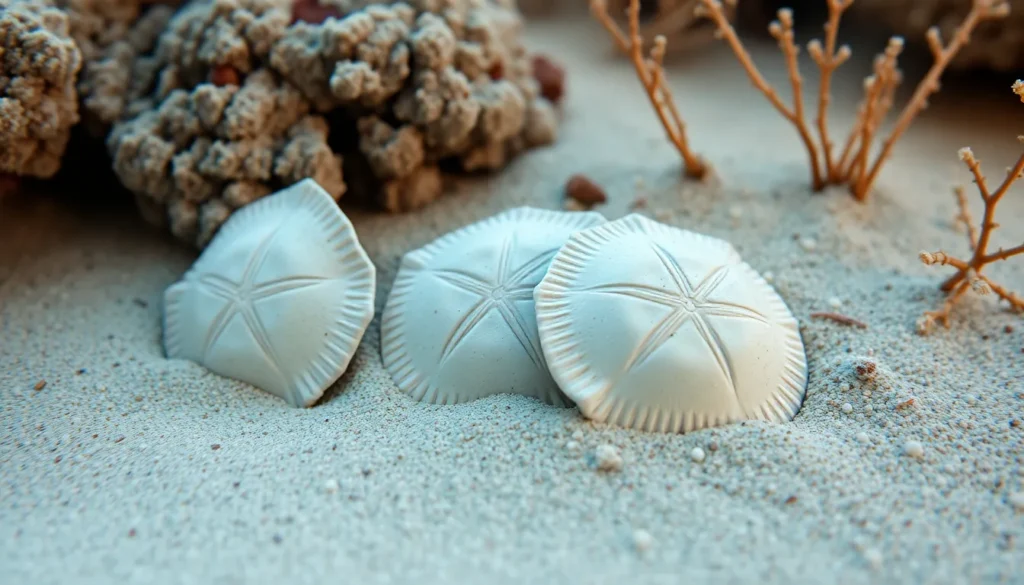
- Sand dollars display a distinctive star-shaped pattern. This pattern is formed by the petaloids, which are specialized respiratory structures.
- They use cilia and spines for movement and feeding. The spines help them move through the sand, while cilia help transport food particles to their mouths.
- Sand dollars primarily feed on small organic particles. They consume plankton, algae, and detritus found in the sediment.
- The mouth of a sand dollar is located on the underside. It is equipped with a structure called Aristotle’s lantern, used for grinding food.
- They are found in temperate and tropical oceans worldwide. Common habitats include shallow sandy or muddy seabeds.
- Sand dollars can burrow just beneath the surface of the sand. This behavior helps protect them from predators and strong currents.
- They are capable of limited movement. Although they are not fast movers, their spines allow slow crawling.
- Sand dollars reproduce by releasing eggs and sperm into the water. Fertilization occurs externally in the ocean.
- The larvae are planktonic and undergo several developmental stages. After settling, they metamorphose into juvenile sand dollars.
- Their tests are often found washed ashore, bleached white by the sun. These empty tests are sometimes collected as souvenirs.
- Live sand dollars are usually darker in color, ranging from purple to brown. Their coloration helps camouflage them in the sand.
- They have a water vascular system. This system, common to echinoderms, helps with movement and feeding.
- Sand dollars are preyed upon by fish, crabs, and sea stars. Their burrowing behavior and spines provide some defense.
- They play a role in ocean ecosystems by recycling nutrients. Through their feeding, they help break down organic matter in sediments.
- Sand dollars are indicators of environmental health. Declines in their populations can signal changes in marine ecosystems.
- They have cultural significance in some coastal communities. Their distinctive shapes have inspired art and folklore.
- Sand dollars belong to the order Clypeasteroida. This order includes related species commonly known as sea biscuits and keyhole urchins.
- Their fossil records date back millions of years. Fossilized sand dollars provide valuable information about ancient marine environments.
Habitat and Behavior
Sand dollars inhabit sandy or muddy seabeds in shallow coastal waters, often in temperate and tropical regions. They prefer environments where they can easily burrow just beneath the surface of the sediment to avoid predators and strong currents. Their flattened bodies and specialized spines aid in locomotion and burrowing. Sand dollars feed by filtering small organic particles, algae, and plankton from the sediment. They reproduce by external fertilization, releasing eggs and sperm into the water column, where planktonic larvae develop before settling to the seabed. Their behavior includes slow crawling and burrowing, which helps them remain camouflaged and protected.
Why This Animal Matters
Sand dollars play an essential ecological role in marine ecosystems by recycling organic matter and contributing to the health of benthic environments. Their feeding activities help break down detritus and recycle nutrients. Additionally, sand dollars serve as prey for a variety of marine predators, linking different levels of the food web. Culturally, their unique appearance has inspired art, jewelry, and folklore in coastal communities. From a scientific perspective, sand dollars and their fossil records provide valuable insights into the evolution of echinoderms and past marine environments. Moreover, their sensitivity to environmental changes makes them useful indicators of ocean health.
Common Misconceptions
Misconception: Sand dollars are a type of shell or coral.
Correction: Sand dollars are echinoderms related to sea urchins and sea stars, not shells or corals.
Misconception: The white sand dollar tests found on beaches are the living animals.
Correction: The white tests are the exoskeletons of dead sand dollars; live individuals are covered in tiny spines and have darker colors.
Misconception: Sand dollars can swim freely in the ocean.
Correction: Sand dollars move very slowly along the ocean floor using spines and cilia; they do not swim freely.
FAQ
What are sand dollars?
Sand dollars are flat, burrowing marine animals belonging to the echinoderm class Echinoidea, related to sea urchins and sea stars.
Are sand dollars alive when you find their white shells on the beach?
No, the white shells or tests found on beaches are the remains of dead sand dollars; live individuals have spines and darker coloration.
How do sand dollars eat?
Sand dollars use their spines and cilia to move food particles toward their mouth, which is located on the underside and contains a jaw-like structure called Aristotle’s lantern to grind food.

Leave a Reply