
Short Answer
21 Facts About Painted Lady Butterflies
- Widespread Distribution
The Painted Lady butterfly (Vanessa cardui) is one of the most widespread butterfly species, found on every continent except Antarctica and South America. - Distinctive Wing Pattern
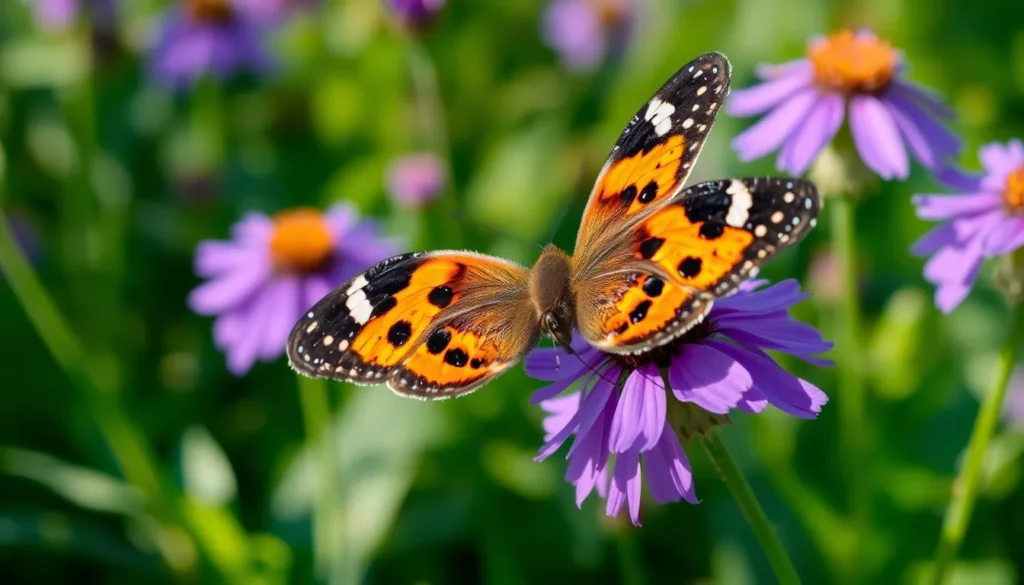
Their wings feature orange, black, and white markings, which help in camouflage and mating displays. - Long-Distance Migrants
Painted Ladies are known for their long migration journeys that can span thousands of kilometers, including annual movements between North Africa and Europe. - Multiple Generations Per Year
They often produce several generations within a year, especially in warmer climates. - Larval Host Plants
The caterpillars primarily feed on plants in the thistle family, including thistles, mallows, and hollyhocks. - Lifecycle Stages
The Painted Lady undergoes complete metamorphosis: egg, larva (caterpillar), pupa (chrysalis), and adult butterfly. - Short Adult Lifespan
Adult Painted Ladies typically live for about 2 to 4 weeks, during which they feed on nectar and reproduce. - Habitat Versatility
They inhabit various environments, from gardens and meadows to deserts and open woodlands. - Temperature-Dependent Development
The development rate of their larvae depends significantly on temperature, with warmer conditions accelerating growth. - Pollination Role
While feeding on nectar, Painted Ladies contribute to the pollination of many flowering plants. - Camouflage as Defense
The undersides of their wings are mottled brown and gray, helping them blend in with natural backgrounds when at rest. - Flight Behavior
They exhibit strong and fast flight, often seen fluttering energetically even on windy days. - Sexual Dimorphism
Male and female Painted Ladies look very similar, though males tend to be slightly smaller and more territorial. - Egg-Laying Preferences
Females lay eggs singly on the underside of host plant leaves to reduce predation risk. - Predators and Parasites
The species faces predation from birds, spiders, and parasitic wasps during various life stages. - Global Migration Tracking
Scientists use citizen science and tagging to study their impressive migratory patterns worldwide. - Climate Change Impact
Changes in climate patterns are altering their migration timings and distribution in some regions. - Population Fluctuations
Their numbers can vary greatly year to year, often influenced by weather conditions and food availability. - Non-Toxic Nature
Unlike some butterflies, Painted Ladies do not possess chemical defenses and rely on camouflage and flight to evade predators. - Cultural Presence
Painted Ladies appear in various cultural artworks and are often symbols of transformation and endurance. - Scientific Research Importance
Due to their wide distribution and migration, Painted Ladies are valuable models for studying ecology and climate change effects.
Habitat and Behavior
Painted Lady butterflies inhabit a broad range of environments across the globe, from temperate gardens to arid deserts. They are highly adaptable and able to exploit diverse habitats as long as suitable host plants for their larvae are present. Their behavior is characterized by rapid and sustained flight, allowing them to migrate over long distances. Adults feed primarily on nectar from a variety of flowering plants, contributing to pollination. The species undergoes complete metamorphosis, with eggs laid on host plants, caterpillars feeding on leaves, and pupae developing in concealed locations. Painted Ladies are resilient and capable of multiple generations annually, particularly in warm climates, enabling them to quickly colonize new areas.
Why This Animal Matters
Painted Lady butterflies play a significant ecological role as pollinators, supporting the reproduction of many plant species. Their presence indicates healthy ecosystems and biodiversity. Their migratory behavior provides opportunities for scientific research into navigation, climate change, and species distribution. Additionally, Painted Ladies hold cultural value as symbols of transformation and endurance across various societies. Their widespread distribution and adaptability make them important indicators for monitoring environmental changes and the impact of human activity on natural habitats.
Common Misconceptions
Misconception: Painted Ladies only live in warm climates.
Correction: While they thrive in warm environments, Painted Lady butterflies are found worldwide, including temperate regions, due to their adaptability and migratory behavior.
Misconception: Painted Lady butterflies are harmful to gardens.
Correction: Although their larvae feed on certain plants, Painted Ladies generally do not cause significant damage and are beneficial as pollinators.
Misconception: Painted Lady butterflies are a single generation species.
Correction: They produce multiple generations each year, especially in favorable climates, contributing to their widespread presence.
FAQ
What do Painted Lady butterflies eat?
Adult Painted Lady butterflies feed primarily on nectar from a variety of flowering plants, while their larvae feed on host plants such as thistles and mallows.
How far can Painted Lady butterflies migrate?
Painted Ladies can migrate thousands of kilometers, with some populations traveling over 14,000 kilometers in multi-generational migrations between continents.
Are Painted Lady butterflies endangered?
No, Painted Lady butterflies are not currently considered endangered and are widespread and abundant across their range.




Leave a Reply