
Short Answer
21 Facts About Mudpuppies
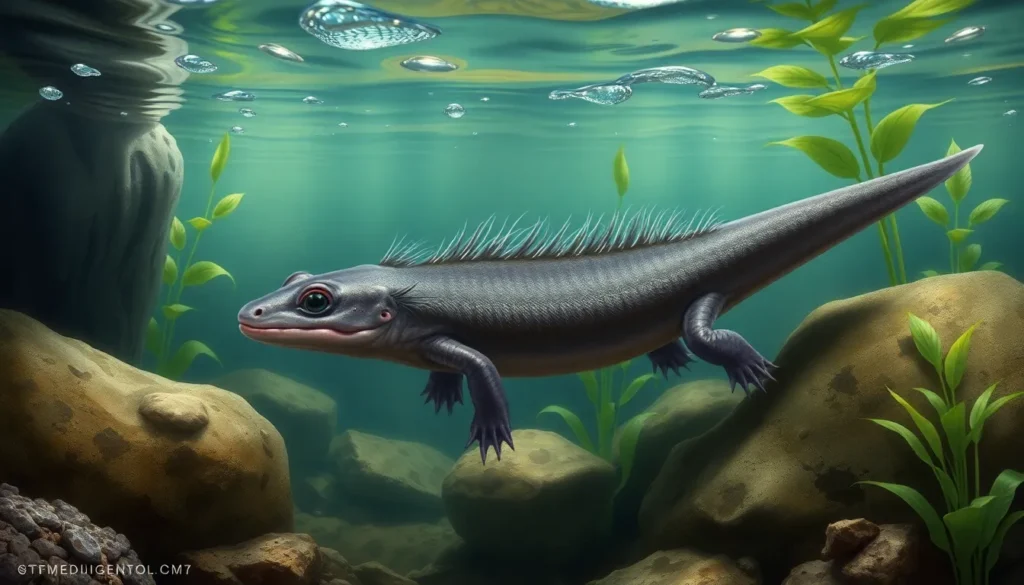
- Fully Aquatic Life: Mudpuppies spend their entire lives underwater, rarely if ever leaving water.
- External Gills: They have feathery external gills behind their heads that allow them to breathe underwater.
- Scientific Classification: Mudpuppies belong to the genus Necturus, within the family Proteidae.
- Species Diversity: There are four recognized species of mudpuppies in North America.
- Size: They typically grow between 9 and 16 inches (23 to 40 cm) in length.
- Nocturnal Behavior: Mudpuppies are mainly active at night, hiding under rocks or logs during the day.
- Diet: Their diet includes fish, insects, worms, and small amphibians.
- Longevity: Mudpuppies can live up to 20 years in the wild.
- Habitat Preference: They inhabit lakes, rivers, and streams with clean, well-oxygenated water.
- Cold Water Adaptation: Mudpuppies tolerate cold water temperatures better than many other amphibians.
- External Reproduction: They lay eggs underwater, typically attaching them to submerged objects.
- Paedomorphosis: Mudpuppies retain juvenile traits such as external gills throughout adulthood, a condition called neoteny.
- Slow Movement: They are slow-moving animals, often relying on stealth rather than speed to catch prey.
- Sensory Adaptations: Mudpuppies have sensory organs that help detect vibrations and chemical cues in water.
- Predators: Common predators include fish, birds, and larger amphibians.
- Conservation Status: While not globally threatened, some populations are vulnerable due to habitat degradation and pollution.
- Indicator Species: Mudpuppies serve as indicators of freshwater ecosystem health because they are sensitive to environmental changes.
- Unique Vocalizations: Despite their name, mudpuppies do not bark or make audible vocal sounds.
- Historical Recognition: The name “mudpuppy” dates back to early North American settlers who observed their aquatic nature and growling sounds when disturbed.
- Research Importance: Mudpuppies are used in scientific studies on amphibian development and regeneration due to their neotenic characteristics.
- Limited Mobility on Land: Unlike some salamanders, mudpuppies are poorly adapted for terrestrial movement and typically remain underwater.
Habitat and Behavior
Mudpuppies inhabit freshwater environments such as lakes, rivers, ponds, and streams throughout much of eastern and central North America. They prefer cool, oxygen-rich waters with abundant cover like rocks, logs, and vegetation. As fully aquatic salamanders, mudpuppies spend their entire life submerged, surfacing only occasionally for air. Their external gills facilitate efficient underwater respiration. They are primarily nocturnal, hunting at night for small fish, insects, worms, and other invertebrates. During the day, they hide in crevices or under debris to avoid predators. Mudpuppies reproduce by laying eggs underwater, which hatch into aquatic larvae that resemble miniature adults. They exhibit neoteny, retaining juvenile features such as external gills into adulthood, which enables them to remain aquatic throughout their lives.
Why This Animal Matters
Mudpuppies play an important ecological role as both predators and prey within freshwater ecosystems. By feeding on various invertebrates and small fish, they help control these populations and contribute to the aquatic food web. Because of their sensitivity to pollution, habitat alteration, and water quality changes, mudpuppies serve as valuable bioindicators for scientists monitoring freshwater ecosystem health. Their presence often signals clean, well-oxygenated water. Additionally, mudpuppies have cultural significance in some indigenous and local folklore, often admired for their unusual appearance and aquatic lifestyle. Conservation of mudpuppy habitats is important to maintain freshwater biodiversity and ecosystem balance.
Common Misconceptions
Misconception: Mudpuppies are baby frogs.
Correction: Despite their name, mudpuppies are fully aquatic salamanders, not frogs, and they retain juvenile features like external gills as adults.
Misconception: Mudpuppies bark or make noise like dogs.
Correction: Mudpuppies do not produce audible vocalizations; their name likely comes from growling sounds heard underwater or folklore.
Misconception: Mudpuppies can live on land like other salamanders.
Correction: Mudpuppies are fully aquatic and poorly adapted to terrestrial life, rarely leaving water during their lifespan.
Misconception: Mudpuppies are harmful or dangerous to humans.
Correction: Mudpuppies are harmless to humans and pose no threat; they are shy and avoid contact.
Misconception: All salamanders lose their gills as they mature.
Correction: Mudpuppies are neotenic, meaning they retain external gills throughout adulthood, unlike many other salamander species.
FAQ
Do mudpuppies have lungs or gills?
Mudpuppies retain external gills throughout their lives, allowing them to breathe underwater. They also have lungs but primarily rely on gills for respiration.
Are mudpuppies dangerous to humans?
No, mudpuppies are harmless to humans. They are shy, avoid contact, and do not pose any danger.
Why are mudpuppies called 'mudpuppies'?
The name 'mudpuppy' likely comes from early observers who heard growling sounds underwater or from folklore, despite the animals not making dog-like noises.


Leave a Reply