
Short Answer
21 Facts About Horned Lizards
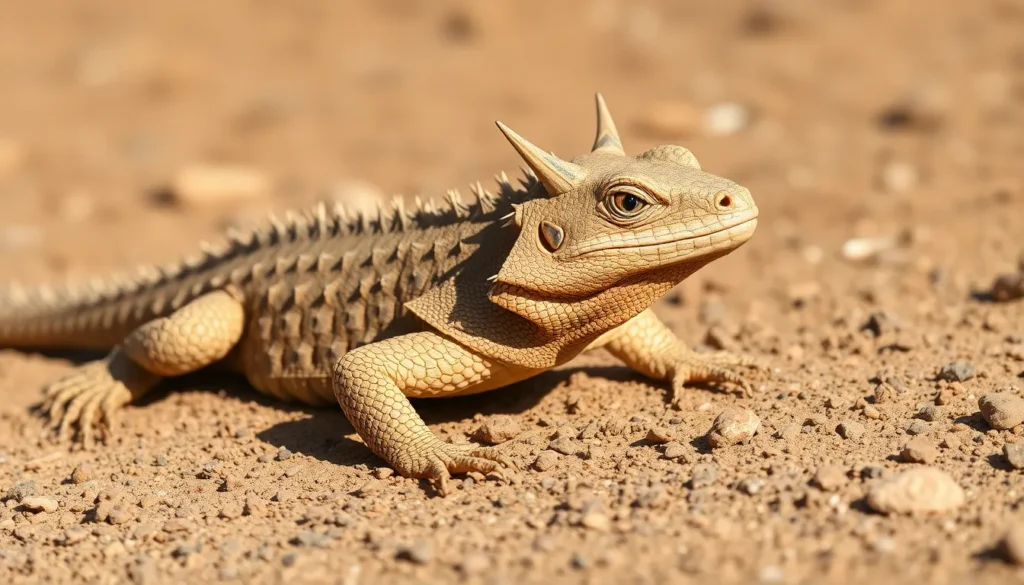
- Horned lizards are known for their distinctive horns and spines. These bony projections on their heads and bodies serve as a defense mechanism against predators.
- There are about 15 species of horned lizards. They belong to the genus Phrynosoma and vary in size, shape, and coloration.
- Horned lizards are often called “horny toads” or “horn toads.” Despite these nicknames, they are reptiles, not amphibians.
- They primarily feed on ants, especially harvester ants. Their diet may also include other small insects.
- Horned lizards have specialized teeth and a sticky tongue to catch ants. Their teeth help crush the exoskeleton of insects.
- Many horned lizard species can squirt blood from their eyes. This unusual defense behavior can deter predators by startling them or by releasing foul-tasting blood.
- The blood-squirting defense is rare and not used by all species. It is mostly observed in the Texas horned lizard (Phrynosoma cornutum).
- Horned lizards have flat, rounded bodies that help them camouflage with their environment. Their coloration often matches the soil and rocks of their habitat.
- They are well-adapted to arid and semi-arid environments. Their physiology helps conserve water and withstand heat.
- Horned lizards can remain motionless for long periods. This behavior helps avoid detection by predators.
- They can burrow into the sand or soil to escape extreme temperatures or threats. Their limbs and body shape facilitate this behavior.
- Horned lizards have a relatively slow metabolism compared to other lizards. This adaptation suits their insect-based diet and desert lifestyle.
- These lizards are oviparous, laying eggs rather than giving live birth. Clutch sizes vary by species but typically range from 8 to 30 eggs.
- Horned lizards are most active during the day (diurnal). They bask in the sun to regulate their body temperature.
- They play an important role in controlling ant populations. This ecological role helps maintain balance in their habitats.
- Several horned lizard species are considered threatened or vulnerable. Habitat loss, invasive species, and pesticide use have contributed to population declines.
- Horned lizards have cultural significance for some Indigenous peoples. They appear in folklore and traditional stories in parts of North America.
- Horned lizards have unique skin textures that help reduce water loss. Their scales can also reflect sunlight to prevent overheating.
- Their eyes have horizontal pupils, which aid in scanning the horizon for predators and prey.
- Horned lizards communicate through body language and subtle movements. They may also perform head bobs or push-ups to signal territory or deter threats.
- Despite their name, horned lizards do not use their horns to attack but primarily for defense and camouflage.
Habitat and Behavior
Horned lizards inhabit arid and semi-arid regions of North and Central America, including deserts, scrublands, and grasslands. They favor sandy or rocky soils that facilitate their burrowing behavior. These lizards are primarily terrestrial and spend much of their time on the ground. Their behavior is adapted to conserve water and avoid predators, featuring camouflage, remaining motionless, and burrowing to escape extreme heat or threats. Their diet mainly consists of ants and other small insects, which they catch using specialized tongues and teeth. Their defense strategies include physical deterrents like horns and spines, camouflage to blend with their environment, and in some species, the remarkable ability to squirt blood from their eyes to confuse or repel predators.
Why This Animal Matters
Horned lizards play a significant ecological role by regulating ant populations, which can influence soil health and plant communities. Their presence supports biodiversity and contributes to the balance of arid ecosystems. Culturally, horned lizards hold importance for Indigenous groups in their native regions, featuring in folklore and traditional practices. From a conservation perspective, several species face threats due to habitat loss, invasive predators like fire ants, and pesticide use. Protecting horned lizards helps preserve the health of dryland environments and the complex interactions between species that inhabit them.
Common Misconceptions
Misconception: Horned lizards are amphibians or toads.
Correction: Despite the nickname “horny toad,” horned lizards are reptiles, not amphibians, and belong to the lizard family Phrynosomatidae.
Misconception: All horned lizards can squirt blood from their eyes.
Correction: Only certain species, such as the Texas horned lizard, exhibit this blood-squirting defense, while most do not.
Misconception: Horned lizards use their horns for attacking prey.
Correction: The horns serve primarily as a defense mechanism against predators and are not used offensively.
Misconception: Horned lizards are common pets that are easy to care for.
Correction: Horned lizards have specialized dietary and environmental needs, making them challenging to keep in captivity and often protected by law.
FAQ
Can horned lizards really shoot blood from their eyes?
Yes, some species of horned lizards, particularly the Texas horned lizard, can squirt blood from the corners of their eyes as a defense mechanism to deter predators by startling them or releasing foul-tasting blood.
What do horned lizards eat?
Horned lizards primarily feed on ants, especially harvester ants, but their diet may also include other small insects such as beetles and spiders.
Are horned lizards dangerous to humans?
No, horned lizards are not dangerous to humans. They are generally shy and rely on camouflage and other defense mechanisms to avoid threats.



Leave a Reply