
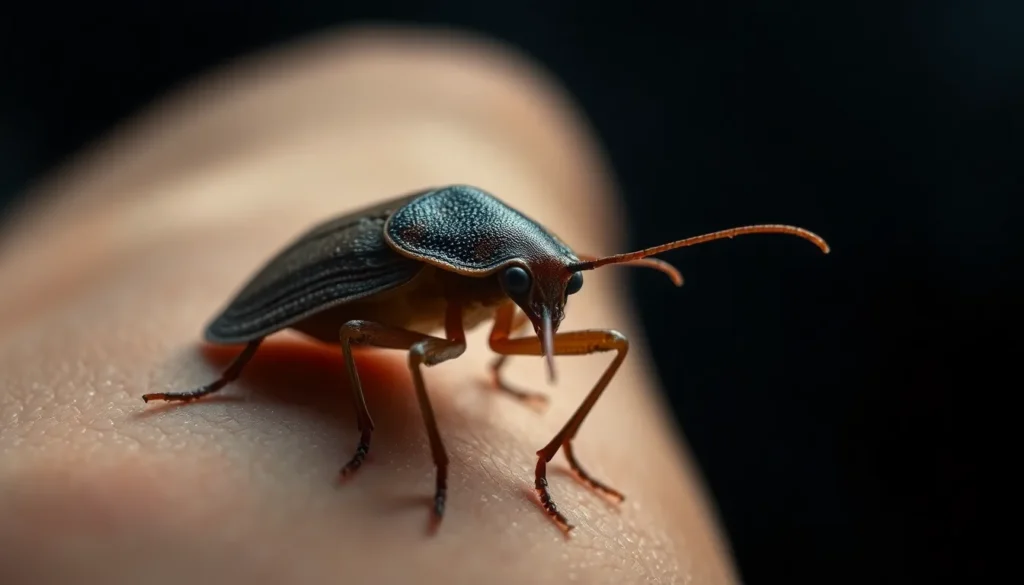
Short Answer
21 Facts About Kissing Bugs
- Kissing bugs are part of the Triatominae subfamily. They belong to a group of blood-feeding insects in the Reduviidae family, often called assassin bugs.
- They are commonly known as ‘kissing bugs’ because of their tendency to bite near human mouths. These nocturnal feeders often bite around the lips or face while their hosts sleep.
- Kissing bugs primarily feed on the blood of mammals, including humans. They use their proboscis to pierce the skin and extract blood.
- There are over 130 species of kissing bugs worldwide. Most species are found in the Americas, especially in Central and South America.
- Some species are vectors for Trypanosoma cruzi, the parasite that causes Chagas disease. This makes them medically important insects.
- Kissing bugs tend to hide in cracks, crevices, and animal nests during the day. They are nocturnal and seek shelter in these locations before emerging at night to feed.
- Their bites can cause allergic reactions in some people. Reactions range from mild irritation to severe anaphylaxis in rare cases.
- Unlike mosquitoes, kissing bugs transmit disease through their feces, not their saliva. Parasites are deposited near the bite site and can enter the body when the person scratches the area.
- Kissing bugs have a distinctive cone-shaped head and relatively flat bodies. These features help distinguish them from other insects.
- They are capable of flying and are attracted to light sources at night. This can sometimes bring them into homes or human dwellings.
- Chagas disease can lead to serious heart and digestive system complications if untreated. Early diagnosis and treatment are critical for managing the disease.
- Kissing bugs can survive for several months without feeding. This allows them to persist in harsh conditions or when hosts are unavailable.
- They are mostly active during warm months but can be found year-round in tropical areas. Their activity corresponds with temperature and host availability.
- Kissing bugs undergo incomplete metamorphosis with egg, nymph, and adult stages. Nymphs resemble smaller adults but lack wings.
- Efforts to control kissing bug populations include improving housing and insecticide use. Reducing contact with humans helps lower the risk of disease transmission.
- They have a wide geographical distribution but are mostly concentrated in rural and suburban areas. Urban infestations are less common but have been reported.
- Kissing bugs are sometimes mistaken for bed bugs or other household pests. Identification is important for appropriate response and control measures.
- Not all kissing bugs carry the Trypanosoma cruzi parasite. Infection rates vary by species and region.
- Kissing bugs have been observed to feed on a variety of animals including dogs, rodents, and birds. This broad host range helps maintain parasite cycles in nature.
- They play a role in the ecosystem by helping regulate populations of small mammals. Their feeding behavior impacts local wildlife dynamics.
- Research continues on vaccines and other methods to prevent Chagas disease transmission by kissing bugs. Advances in understanding their biology contribute to public health strategies.
Habitat and Behavior
Kissing bugs are primarily found in the Americas, with a range extending from the southern United States through Central America and into South America. They inhabit diverse environments including rural homes, animal shelters, forests, and rocky areas. During the daytime, these insects seek shelter in cracks, crevices, piles of wood, animal burrows, and domestic dwellings. At night, they become active and seek out warm-blooded hosts to feed upon. Their feeding behavior involves piercing the skin with a specialized proboscis and drawing blood. They are capable of flying and are often attracted to lights, which can bring them into close contact with humans. Kissing bugs are nocturnal and tend to avoid well-lit, open areas during daylight hours. Their life cycle involves incomplete metamorphosis: eggs hatch into nymphs that molt multiple times before reaching adulthood. This process can take several months depending on environmental conditions. They can survive extended periods without feeding, an adaptation that helps them persist when hosts are scarce.
Why This Animal Matters
Kissing bugs are medically significant due to their role as vectors of Trypanosoma cruzi, the protozoan parasite responsible for Chagas disease. This disease affects millions of people primarily in Latin America and can cause chronic heart and gastrointestinal complications if untreated. Understanding the biology and behavior of kissing bugs is crucial for controlling disease transmission. Ecologically, these insects interact with various mammal species, impacting wildlife populations and contributing to parasite life cycles. Additionally, kissing bugs are indicators of environmental changes, as their presence and distribution can reflect habitat alterations and climate effects. Public health initiatives often focus on improving housing and sanitation to reduce kissing bug infestations. Research into vaccines and novel control methods continues to be important for managing the health risks associated with these insects.
Common Misconceptions
Misconception: Kissing bugs transmit Chagas disease through their bite.
Correction: Kissing bugs transmit the parasite through their feces, which enter the body when the bite area is scratched or rubbed, not directly through the bite itself.
Misconception: All kissing bugs carry the parasite that causes Chagas disease.
Correction: Not all species or individuals are infected; infection rates vary widely depending on geographic location and species.
Misconception: Kissing bugs only bite humans around the mouth.
Correction: While they often bite near the mouth, they can feed on other exposed skin areas depending on accessibility.
FAQ
What are kissing bugs?
Kissing bugs are blood-feeding insects belonging to the subfamily Triatominae, known for biting humans near the mouth and potentially transmitting Chagas disease.
How do kissing bugs transmit Chagas disease?
They transmit the Trypanosoma cruzi parasite through their feces, which can enter the body when a person scratches the bite site or mucous membranes.
Are all kissing bugs infected with the parasite?
No, infection rates vary widely depending on species and geographic location; not all kissing bugs carry the parasite.




Leave a Reply