
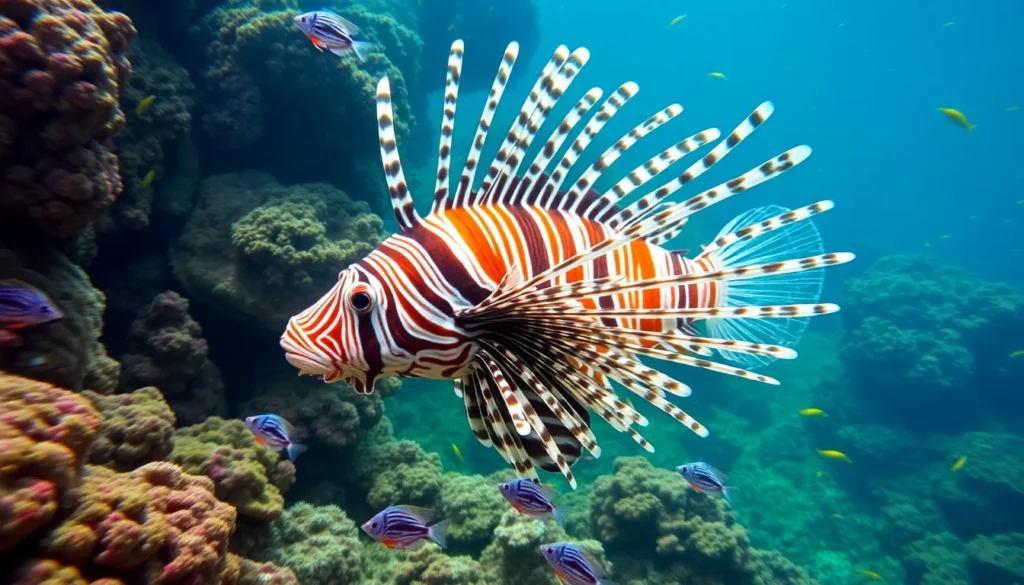
Short Answer
21 Facts About Lionfish
- Venomous Spines
The lionfish has venomous dorsal, anal, and pelvic spines used primarily for defense against predators. - Native Range
Lionfish are native to the Indo-Pacific region, including coral reefs from the Red Sea to the western Pacific Ocean. - Invasive Species
They have become invasive in the western Atlantic Ocean, Gulf of Mexico, and Caribbean Sea, where they threaten native fish populations. - Striking Appearance
They are known for their distinctive red, white, and brown vertical stripes and long, feathery pectoral fins. - Diet
Lionfish are carnivorous predators that feed on smaller fish, crustaceans, and invertebrates. - Reproduction
Lionfish reproduce year-round, releasing thousands of eggs during spawning events. - Rapid Growth
They grow quickly and reach sexual maturity within one year. - Ambush Predators
Using their fins to corner prey, lionfish are effective ambush predators. - No Natural Predators in Invaded Areas
In regions where lionfish are invasive, they have few natural predators, facilitating their population growth. - Ecological Impact
They reduce biodiversity by preying on native fish and competing for resources. - Resistance to Predation
Their venomous spines deter most potential predators. - Adaptability
Lionfish can thrive in a variety of marine environments, including coral reefs, mangroves, and seagrass beds. - Longevity
In the wild, lionfish can live up to 15 years. - Venom Effects
The venom causes pain, swelling, and in rare cases, systemic symptoms in humans but is rarely fatal. - Human Interaction
Despite their venom, lionfish are sometimes caught for food and aquarium trade. - Control Efforts
Various programs encourage removal of lionfish to mitigate their invasive impact. - Unique Hunting Technique
Lionfish often use a fin-spreading technique to herd or corner prey before striking. - Color Variations
Some lionfish exhibit color variations based on region and environmental factors. - Scientific Classification
They belong to the family Scorpaenidae, which includes other venomous fish like scorpionfish. - Common Species
The most well-known species include Pterois volitans and Pterois miles. - Role in Aquarium Trade
Lionfish are popular in the aquarium industry due to their striking appearance but require careful handling due to venom.
Habitat and Behavior
Lionfish inhabit warm marine waters primarily in the Indo-Pacific region, residing in coral reefs, rocky crevices, and lagoons. They prefer depths ranging from shallow waters to around 50 meters but can be found deeper. Lionfish are solitary and territorial, often sheltering in caves or under ledges during the day and becoming more active hunters at night. Their behavior includes using their large, fan-like pectoral fins to herd prey into confined spaces, facilitating capture. In invaded regions, lionfish have adapted to various habitats, including artificial reefs and seagrass beds. They exhibit rapid reproduction and growth, traits that contribute to their success as an invasive species. Their venomous spines serve as an effective deterrent against most predators, allowing them to dominate local ecosystems where they are introduced.
Why This Animal Matters
Lionfish play a significant ecological role in their native habitats as mid-level predators, helping maintain the balance of reef ecosystems by controlling populations of smaller fish and invertebrates. However, in regions where they are invasive, lionfish have disrupted native biodiversity by preying on commercially and ecologically important fish species, leading to declines in native fish populations and altering reef community structures. Their expansion has prompted scientific and conservation efforts to understand and manage their impact. Additionally, lionfish have garnered cultural and economic attention through their role in the aquarium trade and as a culinary resource in affected areas, where efforts to promote lionfish as food aim to encourage population control. Their presence highlights the complexities of marine invasive species and the importance of monitoring and managing human impacts on marine ecosystems.
Common Misconceptions
Misconception: Lionfish stings are deadly to humans.
Correction: While lionfish venom causes painful stings, it is rarely fatal. Medical treatment is advised to manage symptoms and prevent infection.
Misconception: Lionfish are aggressive toward humans.
Correction: Lionfish are not aggressive and typically sting only when threatened or handled improperly.
Misconception: Lionfish only live in coral reefs.
Correction: Although lionfish prefer reef habitats, they can live in a variety of marine environments, including rocky areas and seagrass beds.
Misconception: Removing lionfish is harmful to reef ecosystems.
Correction: Removal programs are crucial for protecting native species and restoring ecological balance in invaded areas.
Misconception: All lionfish are the same species.
Correction: The term “lionfish” refers to several species, with Pterois volitans and Pterois miles being the most common.
FAQ
Are lionfish dangerous to humans?
Lionfish possess venomous spines that can cause painful stings if handled improperly. While the venom can cause intense pain, swelling, and sometimes systemic symptoms, it is rarely fatal to humans. Immediate medical attention is recommended if stung.
Why are lionfish considered an invasive species?
Lionfish are considered invasive because they have established populations outside their native Indo-Pacific range, particularly in the western Atlantic, Gulf of Mexico, and Caribbean Sea. In these regions, they have few natural predators and reproduce rapidly, leading to significant negative impacts on local fish populations and reef ecosystems.
What methods are used to control lionfish populations?
Control methods include organized removal efforts such as lionfish derbies, spearfishing, and promoting lionfish as a food source to encourage fishing. Research also explores biological control and habitat management, but current strategies focus primarily on physical removal to reduce their numbers.






Leave a Reply