
Short Answer
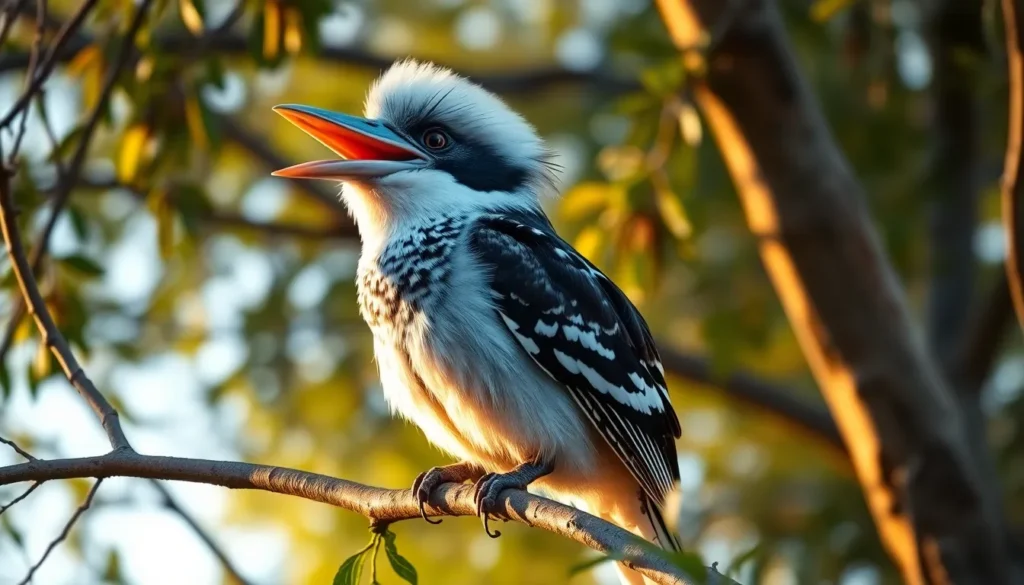
21 Facts About Laughing Kookaburras
- Distinctive Call: Laughing Kookaburras are famous for their loud call, which sounds like echoing laughter and serves to establish territory and social bonds.
- Scientific Name: The Laughing Kookaburra is scientifically known as Dacelo novaeguineae.
- Native Range: They are native to eastern Australia but have been introduced to parts of Western Australia and New Zealand.
- Size and Appearance: These birds are fairly large kingfishers, measuring about 39 to 42 centimeters in length with a wingspan up to 65 centimeters.
- Diet: Laughing Kookaburras are carnivorous, feeding mainly on insects, small reptiles, amphibians, and occasionally small mammals and birds.
- Hunting Technique: They hunt by perching silently and swooping down to capture prey on the ground or in water.
- Social Behavior: They are highly social birds, often living in family groups that cooperate in raising young.
- Breeding: Breeding pairs typically lay 2 to 4 eggs in tree hollows or nest boxes.
- Lifespan: In the wild, Laughing Kookaburras can live up to 20 years, although many have shorter lifespans due to predation and environmental factors.
- Territoriality: Their loud calls help to mark and defend their territory from other kookaburra groups.
- Role in Ecosystem: By controlling populations of insects and small animals, they help maintain ecological balance.
- Adaptability: Laughing Kookaburras are adaptable to various habitats including open forests, woodlands, and suburban areas.
- Flight Pattern: Their flight is generally slow and steady, with short bursts of flapping interspersed with gliding.
- Conservation Status: They are currently classified as Least Concern by the IUCN due to their wide distribution and stable population.
- Cultural Significance: The Laughing Kookaburra is an iconic symbol in Australian culture and often features in folklore and media.
- Vocal Mimicry: While their call is distinctive, individual kookaburras may mimic sounds from their environment.
- Nesting Habits: Both parents and helper birds share responsibilities in feeding and protecting chicks.
- Daytime Activity: They are diurnal birds, most active during early morning and late afternoon.
- Predators: Natural predators include large birds of prey and snakes that can access nests.
- Introduced Populations: Introduced populations in Western Australia have established successfully without major ecological disruption.
- Unique Call Timing: The kookaburra’s call is often heard at dawn and dusk, contributing to its nickname, the “bushman’s alarm clock.”
Habitat and Behavior
Laughing Kookaburras inhabit a range of environments primarily across eastern Australia, including eucalyptus forests, woodlands, and suburban gardens. They favor areas with tall trees that provide nesting hollows and perches for hunting. Behaviorally, kookaburras are territorial and social, often living in family groups that include offspring from previous years who assist in raising new chicks. Their hunting strategy involves quiet observation from a perch before swooping down to capture prey on the ground or water. They are diurnal and most vocal at dawn and dusk, using their characteristic laughter to communicate and defend territory.
Why This Animal Matters
Ecologically, Laughing Kookaburras play a vital role in controlling insect and small vertebrate populations, helping to maintain a balanced ecosystem. Culturally, they are emblematic of Australia’s natural heritage and are frequently referenced in folklore, music, and art, symbolizing the Australian bush. Their distinctive call is widely recognized and appreciated, contributing to their status as a beloved native species. Conservation-wise, their stable population and adaptability make them a successful example of a native species thriving despite human environmental changes.
Common Misconceptions
Misconception: The Laughing Kookaburra’s call is actual laughter.
Correction: Although it sounds like laughter, the call is a territorial and social vocalization used for communication among kookaburras.
Misconception: Kookaburras only eat fish.
Correction: Despite being kingfishers, Laughing Kookaburras primarily eat insects, small reptiles, and mammals, rather than fish.
Misconception: Laughing Kookaburras are aggressive towards humans.
Correction: They are generally shy and avoid humans, though they may become accustomed to people in suburban areas.
Misconception: They are native to all of Australia.
Correction: Their natural range is primarily eastern Australia; populations in other regions were introduced by humans.
Misconception: All kookaburras laugh the same way.
Correction: Individual kookaburras have slight variations in their calls, and groups coordinate their laughs for social and territorial signaling.
FAQ
Why is the Laughing Kookaburra called 'laughing'?
The Laughing Kookaburra's call sounds like a loud, echoing laugh that is used for communication and territorial purposes, which is why it has earned this nickname.
What do Laughing Kookaburras eat?
They mainly eat insects, small reptiles, amphibians, and small mammals. Despite being kingfishers, they rarely eat fish.
Are Laughing Kookaburras dangerous to humans?
No, they are generally not dangerous to humans. They tend to be shy but may become accustomed to people in suburban areas.

Leave a Reply