
Short Answer
21 Facts About Leaf Insects
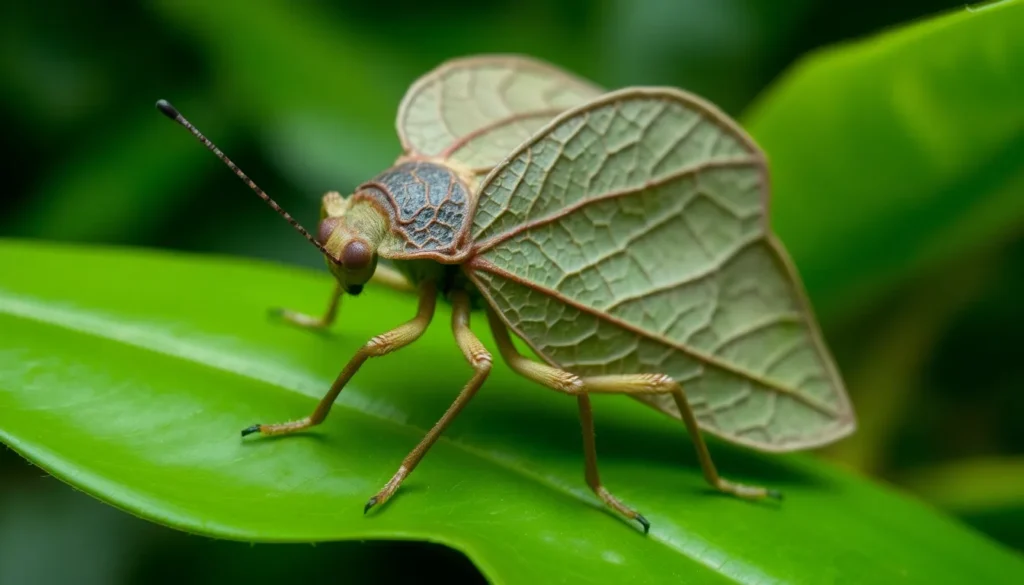
- Mimicry Mastery: Leaf insects are known for their exceptional camouflage, resembling leaves in shape, color, and even vein patterns to avoid predators.
- Family Phylliidae: They belong to the family Phylliidae, which is part of the order Phasmatodea, commonly called stick and leaf insects.
- Multiple Species Diversity: There are over 50 described species of leaf insects distributed mainly in tropical Asia and Australia.
- Sexual Dimorphism: Males and females often differ greatly in size and wing development; males are usually smaller and capable of flight, while females are larger and wingless or have reduced wings.
- Slow Movement: Leaf insects move very slowly to enhance their leaf-like appearance and avoid detection.
- Herbivorous Diet: Their diet mainly consists of leaves from various plants, including guava, mango, and eucalyptus.
- Egg Appearance: Their eggs often resemble seeds, aiding in camouflage and protection from predators.
- Defensive Behavior: When threatened, some species may drop to the ground and remain motionless to evade predators.
- Nocturnal Activity: Most leaf insects are nocturnal, feeding and moving primarily at night.
- Molting Process: Like other insects, leaf insects molt several times before reaching adulthood, shedding their exoskeleton to grow.
- Life Span: Generally, leaf insects live for about one year in the wild.
- Reproductive Strategies: Some species can reproduce parthenogenetically, meaning females can produce offspring without fertilization by males.
- Habitat Preferences: Leaf insects are typically found in tropical and subtropical forests where their camouflage is most effective.
- Predator Avoidance: Their leaf mimicry helps them avoid birds, reptiles, and other insectivores.
- Cultural Fascination: Leaf insects are popular subjects in entomology and natural history due to their unique adaptations.
- Limited Flight: Only males usually possess fully functional wings and can fly, while females are mostly flightless.
- Temperature Sensitivity: They require warm and humid environments to thrive, reflecting their tropical origins.
- Ecological Role: As herbivores, leaf insects contribute to plant population control and serve as prey for various predators.
- Conservation Status: While not globally endangered, habitat loss threatens some species of leaf insects.
- Research Interest: Scientists study leaf insects to understand evolutionary biology, mimicry, and insect physiology.
- Captive Care: Leaf insects are sometimes kept as pets or in research collections due to their intriguing appearance and behaviors.
Habitat and Behavior
Leaf insects predominantly inhabit tropical and subtropical forests across parts of Southeast Asia, Australia, and nearby islands. They thrive in environments with abundant vegetation where their leaf-like appearance provides effective camouflage against predators. Typically nocturnal, these insects are more active during the night, feeding on leaves of various plants and remaining motionless during the day to avoid detection. Their slow movements and ability to mimic leaf veins and edges make them masters of disguise. When threatened, they may drop from foliage and remain still to escape attention. Their reproductive strategies include both sexual reproduction and parthenogenesis, ensuring survival even when mates are scarce.
Why This Animal Matters
Leaf insects play a significant ecological role as herbivores, contributing to the regulation of plant growth and serving as part of the food web by providing sustenance to predators such as birds and reptiles. Their remarkable mimicry is a subject of scientific interest, offering insights into evolutionary adaptations and survival strategies. Additionally, leaf insects have cultural importance in some regions where they are appreciated for their unique appearance. Conservation of their natural habitats is essential, as deforestation and environmental changes pose threats to certain species. Their presence is an indicator of healthy forest ecosystems.
Common Misconceptions
Misconception: Leaf insects are harmless and cannot defend themselves.
Correction: While leaf insects rely heavily on camouflage, some species can exhibit defensive behaviors such as dropping to the ground or remaining motionless to avoid predators.
Misconception: All leaf insects can fly.
Correction: Only male leaf insects typically have fully developed wings and can fly; females are usually flightless or have reduced wings.
Misconception: Leaf insects are related to caterpillars.
Correction: Leaf insects belong to the order Phasmatodea, which is distinct from Lepidoptera, the order that includes caterpillars and butterflies.
Misconception: Leaf insects live everywhere.
Correction: Leaf insects are native primarily to tropical and subtropical forests in Asia and Australia and are not found in all global regions.
FAQ
What do leaf insects eat?
Leaf insects primarily feed on leaves from various plants such as guava, mango, and eucalyptus, depending on their habitat.
Are leaf insects dangerous to humans?
No, leaf insects are harmless to humans; they do not bite or sting and rely on camouflage for defense.
Can leaf insects fly?
Typically, only male leaf insects have fully developed wings and can fly, while females are mostly flightless or have reduced wings.




Leave a Reply