
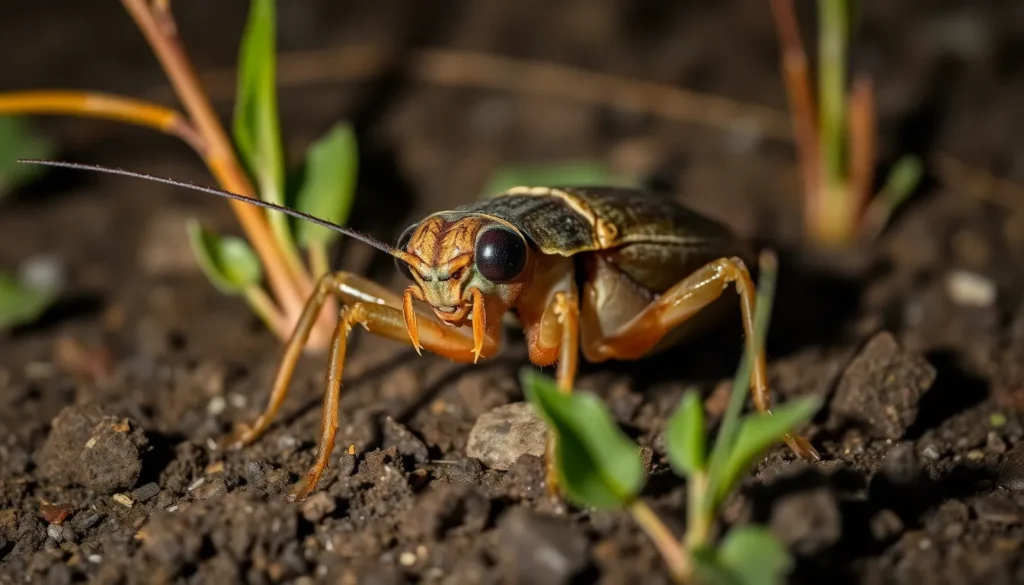
Short Answer
21 Facts About Jerusalem Crickets
- Not True Crickets: Despite their name, Jerusalem crickets are not true crickets but belong to the family Stenopelmatidae.
- Distinctive Appearance: They have large, rounded heads and strong mandibles, with a body length that can reach up to 5 cm (2 inches).
- Flightless Insects: Jerusalem crickets lack wings and are unable to fly.
- Common Names: They are also known as “potato bugs” or “child of the earth.”
- Geographical Range: These insects are native to western North America, including parts of the United States and Mexico.
- Nocturnal Behavior: They are primarily active at night, avoiding daylight to reduce predation risk.
- Diet: Jerusalem crickets are omnivorous, feeding on decaying organic matter, roots, and other insects.
- Burrowing Habits: They are fossorial, spending much of their time underground in burrows they dig themselves.
- Sound Production: Unlike true crickets, they do not produce sound by stridulation but can tap their abdomens on the ground to communicate.
- Longevity: Their lifespan can be up to several years, which is long for insects of their size.
- Reproduction: Females lay eggs underground, and nymphs undergo gradual metamorphosis without a pupal stage.
- Defense Mechanisms: They can deliver a painful bite with their strong mandibles if threatened.
- Ecological Role: Jerusalem crickets contribute to soil aeration through their burrowing and help decompose organic material.
- Predators: They are preyed upon by birds, small mammals, and reptiles.
- Cultural Misinterpretations: Some Native American tribes regard them with superstitions or symbolic meaning.
- Scientific Study: They have been subjects of research in entomology due to their unusual biology and behavior.
- Physical Adaptations: Their large heads house powerful jaw muscles adapted for digging and feeding.
- Temperature Sensitivity: Jerusalem crickets are sensitive to temperature changes and typically emerge during warmer nights.
- Non-aggressive Nature: Despite their intimidating appearance, they are generally not aggressive unless provoked.
- Not Harmful to Humans: They are not venomous and pose minimal risk to people.
- Population Status: They are not currently considered endangered or threatened.
Habitat and Behavior
Jerusalem crickets inhabit a range of environments including deserts, grasslands, and forested areas, primarily in western North America. They prefer loose, sandy, or loamy soils where they can easily dig burrows. These insects are nocturnal, emerging at night to forage and avoid predators. Their diet is omnivorous, consuming organic matter such as decaying plant material, roots, and smaller insects. Their burrowing behavior not only provides shelter but also aids in soil aeration. They communicate by drumming their abdomens on the ground rather than producing chirping sounds typical of true crickets. Jerusalem crickets are solitary creatures and tend to avoid interaction except during mating season.
Why This Animal Matters
Jerusalem crickets play an important ecological role in their habitats. By feeding on decaying material and small insects, they help recycle nutrients and control pest populations. Their burrowing activity enhances soil health by improving aeration and water infiltration. Additionally, as prey for various birds, reptiles, and mammals, they contribute to the food web. Culturally, these insects have been part of indigenous folklore and local myths, reflecting their notable presence in the environment. Although they may appear intimidating, Jerusalem crickets are harmless to humans and do not threaten crops or property, making them an important but often overlooked component of their ecosystems.
Common Misconceptions
Misconception: Jerusalem crickets are venomous and dangerous to humans.
Correction: They are not venomous and pose little risk; their bite can be painful but is not harmful.
Misconception: Jerusalem crickets can fly.
Correction: These insects are flightless as they lack wings.
Misconception: They are related to the true crickets commonly heard chirping.
Correction: Jerusalem crickets belong to a different family and do not produce chirping sounds.
FAQ
Are Jerusalem crickets harmful to humans?
Jerusalem crickets are not harmful to humans. They can deliver a painful bite if handled roughly, but they are not venomous and do not pose a health risk.
Why are they called Jerusalem crickets?
The name 'Jerusalem cricket' is a misnomer. It does not refer to the city of Jerusalem but may have originated from a mistranslation or folk name. They are neither true crickets nor associated with Jerusalem.
Do Jerusalem crickets produce sounds like regular crickets?
No, unlike true crickets, Jerusalem crickets do not produce chirping sounds through stridulation. Instead, they communicate by tapping or drumming their abdomens on the ground.



Leave a Reply