
Short Answer
21 Facts About Hornets
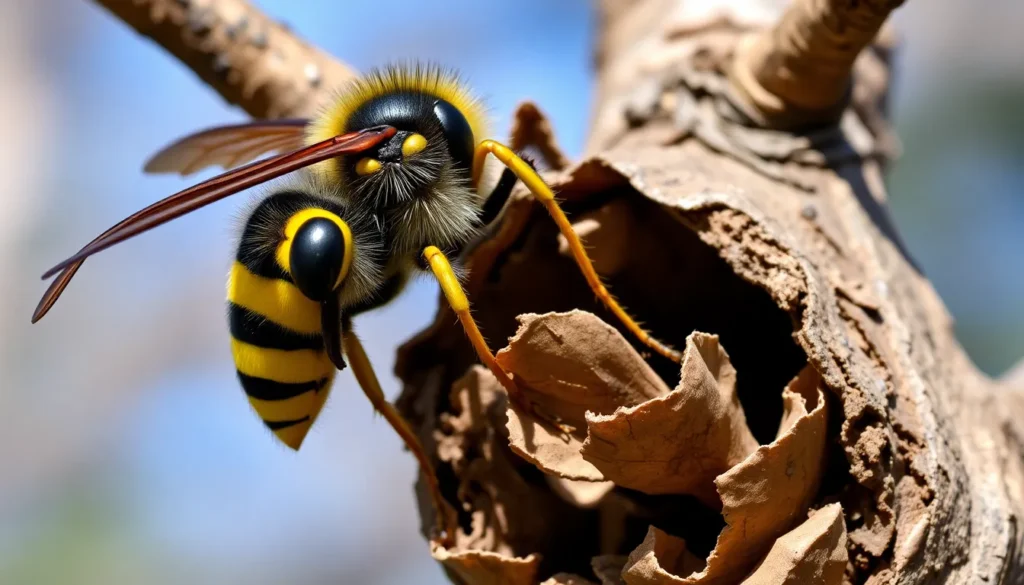
- Hornets are a type of wasp. They belong to the genus Vespa and are among the largest wasps in the world.
- Hornet colonies can contain hundreds to thousands of individuals. These social insects live in nests with a queen, workers, and males.
- Hornets build paper nests. They create these nests by chewing wood fibers mixed with saliva to form a papery material.
- Hornets are carnivorous. They primarily prey on other insects, including flies, bees, and caterpillars.
- Hornet stings can be painful and deliver venom. Their venom contains neurotoxins that can cause allergic reactions in some people.
- Hornets use pheromones to communicate. These chemical signals help coordinate colony defense and other social behaviors.
- Hornets are found mostly in temperate and tropical regions of Asia and Europe. Some species have also been introduced to North America.
- Hornets typically build nests in sheltered areas. Common locations include tree branches, hollow trees, and building eaves.
- Hornets are active during the day. They forage for food and care for their young during daylight hours.
- Hornets have a distinct black and white or brown and yellow coloration. This warning coloration deters predators.
- Hornet queens start new colonies in spring. After hibernation, a queen emerges to establish a nest and lay eggs.
- Hornet larvae are fed by worker adults. The larvae develop inside the nest and eventually emerge as adults.
- Hornets can be beneficial for controlling pest insect populations. They prey on many species considered agricultural pests.
- Hornets exhibit aggressive defensive behavior. They will sting repeatedly to protect their nest if threatened.
- Some hornet species produce loud buzzing sounds. This sound is created by the rapid movement of their wings.
- Hornets can fly at speeds up to 25 miles per hour (40 kilometers per hour). This makes them agile hunters.
- Hornet venom contains compounds that have been studied for medical research. Some components show potential in pain management and antimicrobial treatments.
- Hornets use their mandibles to capture prey and manipulate nest materials. These strong jaws are essential for their survival.
- Hornet populations are influenced by environmental factors. Changes in habitat and climate can affect their distribution and abundance.
- Hornets have a life cycle that includes egg, larva, pupa, and adult stages. The complete metamorphosis allows for specialization in each stage.
- Hornets can be confused with yellowjackets but are generally larger and less aggressive outside the nest. Their behavior and physical characteristics help differentiate them.
Habitat and Behavior
Hornets predominantly inhabit temperate and tropical regions across Asia and Europe, with some species introduced into North America. They prefer wooded or semi-wooded areas where they can find sheltered locations for their nests, such as tree branches, hollow trunks, or human structures like eaves and attics. Nests are constructed from chewed wood fibers mixed with saliva, forming a papery substance. Hornets are diurnal and highly social insects, living in colonies that can number from hundreds to thousands. Their social structure consists of a single reproductive queen, sterile female workers, and males that primarily serve reproductive purposes. Hornets forage during the day for prey, mainly other insects such as flies and caterpillars, contributing to their role as natural pest controllers. Defensive behavior is pronounced when the nest is threatened, with workers capable of delivering multiple stings. Communication within the colony relies heavily on pheromones that coordinate defense and other social activities.
Why This Animal Matters
Hornets play a significant ecological role as predators of pest insects, helping to maintain the balance of various ecosystems. By preying on species that damage crops and plants, they indirectly support agriculture and natural vegetation health. Additionally, hornet nests contribute to nutrient cycling as they decompose after the colony dies off. Culturally, hornets have been recognized in various societies either as symbols of aggression and defense or as subjects of scientific interest due to their venom and complex social behaviors. From a conservation standpoint, hornets are an important component of biodiversity; however, habitat changes and pesticide use can impact their populations. Understanding hornet biology and ecology assists in managing their presence and mitigating conflicts with humans while appreciating their environmental contributions.
Common Misconceptions
Misconception: All hornets are extremely aggressive and will attack humans unprovoked.
Correction: Hornets generally avoid confrontation and only become aggressive when their nest is threatened or they feel directly provoked.
Misconception: Hornets are the same as yellowjackets.
Correction: Although related, hornets are a distinct genus (Vespa) and are typically larger with different behaviors and nesting habits compared to yellowjackets.
Misconception: Hornet stings are always dangerous and can cause severe allergic reactions in everyone.
Correction: While hornet stings can be painful and may cause allergic reactions in sensitive individuals, most people experience localized pain and swelling without severe consequences.
Misconception: Hornets do not contribute positively to the ecosystem.
Correction: Hornets are important predators that help control pest insect populations, supporting ecological balance.
Misconception: Hornet venom is solely harmful.
Correction: Components of hornet venom are being researched for potential medical applications, including pain relief and antimicrobial properties.
FAQ
Are hornets dangerous to humans?
Hornets can sting and their venom can be painful, but they generally do not attack unless provoked or their nest is threatened. Most stings cause localized pain and swelling.
How can you tell a hornet from a yellowjacket?
Hornets are usually larger and have different color patterns compared to yellowjackets. Hornet nests are also larger and made from papery material, often found in sheltered locations.
What role do hornets play in the ecosystem?
Hornets are predators that help control populations of pest insects, contributing to ecological balance and supporting agriculture by reducing harmful insect numbers.



Leave a Reply