
Short Answer
21 Facts About X-ray Fish (Pristella maxillaris)
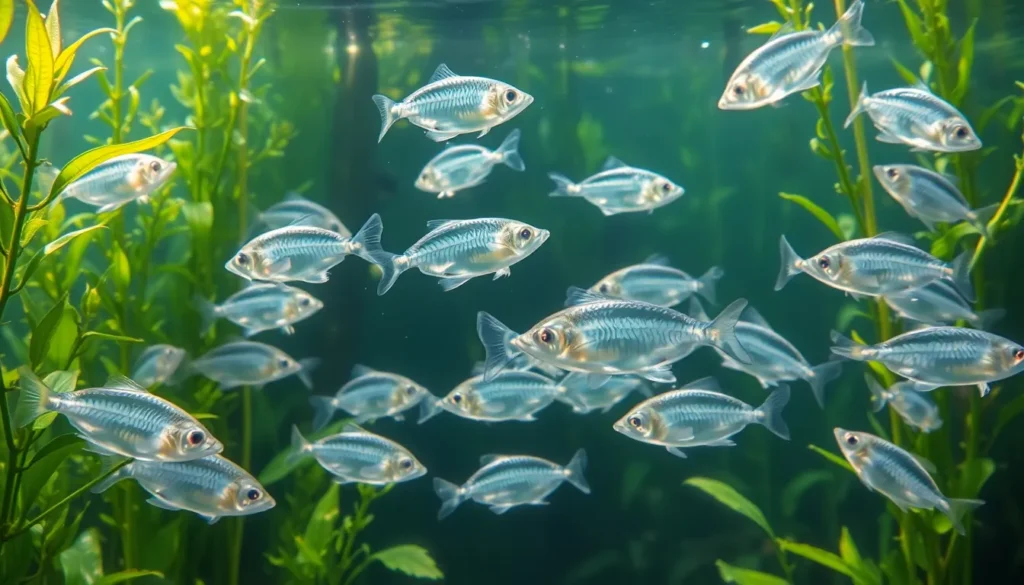
- Unique Transparency: The X-ray fish is named for its translucent body, which allows light to pass through, revealing internal organs and bones, giving it an ‘X-ray’ appearance.
- Scientific Classification: It belongs to the Characidae family, which includes tetras and related freshwater fish.
- Size: Adult X-ray fish typically reach about 4 to 5 centimeters (1.5 to 2 inches) in length.
- Native Range: Found primarily in the Amazon and Orinoco River basins in South America.
- Habitat Preference: They inhabit slow-moving or still waters such as creeks, ponds, and flooded forests.
- Diet: Omnivorous, feeding on small invertebrates, plant matter, and detritus.
- Schooling Behavior: X-ray fish are social and often swim in groups, which helps reduce predation risk.
- Reproduction: They are egg scatterers, laying eggs among aquatic plants without parental care.
- Breeding Conditions: Spawning typically occurs during the rainy season when water parameters change.
- Water Parameters: They tolerate a range of water conditions but prefer slightly acidic to neutral pH and soft to moderately hard water.
- Temperature Range: Optimal temperature for their survival is between 22 to 28 degrees Celsius (72 to 82 degrees Fahrenheit).
- Behavioral Traits: Generally peaceful and non-aggressive, making them suitable for community aquariums.
- Predators: Natural predators include larger fish species and birds in their native habitat.
- Adaptations: Their transparency may help camouflage them from predators in clear water environments.
- Longevity: In captivity, they can live up to 3 to 5 years with proper care.
- Conservation Status: Currently, they are not considered threatened or endangered.
- Popularity in Aquariums: Their unique appearance and peaceful nature have made them popular among aquarium hobbyists worldwide.
- Water Quality Sensitivity: They require clean, well-oxygenated water to thrive.
- Role in Ecosystem: As omnivores, they help control insect populations and contribute to nutrient cycling.
- Scientific Research: The X-ray fish has been studied for its transparency, which provides insight into fish anatomy without dissection.
- Common Names: Besides X-ray fish, they are sometimes called Pristella tetra or golden pristella tetra in the aquarium trade.
Habitat and Behavior
X-ray fish inhabit freshwater ecosystems primarily within the Amazon and Orinoco river basins, favoring slow-moving streams, ponds, and flooded forest areas. These environments provide ample vegetation for hiding and breeding. Their translucent bodies serve as a form of camouflage against predators in these clear water habitats. X-ray fish are schooling fish, often seen in groups that enhance their survival by confusing predators and facilitating social interaction. They exhibit peaceful behavior, making them compatible with other small, non-aggressive fish species in their ecosystem and in captivity. Their omnivorous diet allows them to adapt to varying food availability, feeding on small invertebrates, algae, and organic detritus.
Why This Animal Matters
The X-ray fish plays an important ecological role by contributing to the balance of insect and algae populations in its native habitat. Its feeding habits help in nutrient recycling within the aquatic ecosystem. Additionally, its unique transparent body provides valuable opportunities for scientific study, particularly in understanding fish anatomy and physiology without invasive methods. Culturally, the X-ray fish holds interest for aquarium enthusiasts worldwide, promoting awareness about freshwater biodiversity. Although not currently threatened, monitoring their populations is important to ensure habitat preservation amid environmental changes affecting the Amazon basin.
Common Misconceptions
Misconception: X-ray fish are completely invisible in water.
Correction: They are translucent but not invisible; their bodies allow light to pass through, revealing internal structures but still visible to the naked eye.
Misconception: X-ray fish do not need clean water to survive.
Correction: They require clean, well-oxygenated water, and poor water quality can lead to stress and disease.
FAQ
Why is the X-ray fish called 'X-ray'?
Because its body is translucent, allowing light to pass through and revealing internal organs and bones, similar to an X-ray image.
What conditions are ideal for keeping X-ray fish in aquariums?
They thrive in clean, well-oxygenated water with slightly acidic to neutral pH, temperatures between 22-28°C, and peaceful tank mates.
Are X-ray fish endangered?
No, they are currently not considered threatened or endangered and have stable populations in their native habitats.




Leave a Reply