
Short Answer
21 Facts About Ground Beetles
- Ground beetles belong to the family Carabidae. They are one of the largest beetle families, with over 40,000 species worldwide.
- Most ground beetles are nocturnal predators. They hunt at night, feeding on other insects, worms, and small invertebrates.
- Ground beetles have strong, well-developed legs. These adaptations enable them to run quickly to catch prey or escape threats.
- Many species secrete defensive chemicals. Some can spray noxious or irritating substances to deter predators.
- Ground beetles vary greatly in size. They can range from a few millimeters to several centimeters in length.
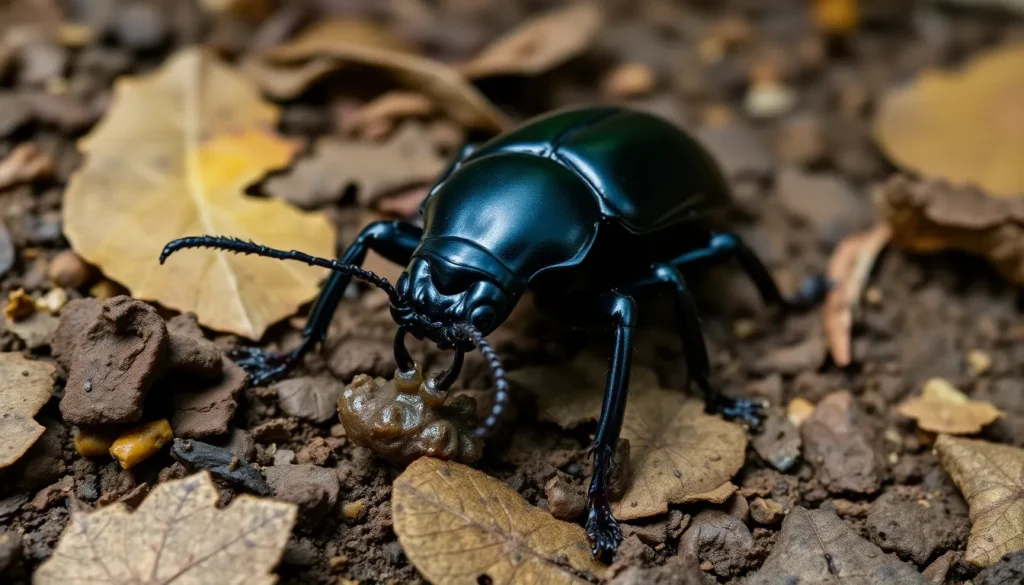
- Their coloration is often dark and shiny. Most are black or brown, although some species display metallic or iridescent hues.
- Ground beetles have specialized mandibles. These strong jaws allow them to capture and crush prey effectively.
- They typically inhabit soil surface layers. Ground beetles are commonly found under rocks, logs, leaf litter, and in soil crevices.
- Some species are flightless. Their wing covers (elytra) are fused, preventing flight but enhancing protection.
- Ground beetles undergo complete metamorphosis. Their life cycle includes egg, larva, pupa, and adult stages.
- Larvae of ground beetles are also predatory. They live underground or within soil and feed on similar prey as adults.
- Ground beetles contribute to pest control. By preying on agricultural pests, they provide natural biological control services.
- These beetles are found worldwide. They inhabit diverse ecosystems from forests and grasslands to deserts and agricultural fields.
- Some species exhibit parental care. Certain ground beetles guard their eggs or larvae to improve offspring survival.
- Ground beetles can live several years. Lifespans vary by species but may extend beyond two years in some cases.
- They are important indicators of environmental health. Changes in ground beetle populations can signal habitat disturbance or pollution.
- Ground beetles have a wide range of sizes and shapes. This diversity reflects adaptations to different ecological niches.
- Some ground beetles can produce audible sounds. Through stridulation, they rub body parts together as a defensive or communication mechanism.
- They play a role in soil aeration. By burrowing and moving through soil, ground beetles help maintain soil structure.
- Ground beetles have been studied for their evolutionary relationships. Their extensive diversity makes them a valuable group for understanding beetle evolution.
- Several species have been introduced globally. Some ground beetles have been transported accidentally or intentionally as biological control agents.
Habitat and Behavior
Ground beetles occupy a broad range of terrestrial habitats worldwide, including forests, grasslands, agricultural lands, deserts, and wetlands. They typically prefer moist environments rich in cover, such as leaf litter, under stones, logs, or other debris where they can hide during the day. Most ground beetles are nocturnal hunters, actively foraging for prey at night. Their diet mainly consists of insects, slugs, worms, and other small invertebrates, making them effective natural pest controllers. Some species are adapted to specialized habitats, such as sandy dunes or mountainous regions.
Behaviorally, ground beetles rely on speed and stealth to capture prey. Many species are flightless and rely solely on running for mobility, while others can fly. Defensive behaviors include secreting chemicals, stridulation (sound production), and hiding. Reproduction involves laying eggs in protected locations, and larvae are similarly predatory, living underground or within soil layers. Ground beetles undergo complete metamorphosis, transitioning from larvae to pupae before emerging as adults.
Why This Animal Matters
Ground beetles play a crucial ecological role as predators of many pest species, contributing to natural pest management in agricultural and natural ecosystems. Their presence helps regulate populations of harmful insects, reducing the need for chemical pesticides. Additionally, ground beetles aid in soil health by aerating the soil through their movement and burrowing activities. Because they respond sensitively to environmental changes, ground beetles serve as valuable bioindicators for monitoring ecosystem health and biodiversity.
From a conservation perspective, maintaining ground beetle diversity supports ecosystem stability and resilience. Some species are threatened by habitat loss, pollution, and agricultural intensification, highlighting the importance of habitat protection and sustainable land management practices. Ground beetles also contribute to scientific research, providing insights into evolutionary biology, ecology, and environmental monitoring.
Common Misconceptions
Misconception: All ground beetles are harmful to humans.
Correction: Ground beetles are generally harmless to humans and do not bite or sting. They play beneficial roles by controlling pest populations.
Misconception: Ground beetles always fly away when disturbed.
Correction: Many ground beetle species are flightless and rely on running or hiding instead of flying.
Misconception: Ground beetles are pests because they live in gardens.
Correction: Ground beetles are beneficial predators that help protect gardens by feeding on harmful insect pests.
Misconception: All beetles that live on the ground are ground beetles.
Correction: While many beetles live on or near the ground, the family Carabidae specifically refers to ground beetles, which have distinct morphological and behavioral traits.
Misconception: Ground beetles are rare or endangered everywhere.
Correction: While some species are threatened locally, many ground beetles are widespread and common in suitable habitats worldwide.
FAQ
What do ground beetles eat?
Ground beetles are primarily carnivorous and feed on a wide variety of small invertebrates including insects, larvae, worms, and slugs. Their predatory habits make them beneficial for controlling pest species.
Are ground beetles harmful to humans?
No, ground beetles are not harmful to humans. They do not bite or sting and generally avoid human contact. Their presence is beneficial as they help reduce pest populations.
Can ground beetles fly?
Some ground beetle species have fully developed wings and are capable of flight, but many species have fused wing covers and are flightless, relying on running to move around.






Leave a Reply