
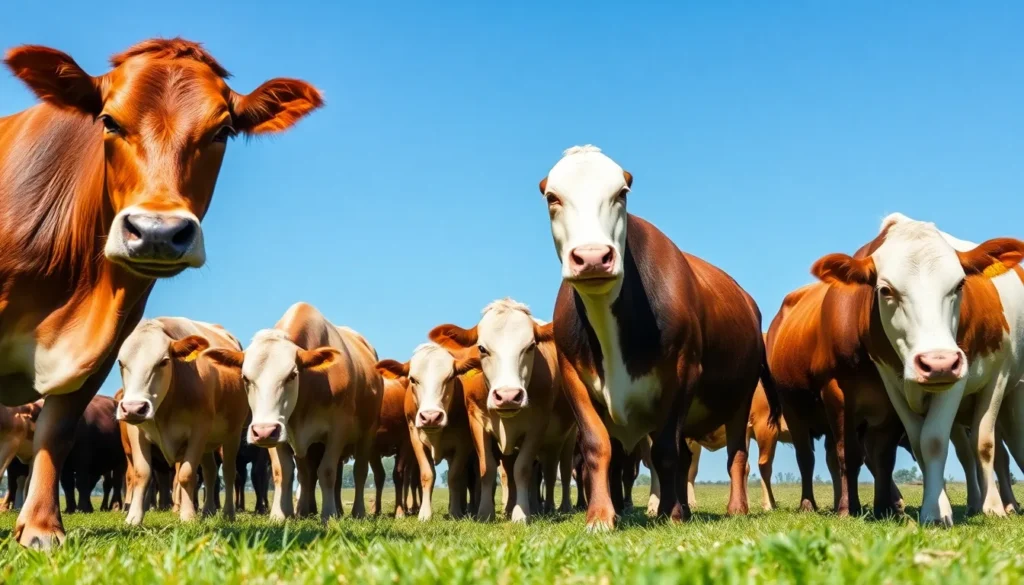
Short Answer
21 Facts About Cows
- Cows are social animals. They form strong bonds with other members of their herd and can experience stress when isolated.
- They have a complex digestive system. Cows are ruminants with a four-chambered stomach allowing them to digest tough plant material efficiently.
- Cows have panoramic vision. Their eyes are positioned on the sides of their heads, providing nearly 360-degree vision, though they have a blind spot directly behind them.
- Cows communicate using vocalizations and body language. They produce various sounds such as moos and use tail flicks or ear movements to express emotions.
- Cows can recognize individual humans and other cows. Studies show they remember faces and can differentiate between familiar and unfamiliar individuals.
- The average lifespan of a cow is about 18 to 22 years. However, in commercial farming, cows are often kept for fewer years.
- Cows have unique personalities. Like humans, individual cows can be shy, curious, or bold.
- Cows spend much of their day chewing cud. This rumination process helps break down fibrous plant material to extract nutrients.
- Cows are herbivores. Their diet mainly consists of grass, hay, and silage, though they may consume grains in farming environments.
- Cow milk is a significant source of dairy products worldwide. Milk from cows is used to produce cheese, yogurt, butter, and other dairy foods.
- Cows have been domesticated for over 10,000 years. They were among the first animals to be domesticated by humans for agriculture and milk.
- Cows can detect smells up to six miles away. Their keen sense of smell helps them find food and recognize other animals.
- Cows have four stomach compartments: rumen, reticulum, omasum, and abomasum. Each compartment plays a role in digesting plant matter.
- Cows are important in many cultures and religions. For example, cows are considered sacred in Hinduism and are often protected and revered.
- Cows can sleep both standing up and lying down. They typically lie down for deeper sleep but can doze while standing.
- Cows produce methane as part of their digestion. This greenhouse gas contributes to environmental concerns related to livestock farming.
- Cows have good memories for places and other cows. They can remember locations of food and water and recognize herd members even after long separations.
- Cows are important for sustainable agriculture in some regions. They provide manure used as fertilizer, improving soil health.
- Cows can run at speeds up to 25 miles per hour. Though generally slow, they can sprint quickly when startled or threatened.
- Cows have a strong maternal instinct. Mothers form close bonds with their calves and protect them vigorously.
- Cows are used for more than milk and meat. In some cultures, cows are used for draught work, leather production, and even as a source of bioenergy.
Habitat and Behavior
Cows are domesticated animals found worldwide, primarily on farms and ranches. They thrive in a variety of climates, from temperate to tropical regions, provided they have access to adequate pasture or feed. Behaviorally, cows are herd animals that prefer to live in groups for social interaction and protection. They engage in behaviors such as grazing, rumination (chewing cud), and resting. Their social hierarchy within the herd is generally peaceful but can include mild competition for resources. Cows communicate through vocalizations, body language, and chemical signals. They are primarily diurnal, active during the day, and rest at night, although patterns can vary depending on environmental conditions.
Why This Animal Matters
Cows play a crucial role in human agriculture and economies as sources of milk, meat, and leather. Ecologically, they influence grassland ecosystems through grazing and manure deposition, which can affect soil fertility and plant community dynamics. Culturally, cows hold symbolic and religious significance in many societies, notably in South Asia. Additionally, cows contribute to rural livelihoods and food security globally. However, their environmental impact, particularly methane emissions linked to climate change, has raised concerns and spurred research into sustainable livestock management practices.
Common Misconceptions
Misconception: Cows have poor eyesight.
Correction: While cows have a wide field of vision due to eye placement, they can see colors and have good peripheral vision, although their depth perception directly ahead is limited.
Misconception: Cows are unintelligent.
Correction: Scientific studies indicate cows possess problem-solving abilities, recognize individual faces, and exhibit emotional complexity, demonstrating notable intelligence.
Misconception: Cows are aggressive animals.
Correction: Generally, cows are docile and non-aggressive unless threatened or protecting their calves.
Misconception: All cows produce milk continuously.
Correction: Only female cows produce milk, and only after giving birth. Milk production is linked to lactation cycles.
FAQ
Why do cows chew cud?
Cows chew cud as part of their digestive process. They regurgitate partially digested food from their rumen to chew it again, which helps break down tough plant fibers and improves nutrient absorption.
Are all cows milk-producing?
Only female cows produce milk, and typically only after giving birth to a calf. Male cows, called bulls, do not produce milk.
How do cows communicate?
Cows communicate through vocalizations like moos, body language such as ear and tail movements, and chemical signals. These methods help express emotions, establish social bonds, and alert others to danger.






Leave a Reply